

Top News
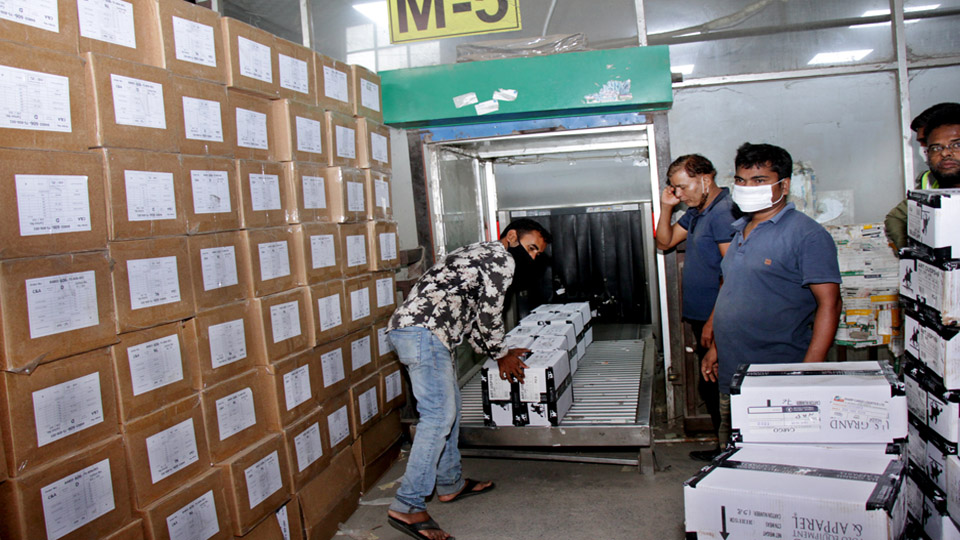
Dhaka: Export cargo operations at Hazrat Shahjalal International Airport are under strain after three of the four Explosive Detection System (EDS) scanners used for screening outbound shipments became non-operational, raising concerns over delays, rising costs, and potential disruptions to air freight exports.
Industry stakeholders said, the situation is currently manageable due to relatively low cargo pressure, but warn that a surge in export demand could quickly overwhelm the limited screening capacity and create significant backlogs.
According to freight operators, only one EDS scanner is currently operational. Two units have remained out of service for several years, while another developed technical faults earlier this year, leaving the airport heavily reliant on a single machine for EU-bound cargo screening.
Freight forwarders said, the slowdown is most severe for shipments destined for European Union countries, where EDS screening is mandatory. As a result, processing times have increased and cargo queues are building.
Industry representatives also noted that airport authorities are increasingly deploying Explosive Detection Dog (EDD) squads as a temporary workaround to maintain flight schedules and prevent underloaded departures. However, they say this is not a sustainable solution for long-term cargo operations.
Stakeholders warned that if export volumes rise during peak seasons, airlines may face operational and commercial pressure due to limited screening capacity. In some cases, aircraft could be forced to depart with unused capacity, increasing costs for carriers and exporters.
Air freight rates currently range between USD 4.5 per kg for European destinations and up to USD 6.5–USD 9 per kg for North America, depending on carrier and route conditions, according to industry sources.
Exporters, particularly in the garment sector, have urged authorities to urgently repair the non-functional scanners, warning that prolonged disruptions could threaten overall trade flows through the airport.
Airport officials have cited delays in sourcing imported spare parts as a key reason for the prolonged downtime, noting that the machines require specialized components and technical support from foreign suppliers. Maintenance agreements are in place, they said, and repair efforts are ongoing.
Meanwhile, freight forwarders have alleged rising unofficial costs linked to the bottleneck, though airport authorities say they have not received formal complaints and will take action if evidence is submitted.
Industry players said that while cargo volumes are currently within manageable limits, the limited screening capacity poses a serious risk to Bangladesh’s growing air export sector if not addressed promptly.
T