Women’s buses, cycling network, monorail vision


Women’s buses, cycling network, monorail vision
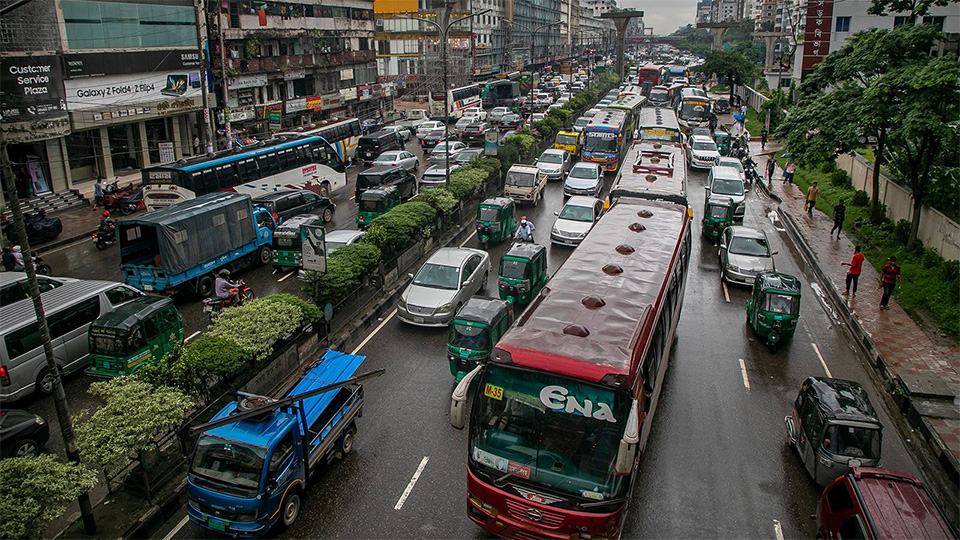
Dhaka: The government is preparing an ambitious restructuring of Dhaka’s public transport system, introducing a mix of short-, medium-, and long-term measures aimed at improving order, safety, and commuter experience in the capital.
The initiatives include dedicated bus services for women, expansion of cycling infrastructure, electric buses, and long-term plans to integrate metro rail with a proposed monorail system across densely populated areas.
Since taking office in February, Prime Minister Tarique Rahman has held multiple high-level meetings with experts and relevant agencies to develop a coordinated transport strategy. Officials said, ministries have also been instructed to prepare 180-day action plans focused on visible improvements in public services.
As part of this effort, the Road Transport and Highways Division has drafted a detailed roadmap outlining reforms over the next six months, the upcoming fiscal year, and a five-year horizon. The main goal, according to officials, is to bring discipline to Dhaka’s chaotic transport system while improving passenger convenience.
Women-only buses, safer travel options
One of the key short-term initiatives is the introduction of dedicated “women’s buses” on selected routes in Dhaka.
The plan includes deploying a small fleet initially, with female drivers and conductors trained and licensed under a government-supported program.
Officials said, this is aimed at improving safety and encouraging greater female participation in public transport.
Expanding cycling, last-mile connectivity
The government is also planning to promote cycling as a sustainable transport option.
A pilot project linked to the metro rail network in Uttara includes dedicated cycle stands, bike-sharing services, and the development of cycling lanes.
The initiative is expected to be implemented under a public–private partnership model to encourage short-distance travel and reduce congestion.
Restructuring bus services
A major long-discussed reform—bus route rationalization—is also being revived. The plan aims to consolidate Dhaka’s numerous bus routes into a smaller number of standardized corridors operated by selected companies.
This would introduce uniform buses, regulated stops, and improved scheduling systems to reduce competition and disorder on the roads.
Although similar efforts were attempted in the past under the Dhaka Transport Coordination Authority, officials said, the new plan includes legal reforms and a clearer implementation framework to ensure sustainability.
Shift toward electric mobility
To reduce dependence on fossil fuels, authorities are also considering introducing electric buses in phases.
Tax incentives for importing electric school buses are already under review, with broader plans to encourage electric public transport vehicles in the future.
Metro expansion, monorail concept
Dhaka’s mass transit network is also set for expansion. While metro rail lines are already under construction or planning, officials are now exploring the introduction of a monorail system for densely populated areas where conventional metro infrastructure may not be feasible.
Experts said, monorail systems could complement existing metro services by serving narrow or high-density urban zones, offering a lighter and more flexible transport option.
According to transport planners, integrating metro rail, monorail, and bus systems could create a more balanced urban mobility network for the capital.
Long-term vision
The broader plan also includes workforce training, improved licensing systems for transport workers, and social welfare measures such as discounted fares for students, elderly citizens, and persons with disabilities.
Urban transport specialists said, while the proposals are ambitious, successful implementation will depend on strong coordination and long-term political commitment.
If executed effectively, officials believe the reforms could significantly reshape how millions of people commute daily in Dhaka within the next decade.
T



Download The Mobile App