

ECNEC approval of Tk2,459cr China-Bangladesh Friendship Hospital seen as major boost to medical tourism

Dhaka: Bangladesh has taken a significant step toward boosting medical tourism with the approval of the China-Bangladesh Friendship General Hospital, a flagship healthcare project aimed at delivering world-class medical services outside Dhaka.
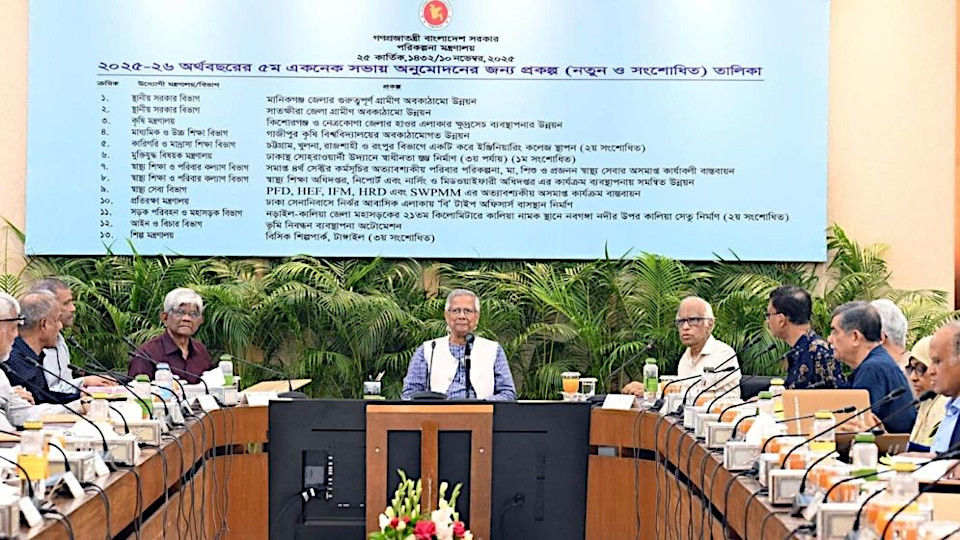
The Executive Committee of the National Economic Council (ECNEC) on Sunday approved the establishment of a 1,000-bed Bangladesh-China Friendship General Hospital in Nilphamari at an estimated cost of Tk 2,459.34 crore, said a media report.
Planning Adviser Dr. Wahiduddin Mahmud described the project as a strategic and timely initiative, noting that its scale and modern facilities could attract patients not only from across Bangladesh but also from neighboring countries. He expressed hope that the hospital would emerge as a regional hub for advanced treatment, as no comparable facility currently exists in the surrounding region.
Of the total project cost, Tk 179.27 crore will be financed by the government, while Tk 2,280.07 crore will come from external sources, mainly through financial and technical assistance from China. The project will be implemented in Nilphamari Sadar upazila under Rangpur Division between January 2026 and December 2029.
Planning Commission officials said the hospital will offer integrated general and specialized healthcare services, including nephrology, cardiology, oncology, and neurology. With state-of-the-art diagnostic facilities, advanced operation theaters, and modern ICU, CCU, and HDU units, the hospital is expected to provide effective treatment for complex and long-term diseases.
Dr. Mahmud said the proposal originated from high-level discussions during the Chief Adviser’s visit to China, where Beijing showed interest in supporting the construction of a highly modern hospital in Bangladesh. He clarified that the decision to locate the hospital in Nilphamari was taken by Bangladesh as part of a broader decentralization strategy.
Nilphamari’s proximity to Syedpur Airport is expected to enhance accessibility, a key factor in attracting foreign patients. The hospital’s planned international-standard services, digital health systems, electronic health records, and hospital automation are also expected to strengthen Bangladesh’s appeal as a medical tourism destination.
In addition to easing pressure on hospitals in Dhaka and Rangpur, the project will contribute to medical education, research, and human resource development, further enhancing the country’s healthcare capacity.
Officials believe the initiative marks a major advance not only in decentralized healthcare but also in positioning Bangladesh on the regional medical tourism map.
K