

Top News
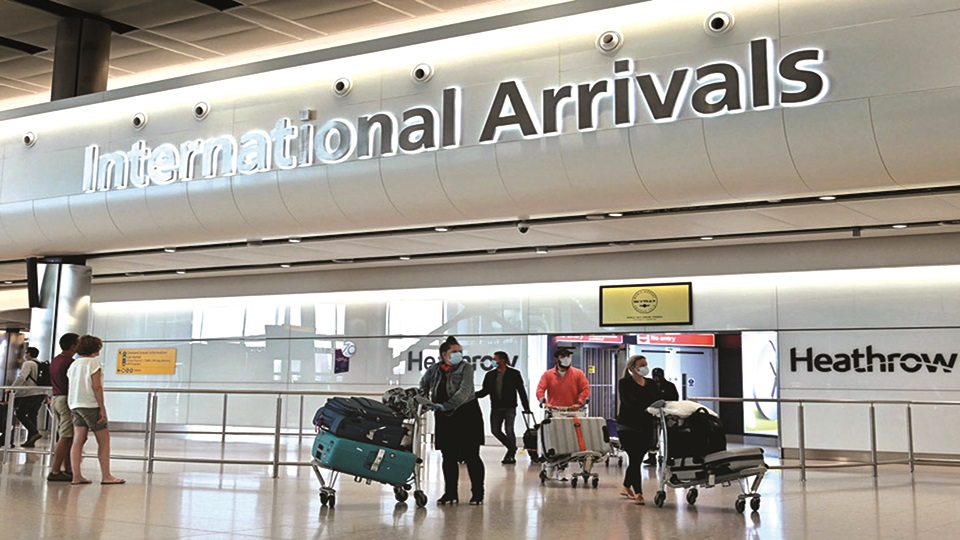
Montreal : IATA urged world states to follow the World Health Organisation's new guidance on travel. The guidance recommends a risk-based approach to implementing measures related to Covid-19 and international travel.
Specifically, WHO recommended that governments:
Do not require proof of Covid-19 vaccination as a mandatory condition for entry or exit.
Remove measures such as testing and/or quarantine requirements for travellers who are fully vaccinated or have had a confirmed previous Covid-19 infection within the past six months.
Ensure alternative pathways for unvaccinated individuals through testing so that they are able to travel internationally. WHO recommends RT-PCR tests or antigen detection rapid diagnostic tests (Ag-RDTs) for this purpose.
Only implement test and/or quarantine measures for international travellers "on a risk-based manner" with policies on testing and quarantine regularly reviewed to ensure they are lifted when no longer necessary.
On the matter, Willie Walsh, Director General, IATA, said, "These commonsense, risk-based recommendations from WHO, if followed by states, will allow for international air travel to resume while minimising the chance of importing Covid-19. As WHO notes-and as the latest UK testing data proves-international travellers are not a high-risk group in terms of Covid-19."
"Out of 1.65 million tests carried out on arriving international passengers in the UK since February, only 1.4 per cent were positive for Covid-19. It is long past time for governments to incorporate data into risk-based decision-making process for re-opening borders," he added.
WHO also urged states to communicate "in a timely and adequate manner" any changes to international health-related measures and requirements.
"Consumers face a maze of confusing, uncoordinated and fast-changing border entry rules that discourage them from travelling, causing economic hardship across those employed in the travel and tourism sector. According to our latest passenger survey, 70 per cent of recent travellers thought the rules were a challenge to understand," mentioned Walsh.
At the same time, WHO encouraged states to look at bilateral, multilateral, and regional agreements, particularly among neighbouring counties, "with the aim of facilitating the recovery of key socioeconomic activities" including tourism, for which international travel plays a vital role.
"The pandemic has put over 46 million jobs, normally supported by aviation, at risk. By incorporating these latest WHO recommendations into their border opening strategies, states can begin to reverse the economic damage of the past 18 months and put the world on the road to recovery," concluded Walsh.