
Top News
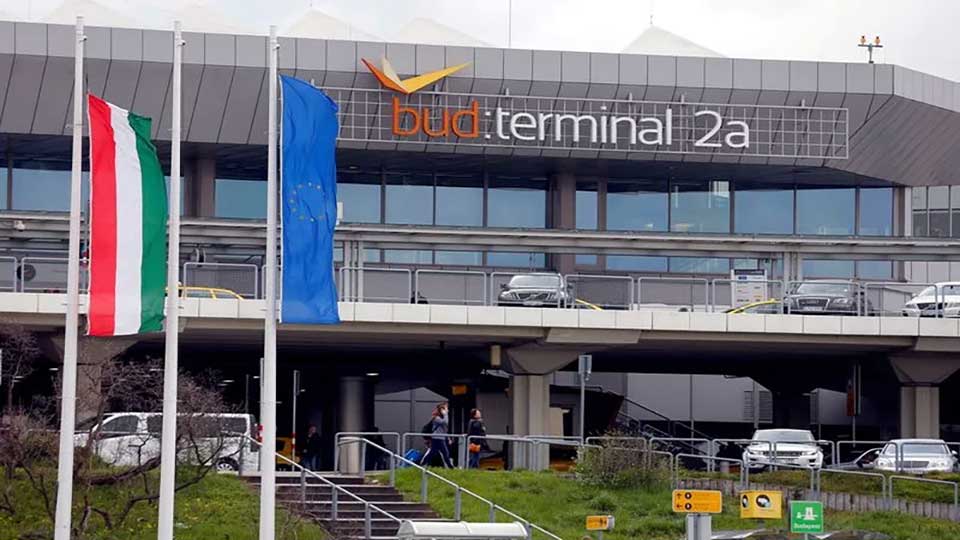
Hungary: Budapest Airport has stepped up another level in environmentally conscious operation: it has achieved level 4+ “Transition” in Airports Council International’s (ACI) Airport Carbon Accreditation program.
Less than 10 percent of the more than 550 airports participating in the assessment, only 52 airports,[1] to be precise, have currently achieved this level, and Budapest Airport is the first airport in the Central European region to attain this certification.
Airport Carbon Accreditation, established by Airports Council International (ACI), is the only global, institutionally approved program that assesses the carbon emissions of the world’s airports, using a rigorous certification scheme, on a scale of one to five. Budapest Airport has moved up this certification scale by achieving a 4+ “Transition” rating.
This upgrade confirms that the airport fully offsets the direct carbon emissions from its operations and is working with its partners to reduce emissions. In addition, Budapest Airport has set a long-term absolute emissions reduction target, developed a stakeholder partnership scheme and established a Carbon Management Plan, in line with the Paris Agreement targets, including a reduction pathway along which it will achieve these targets.
In order to achieve level 4+ “Transition” of the Airport Carbon Accreditation program, Budapest Airport has in recent years added new elements to the measurement of indirect carbon emissions from the activities of companies operating at the airport,
in addition to reducing its own emissions. During data collection, the airport operator has taken into account, among other things, information on the materials used for the de-icing of aircraft, roads, taxiways and aprons, the amount of fuel used by subcontractors during construction and development works, as well as the routes and the treatment of waste and waste water.
Measurements also include the total amount of fuel supplied to airlines and mapping the commuting habits of airport staff. The resulting comprehensive analysis will help Budapest Airport to further reduce the environmental impacts of the airport, together with its partners, and achieve net zero emissions target set by ACI by 2035.
The criteria for level 4+ “Transition” are fulfilled by only 10% of the airports participating in the program, currently a total of 52 airports,1 with Ferenc Liszt International Airport being the first in the Central European region to achieve this certification.
Olivier Jankovec, the director general of ACI EUROPE emphasized: “I have only praise for Budapest Airport’s latest achievement within Airport Carbon Accreditation. The Hungarian hub has reached another critical step in carbon management, as it has become certified at level 4+ Transition, which means it has fully aligned its carbon reduction pathway with the ambitious climate goals of the Paris Agreement.
BUD is the first airport in Central Europe to reach this level of carbon management maturity, and with its target to achieve net zero emissions already by 2035 for CO2 emissions under its control, the airport is also clearly a leader in terms of climate action at global level. Hats off to the entire team for this significant achievement!”
-B
Share this post
Also on Bangladesh Monitor