
Top News
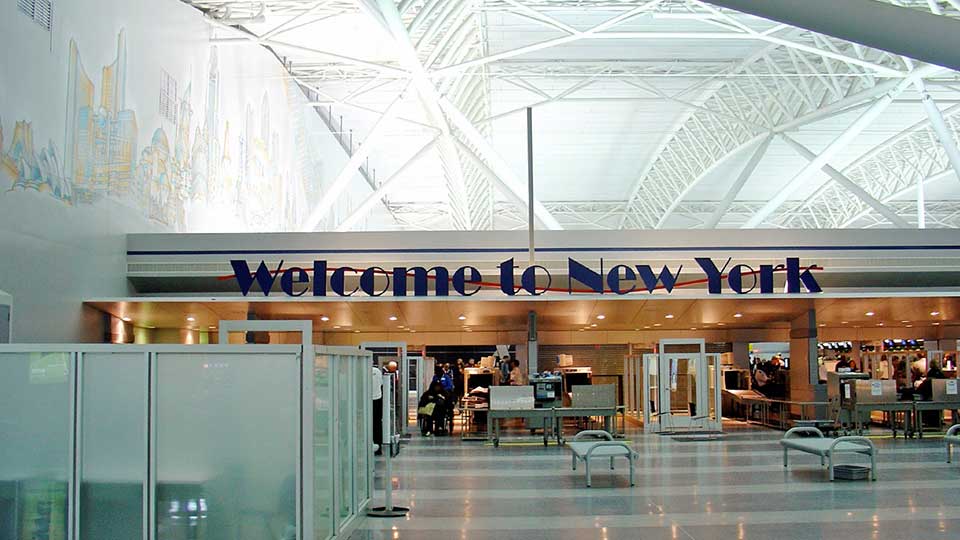
New York : Airports around the world are relocating sensitive electrical equipment to rooftops to protect it from flooding, reinforcing runways to handle extreme temperature swings and revving up air conditioning as climate change complicates operations.
In New York, the $19 billion renovation of John F. Kennedy International Airport includes preparing for more extreme weather events such as storm surges and coastal flooding. Up in northern Alaska, melting permafrost is forcing runways to be fortified, while in Europe, developers are studying building materials that will make runways withstand larger temperature swings or redesigning buildings for sweltering summers.
“The impacts of climate change have humbled us all,” said Rick Cotton, executive director of the Port Authority of New York and New Jersey, which includes JFK and the smaller airports LaGuardia and Newark.
Related:Bob Jordan, CEO of Southwest Airlines: “I feel very, very well prepared for this winter” While the aviation industry has pledged to achieve net-zero carbon emissions by 2050, harsher weather conditions are already forcing a rethink of critical infrastructure in airports and airfields around the world. Sea level rise alone means airports may have to spend $57 billion by the end of the century to maintain current levels of risk, according to a 2021 report published by Newcastle University and the Tyndall Center for Climate Change Research in the United Kingdom Climate risk management.
Read More: Biman resumes direct flights to Guangzhou
Heat waves this summer in the U.S., Europe and Asia are putting pressure on airport cooling systems – which are critical not only to passenger comfort but also to ensuring that key electronic systems don’t overheat. Sudden rain in August left planes at Frankfurt, Germany’s busiest airport, looking like they were parked in a lake, while hot temperatures in the UK last year caused the runway at London Luton Airport to buckle.
Runways contain different asphalt mixtures depending on a region’s climate. A surface in Dubai, for example, is made of a different composition to withstand higher temperatures than one in the UK, which now sweats in high temperatures for longer periods.
The New York Port Authority is making changes to its low-lying coastal airports, including moving substations from the ground to the roofs of buildings, Cotton said. To protect the JFK Hub, the agency also plans to raise or relocate buildings to less flood-prone areas of the hub and install flood protection devices.
Cotton said the agency is on “high alert” about the threats of climate change and has learned lessons from Hurricane Sandy in 2012, which pushed water over the seawall at LaGuardia, destroying electronic equipment and flooding the airfield.
“We designed the terminal to protect critical infrastructure in the event of flooding due to rising sea levels or storms, and as an additional precaution, we added deployable flood barriers,” said Helena Williams, CEO of JFK Millennium Partners, leading a 4.9 Billion dollar renovation of Terminal 6 at the airport.
In Alaska’s frigid climates, airports and other critical infrastructure are built on permafrost, a permanently frozen layer on or beneath the Earth’s surface. But as temperatures have risen, some layers of permafrost have thawed, damaging roads and runways. The Alaska Department of Transportation has helped airfields like Noatak and Deering, two strips of the Northwest popular with charter flights, build insulation into the ground to thermally protect permafrost and level embankments to cover runways stabilize, said Matt Billings, a geotechnical engineer for the agency’s northern region.
Read More: UAE travel: Airlines drop fares, offer major discounts
Over in Europe, Amsterdam Airport Schiphol has already raised its runways in the middle and sloped them towards the edges to ensure water can drain properly during heavier rainfall. According to an official, Schiphol is also working on a precipitation management system that can handle increasing rainfall over the next century.
The airport is creating shaded areas along pedestrian and bicycle paths, improving ventilation, planting trees and designing heat-resistant surfaces to prevent buildings and the surrounding urban area from overheating.
In France, water shortages and high temperatures have led to restricted water use in certain regions. Nice airport in southern France has reduced the amount of industrial water it uses for cleaning over the past year, said Isabelle Vandroit, head of sustainable development and environment at L’Aéroports de la Côte d’Azur.
Higher temperatures even affect the physical laws that underlie flying itself. Warm weather means the air is less dense, resulting in less lift for the wings and less power for the engines. This in turn may require longer runways because the planes require longer takeoff runs, or it may force airlines to reduce the number of seats on planes to reduce weight, depriving them of revenue.
According to a March Eurocontrol report, the aviation industry is becoming increasingly urgent to adapt to climate change amid the post-pandemic travel recovery and worsening weather conditions. The European airspace coordinator called on airports and airlines to adapt now and become more resilient to avoid future damage to infrastructure and operations.
Runways can expand and crack when exposed to large temperature fluctuations, which are becoming increasingly common, especially if they were originally designed for much narrower temperature ranges. In August last year, all flights at the Royal Air Force’s Brize Norton air base were temporarily suspended because the runway had become unsafe due to high temperatures.
According to Alex Walton, a senior civil engineer at construction giant Arup Group Ltd., extreme weather events are becoming more common and more airports are likely to choose material mixes that can withstand both hot and frosty conditions, which is more expensive.
Some of the hundreds of airports Arup works with plan to redesign their airfield system or select new materials for cooling and ventilation systems in terminals. After a slowdown during the pandemic, more airports are now prioritizing redesign, Walton said.
Read More: Air India’s maiden flight on Dhaka-Delhi route takes off
The cost of climate-related upgrades depends on the location and the issues associated with each airport. Daily inspections and runway maintenance cost at least tens of thousands of dollars a year and could rise with climate change, said Thomas Budd, a lecturer at Cranfield University in England. A major repair to a runway can easily cost hundreds of thousands of dollars and cause significant disruption, whereas a complete resurfacing can cost up to $100 million.
Most airports in the world are not designed for temperatures above 120 degrees, Budd said. If climate change continues on its current path, more airports could potentially suffer from pavement deficiencies and other infrastructure problems, causing significant disruption to global air travel.
“Climate change is happening now, so we don’t have the luxury of a lot of time to prepare,” Budd said. “The time for this was probably 20, 30 years ago.”
-B
Share this post
Also on Bangladesh Monitor