

Delhi airport plans to increase capacity by 30pc in 3 years

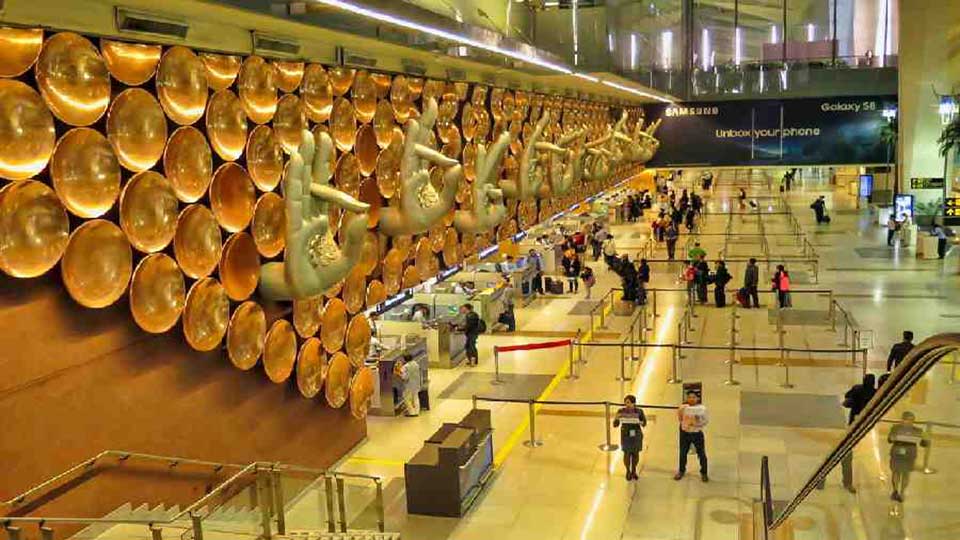
New Delhi: Delhi Airport is working with the government-run Airports Authority of India (AAI) and an international consultant to optimise operations so that it can increase peak runway capacity by about 30 per cent to 110 movements per hour in three years, said Videh Kumar Jaipuriar, chief executive officer of Delhi International Airport Limited (DIAL), on Friday.
The airport wants to increase its international passenger handling capacity by 40-50 per cent in the next 6-12 months as the transit traffic, domestic-to-international as well as international-to-international, is growing rapidly, he said.
The Delhi airport handles more than 100 million passengers annually. About 82-83 per cent of this capacity is for domestic flights while the remaining is for international services. The GMR Group-led DIAL runs the Delhi International Airport, India's largest, which handles 84 aircraft movements per hour during peak hours.
"We have four runways. We are working with an international consultant, the AAI, to optimise our operations. We will first go for a dependent parallel approach. Then we will achieve an independent parallel approach. In 2-3 years, our peak runway capacity would increase to about 110 aircraft movements per hour," Jaipuriar said at CAPA India Aviation Summit 2024.
A dependent parallel approach involves two aircraft approaching closely spaced parallel runways with interdependent operations, requiring coordinated timing and separation to ensure safety. An independent parallel approach lets two aircraft land on widely spaced parallel runways simultaneously without interference, maximising efficiency and capacity.
Jaipuriar said that the airport offers 1,500 slots per day to airlines and this would increase to more than 2,000 after optimisation. An airport slot is a specific time allocated for an aircraft to land or take off at an airport.
He said that the DIAL is also working with the governments of Delhi and Haryana to see how connectivity between Gurugram and the Delhi airport can be improved. "A few projects have been discussed, including one to establish direct connectivity between Lutyens Delhi (central Delhi) and the Delhi airport," he stated.
The Delhi airport is putting in place an artificial intelligence (AI) engine in Airport Operations Centre (APOC) that will study the flow of passenger movement and inform the airline, immigration personnel, security personnel and others so that they can immediately change their manpower strength. As the Delhi airport wants to become an aviation hub, it is developing a hotel just outside the T3 terminal. Moreover, it is thinking of establishing a hotel immediately outside the T1 terminal.
-B