
Top News
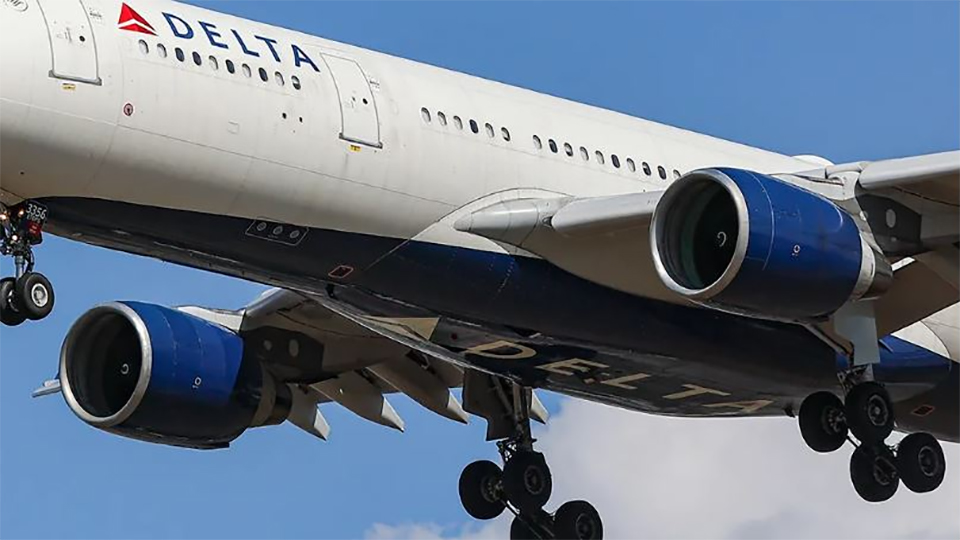
Atlanta, Georgia : Delta Air Lines Inc. resumed flights at a Toronto airport on Tuesday (Feb 18) as investigators examined the wreckage of a regional jet that lost control after landing, skidding along the runway, and coming to rest upside down.
The accident, which occurred on Monday (Feb 17) at Toronto-Pearson International Airport, resulted in no fatalities. The number of injured passengers taken to hospitals was updated to 21 on Tuesday, up from the initial report of 18. Nineteen passengers have since been released. The regional jet, coming from Minneapolis/St. Paul, had 76 passengers and four crew members on board.
Passengers described a surreal turn of events, when an apparently routine approach turned into sudden chaos. Footage on social media showed the aircraft slamming down hard on the tarmac and being engulfed in smoke and a burst of flames. As it tumbled down the runway, a fireball erupted from the left side of the plane, passenger John Nelson told CNN in an interview.
Canadian aviation officials plan a briefing on their probe into the crash later Tuesday. Investigators from the US National Transportation Safety Board also are taking part in the review.
“When we hit, it was just super hard, like a hit on the ground and the plane went sideways,” said Nelson, who was seated in row 10, just in front of the wing. “I believe we skidded on our side and then flipped over on our back.”
Television images showed the Bombardier CRJ900, missing its tail and one wing, resting on its roof on the runway, with smoke billowing from its underside.
Nelson said he and a passenger next to him were dangling upside down, still strapped to their seats, when the plane stopped. They evacuated as quickly as possible through the rear of the airplane, where emergency personnel were already waiting.
“It was mass chaos,” he said. “We kind of let ourselves go to hit the ceiling, which is kind of a surreal feeling, and then everybody was like, ‘Get out, get out, get out.’ We could smell jet fuel. Even now I smell like jet fuel.”
In addition to resuming operations at the airport, Delta put larger aircraft on two flights for greater arrival and departure capacity.
The incident continues a bad start to the year for air safety in North America. Ten people died aboard a commuter plane that crashed in Alaska earlier this month. In late January, 67 people died after a regional jet operated for American Airlines Group Inc. and a military helicopter collided mid-air near Ronald Reagan Washington National Airport, and days later, a medevac plane crashed soon after takeoff in Philadelphia, killing the six people aboard and one on the ground. A private jet veered off a runway in Scottsdale, Arizona, and into another plane on Feb. 10, killing the pilot of the smaller aircraft.
The Toronto incident occurred at about 2:15 p.m. Eastern time, Delta said. At the time of the accident, winds were blowing at 28 knots (32 miles per hour) with gusts up to 35 knots, with blowing snow and clouds, according to aviation data tracker Cirium. The temperature was -9C (16F).
The regional jet was operated by Endeavor, a wholly owned unit of Delta. The crash in Washington last month also involved a CRJ plane, though the slightly smaller 700 variant. Nobody survived the midair impact.
Delta is working with crash investigators, Chief Executive Officer Ed Bastian said in a message to employees on Tuesday, “providing our full coordination and support to determine a cause and learn what we can from this incident.” A specialized Delta employee response team is providing support and resources to passengers and families, he said.
-B
Share this post
Also on Bangladesh Monitor