
Top News
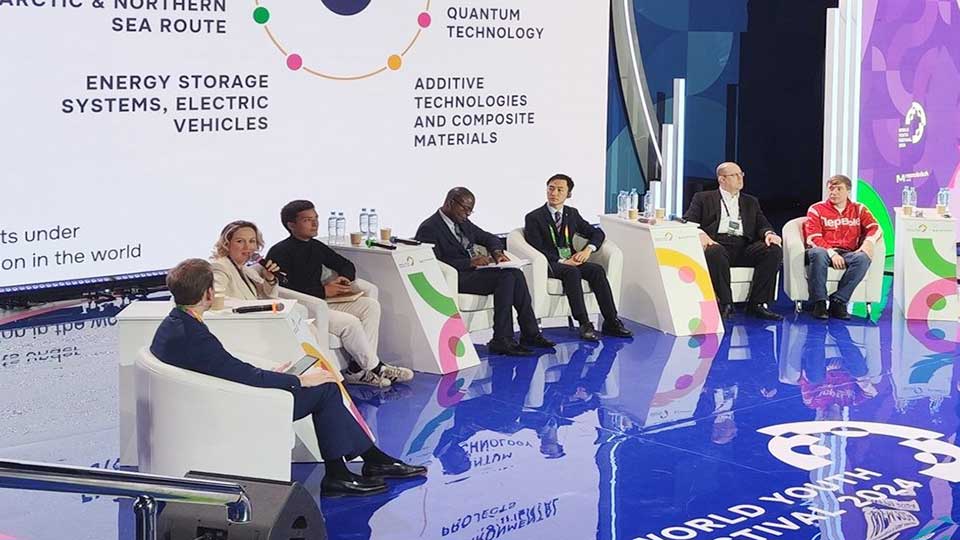
To meet the global challenges of the present and shape the technological landscape of the future, it is necessary to educate young people and develop talents. Russia’s state atomic energy corporation Rosatom’s Deputy DG for HR Tatiana Terentieva was speaking at a seminar on “Global Cooperation in Education and Science: Developing the Potential of International Youth in Today’s World” organized on the sideline of the recently concluded World Youth Festival in Russia.
Leading experts in the field of education including government representatives, universities, business, and active youth from Russia and other counties took part in the session.
“We are therefore building an ecosystem of human resource development based on the principles of partnership and taking into account trends like digitalization and greening of professions. We are also developing the competencies of the future: STEM and 4C social skills (cooperation, creativity, communication, and critical thinking). Our ecosystem involves schools, parents, teachers, universities, employers, and our enterprises,” Tatiana said.
Tatiana stressed that the Rosatom ecosystem is open to the whole world and cited as an example several projects involving young people from different countries including international shifts at the Artek camp, the AtomSkills Professional Skills Championship, Impact Team 2050, as well as the new BRICS YEA platform.
She paid special attention to the flagship global educational project Obninsk Tech. It is an international research and education center for nuclear and related technologies, implemented in Obninsk to meet the growing demand of partner countries for qualified personnel.
The center unites Rosatom’s leading core universities and research organizations, enabling the training of personnel to work at NPPs of Russian design in Russia and abroad, as well as conducting large-scale scientific activities. By 2030, Obninsk Tech plans to host 10,000 Russian and foreign students studying nuclear and related specialties.
“Rosatom, along with its supporting universities, aims to occupy at least 20% of the global market for nuclear physics education”, said Ekaterina Solntseva, Chairman of the Council of Young Scientists of Rosatom.
Rosatom runs a community of higher education institutions established to coordinate activities in the interests of the nuclear industry in the sphere of higher, postgraduate, and additional professional education.
Share this post
Also on Bangladesh Monitor