
Top News
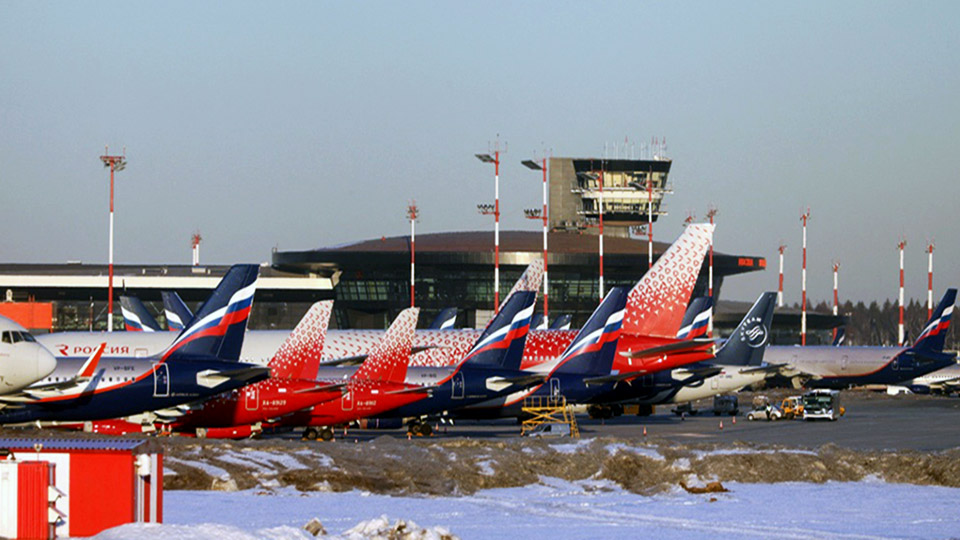
Dhaka: Banned from vast swaths of the world’s skies, denied access to vital spare parts, stripped of insurance and struggling to keep hold of planes, Russia’s airline industry has been plunged into its biggest crisis in decades over a week.
Western governments have unleashed waves of sanctions since Russian President Vladimir Putin sent troops into Ukraine in late February to invade the country, but few have delivered such a visible punch as those targeted at an industry that accounted for 6 per cent of the world’s airline capacity in 2021.
Russia’s flag carrier Aeroflot, which took delivery of its first western aircraft from Airbus when Boris Yeltsin was in the Kremlin, on March 5, announced it would stop all international flights other than to Belarus. S7, Russia’s second-largest airline, has also scrapped flights outside domestic airspace.
With no clarity on how long the sanctions from US and EU authorities will remain in place, experts warned that in a worst-case scenario Russian domestic carriers’ schedules would shrink to levels not seen in three decades.
The EU’s sanctions prohibit the sale, transfer, supply or export of aircraft or any components, while the US has introduced export restrictions including on Russia’s aerospace sector.
Russia’s carriers have been hit just as they were drawing a line under the disruption caused by the coronavirus pandemic. Expectations of a steady and sustained rebound in domestic demand has been replaced, at least for now, by extreme volatility.
In a sign of the concern, the US, French and UK governments this week advised their citizens to leave the country while commercial flights were still available.
Yet with economists predicting that the Russian economy will soon be driven into a deep recession, local aviation executives are braced for a sharp decline in domestic demand.
Although Aeroflot is majority owned by the government and other carriers may turn to the state for support, industry experts said that overcoming the new restrictions on access to aircraft parts would prove more testing.
Airbus and Boeing this week suspended the supply of spare parts and services, removing the maintenance support vital to keeping planes in the air.
The two aerospace groups account for 70 per cent of Russia’s commercial fleet of roughly 880 aircraft, according to reports. Aviation consultancy IBA estimated 37 new planes were due to be delivered to Russian airlines by Airbus and Boeing in 2022.
Boeing, which has been active in Russia since the late 1990s, has halted operations at its Moscow training campus, where several thousand pilots are trained each year and which also offers flight simulation, maintenance, and cabin training. Meanwhile, Brazil’s Embraer, another supplier of planes to Russian carriers, said it was complying with sanctions.
Rolls-Royce, Safran and GE Aviation have also paused the provision of support services
A further threat, however, comes from Europe’s aircraft leasing industry which in recent years has proved to be a critical supplier of planes to Russia.
Non-Russian lessors have 515 planes in the country, with a combined market value of close to USD 10 billion. European lessors accounted for up to USD 5 billion worth of the planes — ones they will want to recover as EU sanctions require them to terminate contracts with Russian carriers by the end of March.
- T
Share this post
Also on Bangladesh Monitor