


Singapore Airlines Group carries 3m+ pax in February, surpasses 2019 levels

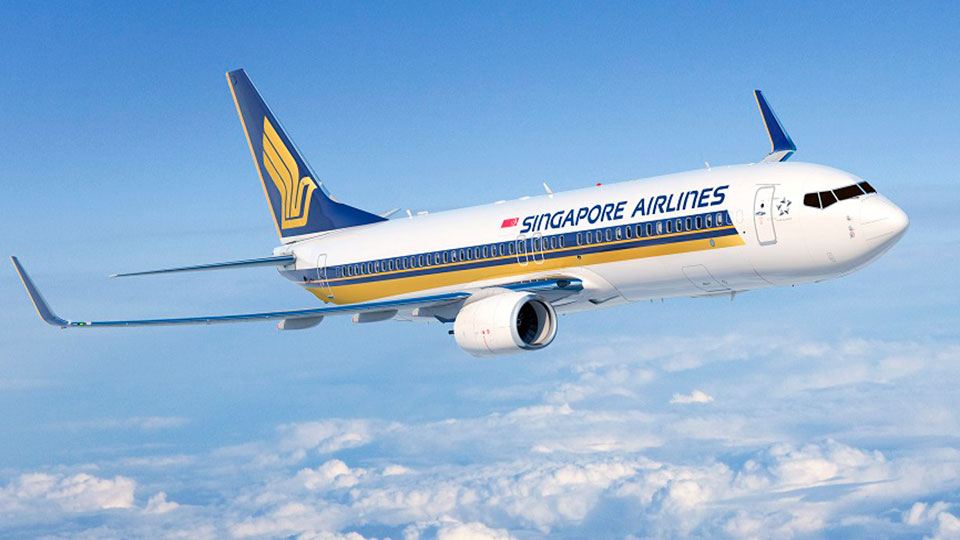
Dhaka: Singapore Airlines Group has, for the second month, surpassed 2019 numbers. In February 2024, the Group, which includes full-service carrier Singapore Airlines and low-cost Scoot, carried 3.06 million passengers at a load factor of 86.3 per cent, close to 10 per cent ahead of the 2.79 million it carried in February 2019.
The year-on-year comparison to the 2.38 million it carried in 2023 shows the group had increased passenger numbers by 28.2 per cent in the intervening twelve months. The Group's disciplined approach to adding capacity has paid off, with 2024 capacity, as measured by available seat kilometers, at 13,643.5 million compared to 11,302.1 million in 2023, while revenue passenger kilometers (RPKs) was 11,779 million in 2024 compared to 9,782.7 million in 2023. That balance is an important metric and shows how the capacity growth (20.7 per cent) is matched by a similar increase (20.4 per cent) in demand.
On the other hand, in February 2023, Scoot carried 848,200 passengers at a load factor of 91.6 per cent, and in 2024, that had jumped by 25.6 per cent to 1.065 million at a load factor of 92.6 per cent, which rank as one of the most consistently high passenger load factors globally.
It has grown passenger numbers from 827,000 at a load factor of 85.3 per cent in 2019 to 1.06 million at 92.6 per cent in 2024. It has grown its available seat capacity to 3,065 million and revenue passenger kilometers to 2,839.9 million while boosting the all-important passenger load factor into the 90pc+ bracket.
However, in 2019, the Group reported passenger and traffic numbers for SilkAir separately. However, in February 2024, Singapore Airlines (SIA) carried 1.99 million passengers at a load factor of 84.5 per cent, compared to 1.537 million at 85.1 per cent in February 2023, growing its passengers by 29.7 per cent YoY.
The regions and load factors for SIA are South West Pacific (92.4pc), the Americas (83.1pc), West Asia and Africa (82.9pc), East Asia (82.4pc) and Europe (81.6pc).
Furthermore, Singapore Airlines cargo carriage increased by 12.9 per cent YoY, primarily due to stronger demand from e-commerce markets, which outpaced the capacity expansion of 7.4 per cent from 2023. This resulted in cargo load factors reaching 56.7 per cent, 2.7 percentage points higher than in February 2023.
- T