
Top News
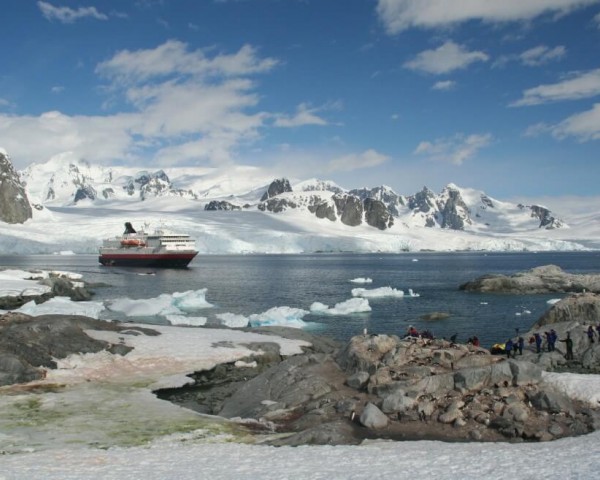
The gasification of tourism in Antarctica, one of the last sanctuaries on the planet, poses a number of environmental problems. Among others, the risk of seeing marine species invades the polar biodiversity.
While the white continent is the dream of more and more travelers, tourism in Antarctica is an environmental aberration. In addition to polluting and harming terrestrial animals, these expeditions, which cost up to 15,000 euros and are reserved for a certain elite, threaten the marine wildlife of this fragile ecosystem.
Indeed, the tourist boats coming from all over the world bring invasive species into the waters of the Southern Ocean on their hulls. This is precisely what a recently published study by the British Antarctic Survey and the University of Cambridge reveals.
The report focusing on fishing and tourism vessels that regularly visit this remote region reveals that the ships that sail off the Antarctic coast come from 1,500 ports around the world. And that's problematic. Because "almost any place can be a potential source of invasive species [which] can completely change an ecosystem," researcher Arlie McCarthy of Cambridge University said. "They can create entirely new habitats that would make it harder for Antarctic animals to find their own place to live."
Potential invaders include any marine species that can attach to a ship's hull and survive the journey to Antarctica. Mussels, barnacles, crabs, and algae are of particular concern because they attach themselves to hulls in a process called biofouling. Mussels, for example, can survive in polar waters and spread easily, threatening marine life on the seafloor. Their filtering of the water alters the marine food chain and the chemistry of the water around them.
The native species of Antarctica are singularly fragile since they "have been isolated over the last 15 to 30 million years," says David Aldridge, a professor at the University of Cambridge. Invasive species represent one of the greatest threats to biodiversity in the region. And the risk of losing endemic species is, therefore, higher in Antarctica due to the tourist boats.
It is true that tourist boats bring back some potentially invasive species. But they are not spreading for the moment. Antarctica remains "the last place in the world where we don't have invasive marine species. So we [still] have the opportunity to protect it," says Arlie McCarthy.
-B
Share this post
Also on Bangladesh Monitor