

NOVOAIR prepares for int'l leap amid mounting domestic aviation crisis

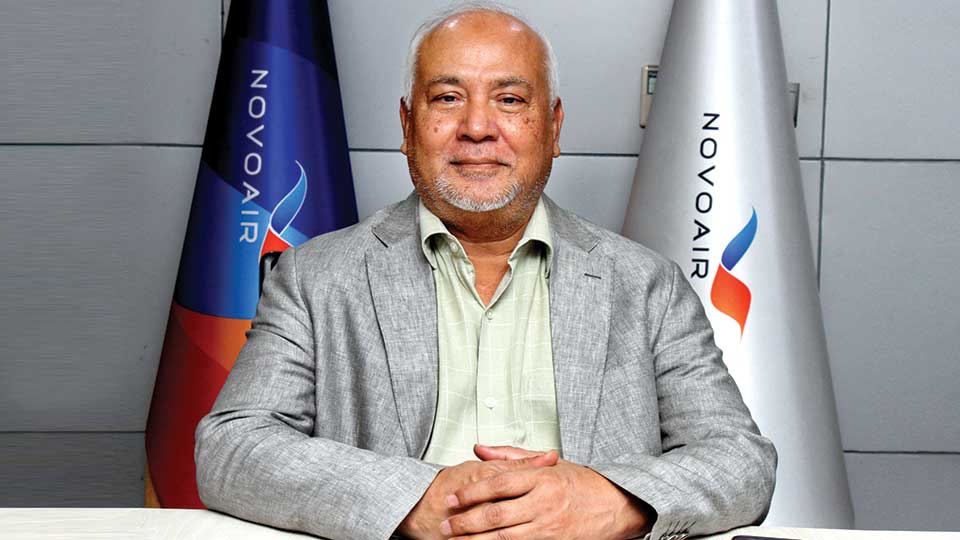
Dhaka : For over a decade, NOVOAIR has been a trusted name in Bangladesh's domestic aviation sector, connecting business hubs and tourist destinations across the country. However, now, the privately owned carrier finds itself at a critical crossroads. Crushed by rising costs and shrinking profitability in the domestic market, NOVOAIR is betting big on international expansion as its only path to survival.
In an exclusive interview with The Bangladesh Monitor, Mofizur Rahman, Managing Director of NOVOAIR, painted a stark picture of the domestic aviation landscape while outlining the airline's ambitious plans to transform itself into a regional player.
Domestic-only operations no longer sustainable
According to Rahman, NOVOAIR is currently losing BDT 5-6 crore every month by operating only within Bangladesh. The airline's reliance on domestic routes, once considered stable and dependable, has now become its greatest weakness.
"The challenge began after the Ukraine war drove up jet fuel prices worldwide. International carriers could cope because they have diversified operations. Domestic operators like us could not. Passenger numbers dropped, fares fell, but costs skyrocketed," Rahman explained.
The imbalance has pushed NOVOAIR into what Rahman calls "an awkward and unsustainable position." While international airlines flying into Bangladesh enjoy economies of scale and broader revenue streams, homegrown carriers are left fighting a losing battle on short-haul domestic routes.
Fuel pricing reforms bring relief-but not enough
One bright spot has been the recent reform in jet fuel pricing under Bangladesh's interim government. The Bangladesh Energy Regulatory Commission (BERC) now oversees the process, aligning domestic fuel prices with global markets.
"Earlier, fuel prices were arbitrary. At one point, in India, jet fuel cost BDT 80, while in Bangladesh it was BDT 131 - BDT 50 higher. Now, pricing is transparent and at par with global markets," Rahman acknowledged.
However, he was quick to add that this change, while welcome, does not address the other crippling cost burdens that airlines face in Bangladesh.
Regulatory costs choking local carriers
Rahman, who also serves as Secretary General of the Airline Operators Association of Bangladesh (AOAB), did not mince words when describing the regulatory and tax environment for airlines.
n Airport charges: "Our airport-centric costs-both aeronautical and non-aeronautical-are too high. Hangar rents at Dhaka airport are more expensive per square foot than commercial space in Gulshan. Landing and parking fees are 7-8 times higher than regional standards."
n Tax regime: "On paper, certain aircraft spare parts are tax-free. However, customs often reclassify them under taxable codes. For example, an LCD display meant for an aircraft cockpit should be exempt. But since it's an LCD, customs codes it differently and imposes 64 percent tax. These discretionary practices push us to pay anywhere between 35-175 percent in taxes on critical spares."
n Surcharges: Bangladesh also imposes surcharges at a rate of 72 percent annually, compared to below 8 percent globally. "Even India only charges 10-12 percent. This makes our dues spiral beyond the ability to pay. No other country burdens private airlines this way," Rahman said.
"These issues have been raised for 14 years. Without real reform, Bangladesh will remain a market for foreign airlines, while local carriers collapse under the pressure," he warned.
Fleet renewal setbacks
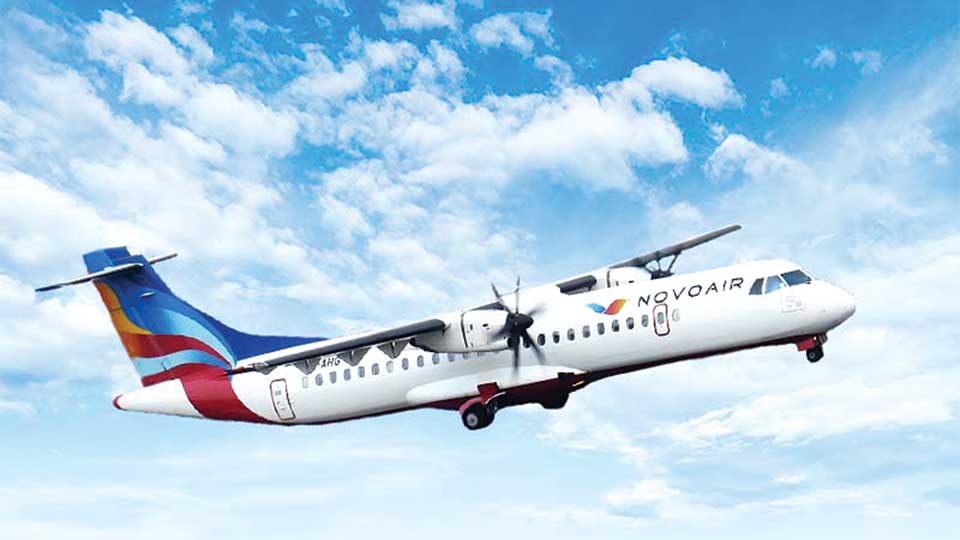
NOVOAIR had briefly suspended operations recently in hopes of replacing its fleet of ATR 72-500 aircraft with newer ATR 72-600s. However, the deal fell through amid global supply chain disruptions triggered by the Ukraine war.
"For more than two years, we've been trying to source new aircraft. Supply chain challenges persist worldwide. Major lessors can't confirm when the situation will normalize. If we had been able to add more aircraft earlier and launch international operations, we could have offset domestic losses," Rahman said.
With aircraft availability slowly improving, Rahman now expects opportunities to open up by the third quarter of 2026. "We have already submitted our interest to lessors. This time, instead of waiting for ATRs or A320s, we'll take whatever is available. Right now, Boeing 737s are in the market, so that's our likely option," he added.
International expansion on horizon
NOVOAIR's new survival strategy hinges entirely on launching regional international services. The airline plans to start small, with just two aircraft, before scaling up.
"We'll begin with Southeast Asia-Bangkok, Kuala Lumpur, and Singapore-as well as the Middle East-Dubai, Sharjah, and Muscat. These are natural markets for Bangladeshi travelers and have high demand," Rahman said.
The move would mark a historic shift for the airline, which has never operated beyond Bangladesh's borders. For Rahman, the stakes could not be higher: "With domestic-only operations, you cannot sustain in the market anymore. International expansion is no longer optional-it is a necessity."
No plans to shut down
Despite the grim financial reality, Rahman was clear about NOVOAIR's long-term commitment. "We may consider selling some stakes to raise capital, but NOVOAIR will not close. We remain committed to our passengers, our employees, and to the future of Bangladeshi aviation," he affirmed.
For NOVOAIR, the next year will be decisive. If its fleet expansion and international launch go as planned, the airline could turn a corner. If not, the storm clouds over domestic aviation may only darken further.