
Top News
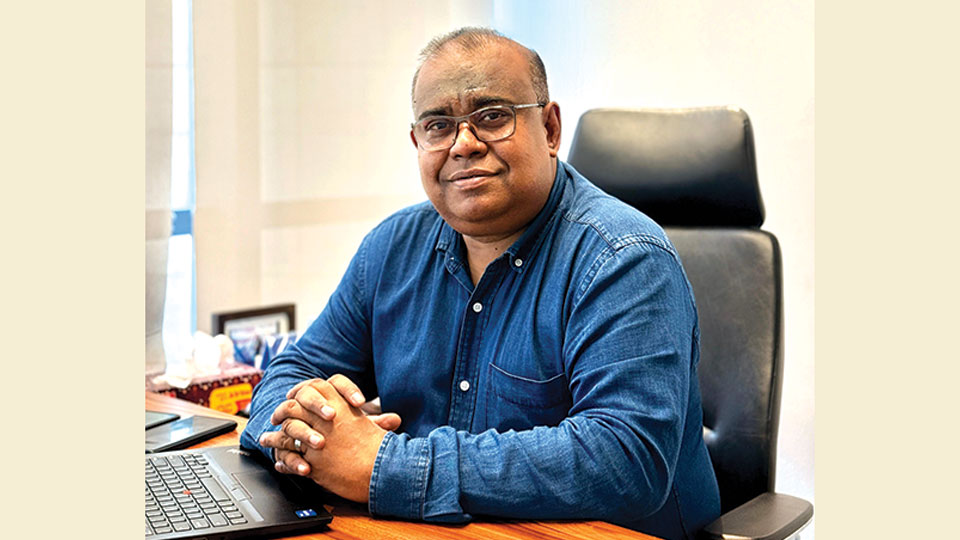
SM Fahim Hassan, Executive Director of Travelport's official partner MGH Group Bangladesh
Dhaka : As Bangladesh's aviation and travel industry continues to grow in scale and complexity, one name is emerging as a catalyst for change: Travelport, represented in the country by its official partner MGH Group Bangladesh.
In an exclusive interview, SM Fahim Hassan, Executive Director of Travelport's official partner MGH Group Bangladesh, outlined how the global travel technology leader is not only offering advanced distribution solutions but also working to create a fairer, more sustainable ecosystem for all stakeholders in Bangladesh's travel market.
Positioning beyond distribution
"Travelport is not here to simply distribute content," Hassan explained. "Our goal is to act as a trusted enabler of growth. That means building an ecosystem where airlines and agencies can thrive together through fair practices, transparency, and modern retailing tools."
This positioning, Hassan said, sets Travelport apart from competitors in the global distribution system (GDS) space. While content and reach are important, Travelport differentiates itself by embedding accountability and ethical practices into its partnerships.
"We're committed to innovation with integrity," he added. "By working closely with local partners, we ensure that our solutions are practical, inclusive, and raise the standards of the industry as a whole."
Innovation for new travel era
Travelport's investments in Bangladesh are centered on introducing a new generation of retailing solutions. These are designed to reduce inefficiencies, cut manual processes, and empower agencies to move toward digital-first operations.

For airlines, the benefits are equally significant. Travelport is enabling carriers to retail ancillaries and personalized offers-capabilities that not only drive revenue but also provide travelers with more tailored, flexible options. "This is about setting smarter benchmarks for distribution in Bangladesh," Hasan said.
The role of NDC,automation, AI
Industry-wide, technologies like New Distribution Capability (NDC), automation, and artificial intelligence (AI) are reshaping the way tickets are sold and travel experiences are delivered. Hassan believes Bangladesh must embrace these shifts carefully but decisively.
"NDC allows airlines to present more tailored, ethical offers. Auto-mation eliminates waste and inefficiency. AI helps agencies better understand traveler needs," he explained. "The future is not about selling more tickets-it's about creating more value for every traveler."
Supporting agencies in digital transition
Hassan emphasized that Travelport's strategy in Bangladesh goes beyond technology deployment. "We believe in partnership, not just technology," he stressed.
To that end, Travelport and MGH are providing training, continuous support, and the right tools for travel agencies to navigate their digital transformation. "The idea is to ensure agencies don't just adopt new platforms but also build resilience and competitiveness while maintaining ethical business practices," Hassan said.
Opportunities with Bangladeshi airlines
Bangladeshi carriers, according to Hassan, stand on the cusp of major growth opportunities. From labor migration flows to religious travel, airlines in the country have strong demand bases waiting to be tapped more effectively.
"Collaboration with local airlines is an opportunity to establish new standards of excellence," Hassan ob-served. "By working transparently and sustainably, we can expand their reach, improve their retailing capabilities, and create benchmarks that others in the region will look to follow."
Challenges ahead: more than just technology
However, growth will not come without challenges. Hassan pointed out that the biggest obstacle is not the availability of advanced platforms, but the industry's readiness to adapt.
"The real challenge is mindset," he explained. "We need stakeholders to embrace transparency and digital-first practices. At the same time, growth must be inclusive. Smaller agencies cannot be left behind in this transformation."
According to Hassan, overcoming these challenges will require a collective effort-through cooperation, education, and a shared vision of an ethical, sustainable travel ecosystem.
Shifts in traveler behavior post-pandemic
The pandemic, Hassan said, has already forced a reset in traveler expectations. "Trust, flexibility, and clarity are now top priorities," he noted.
"Whether it's transparent pricing, clear refund policies, or fair ancillary offers, travelers want responsibility and honesty. This is an opportunity to rebuild the industry on stronger values, focusing on long-term loyalty rather than short-term gains."
Looking ahead : next five years
Hassan is optimistic about the next phase of Bangladesh's travel sector. He sees the industry embracing greater digital adoption, prioritizing ethical retailing, and strengthening cooperation between airlines and agencies.
"Bangladesh's travel market is heading for significant growth, but it must be achieved responsibly," he said. "The future belongs to those who balance growth with responsibility, breaking old practices and setting new benchmarks."
Travelport's role in shaping that future
Through its partnership with MGH, Travelport aims to be the driving force behind this transformation. Hass an concluded with a clear vision:
"Travelport's role is not only to provide technology but to lead by example. With cooperation, fairness, and sustainability at the core, we want to help define Bangladesh as a forward-looking, responsible travel market. Our mission is to break barriers, raise standards, and enable growth that benefits everyone."
Also on Bangladesh Monitor