Chagos: Paradise at center of power struggle among Britain, America, Mauritius
Reminder for travelers that even paradise can sit at crossroads of global power


Reminder for travelers that even paradise can sit at crossroads of global power

Dhaka: Far out in the central Indian Ocean, beyond commercial flight paths and cruise itineraries, lies one of the world’s most secluded tropical archipelagos — the Chagos Archipelago. Scattered like coral fragments across a vast blue expanse, its atolls hold lagoons of impossible turquoise, coconut-fringed shores, and reef systems that marine scientists describe as among the healthiest on earth. Yet, this untouched paradise is also one of the most politically contested territories in the modern world.
A destination few will ever see
Located roughly 500 kilometers south of the Maldives, Chagos consists of more than 60 islands spread across seven atolls. There are no resorts, no airports for civilian travel, no dive liveaboards marketing luxury expeditions. Tourism is effectively closed.
Access is tightly restricted. Visiting typically requires special permits issued by the British authorities who administer the territory as the British Indian Ocean Territory (BIOT). Most of the archipelago is designated as a vast Marine Protected Area, limiting fishing, anchoring, and development.
For travelers accustomed to the polished hospitality of the Maldives or Seychelles, Chagos represents something entirely different: raw isolation. It is a place where self-sufficiency is essential, and where nature — not infrastructure — dictates daily life. Beneath its serene surface, however, lies a complex and painful history.
The Diego Garcia factor
At the center of the controversy is Diego Garcia, the largest island in the archipelago. Since the early 1970s, it has hosted a strategically vital joint UK-US military base. The facility has played roles in major global operations, from the Cold War to conflicts in the Middle East.
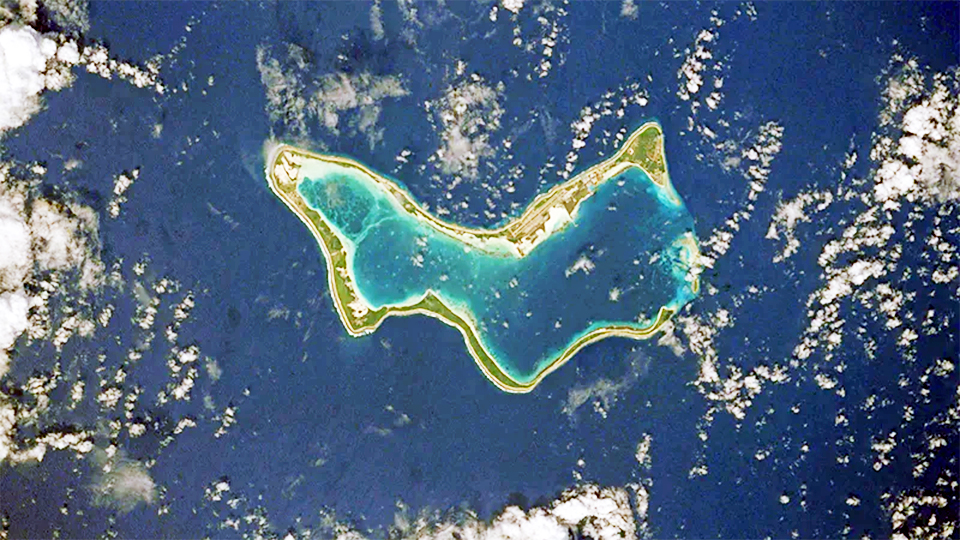 Diego Garcia, the largest island of Chagos, is home to a top-secret military base – Photo: Alamy
The base exists because, in the late 1960s and early 1970s, the indigenous population of Chagos — known as Chagossians or Ilois — were forcibly removed from their homeland. Families were relocated primarily to Mauritius and the Seychelles, often arriving with little support, compensation, or recognition. The displacement remains one of the most controversial chapters in Britain’s post-colonial history.
A sovereignty dispute reignited
The political dispute centers on ownership. Although Britain has administered the territory since 1814, Mauritius has long argued that Chagos was unlawfully separated from it before Mauritian independence in 1968.
In recent years, international legal bodies have questioned the UK’s continued administration. A 2019 advisory opinion by the International Court of Justice concluded that Britain should end its control of the islands. Diplomatic pressure mounted.
In 2025, the UK announced an agreement to transfer sovereignty to Mauritius while retaining operational control of Diego Garcia under a long-term arrangement with the United States. The move was welcomed by some as a step toward decolonization but criticized by others, including political figures in Washington concerned about strategic interests. The debate underscores how geopolitics, defense strategy, and post-colonial justice intersect in this remote corner of the Indian Ocean.
Ecological treasure
Beyond politics, Chagos is ecologically extraordinary. Its reefs are often described as among the least disturbed coral ecosystems remaining globally. With minimal commercial fishing and no mass tourism, marine life thrives. Sharks patrol reef edges. Giant manta rays glide through channels. Seabird colonies nest in vast numbers along undisturbed beaches.
For marine scientists, the archipelago serves as a living laboratory — a baseline against which degraded reef systems elsewhere can be compared. Yet even here, climate change looms. Coral bleaching events linked to rising sea temperatures have affected sections of the reef. Like the Maldives, Chagos is extremely low-lying, making it vulnerable to sea-level rise. Environmental groups caution that any future resettlement or tourism development must be carefully managed to preserve the fragile ecosystem.
The human question
For Chagossians living in diaspora communities, the issue is not only geopolitical — it is personal. Many elders who were removed decades ago have passed away without returning. Younger generations, born in Mauritius, Seychelles or the UK, continue to campaign for recognition, compensation and the right of return.
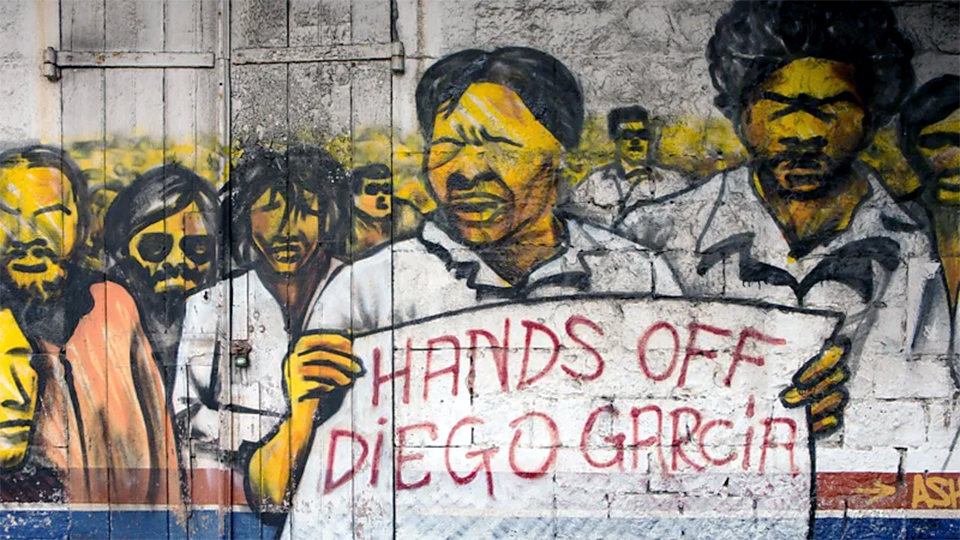 Many Chagossians long to return to the islands – Photo: Alamy
While proposals linked to the 2025 agreement suggest limited resettlement on outer islands, the continued restriction on settling Diego Garcia remains contentious. At its core, the debate asks difficult questions: Who belongs to a place? Can strategic necessity justify displacement? And how should historical injustice be addressed decades later?
What future for travel?
If Chagos ever opens to broader travel, it is unlikely to resemble mainstream island tourism. Policy discussions have previously explored tightly controlled, small-scale access — perhaps yacht-based tourism, scientific expeditions, or eco-lodges designed around sustainability principles. Mass-market resorts are improbable, both because of environmental concerns and geopolitical sensitivities.
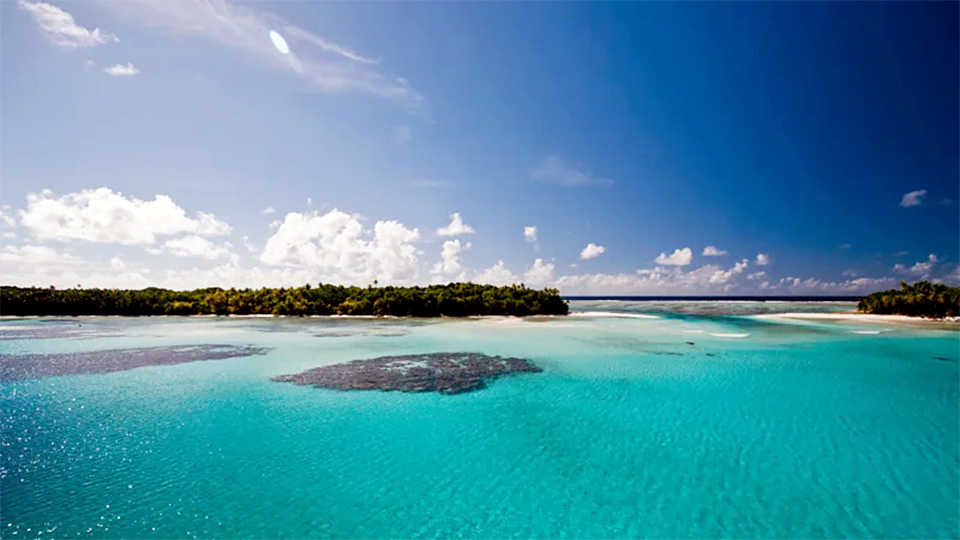 What the future holds for these islands only time will tell – Photo: Diane Selkirk
For Bangladesh’s growing outbound travel market, Chagos represents less a near-future destination and more a symbol — of how even the most idyllic landscapes can sit at the crossroads of global power politics.
Paradise with a question mark
In travel journalism, destinations are often framed as escapes — places removed from the noise of the world. Chagos challenges that notion. Its lagoons may be luminous and its beaches untouched, but its story is layered with history, displacement and diplomacy. It is a reminder that even in the most remote corners of the planet, paradise rarely exists outside politics.
Whether sovereignty shifts fully to Mauritius, whether Chagossians return in meaningful numbers, and whether limited eco-tourism becomes reality — all remain uncertain. For now, the Chagos Archipelago remains what it has long been: breathtaking, restricted, and emblematic of unfinished history in the Indian Ocean.



Download The Mobile App