

Top News
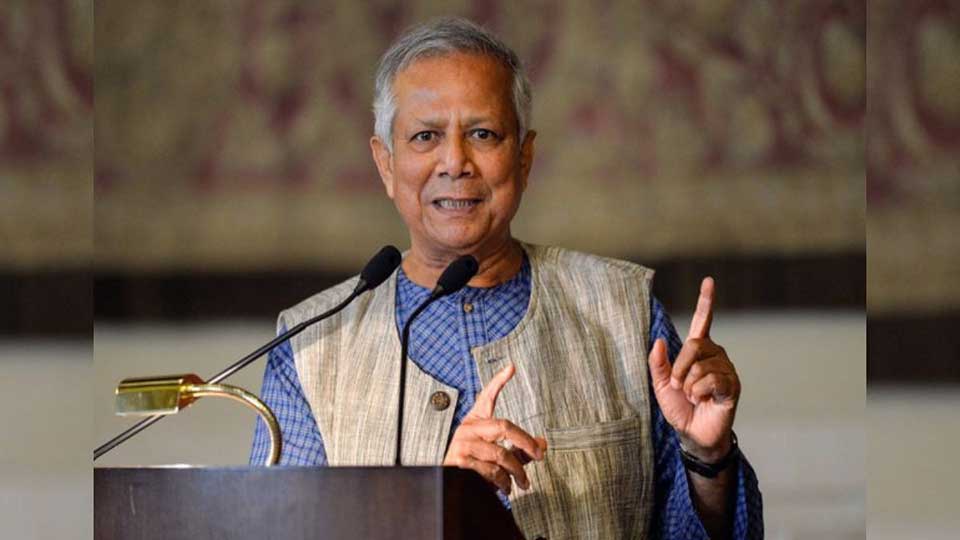
Dhaka: Chief Adviser Professor Muhammad Yunus on Sunday, February 8, directed authorities to take firm measures to prevent forgery and the use of fake skill development certificates, stressing that such practices are damaging Bangladesh’s reputation in the international labor market.
The directive was issued at a meeting of the Governing Body of the National Skills Development Authority (NSDA), held at the Chief Adviser’s Office in Tejgaon. The meeting marked the second Governing Body session of the NSDA since its establishment in 2018, following the first meeting held in 2022.
In his address as chair, Professor Yunus said the NSDA provides a strong framework for developing skilled human resources in line with national and global labor market demands, read a press release. He noted that as international demand for Bangladeshi workers continues to grow, the role of the authority will become even more critical.
“The global market has significant demand for Bangladesh’s workforce, but the credibility of our workers is being undermined due to certificate forgery and fraudulent practices,” the Chief Adviser said. Warning that a loss of trust among employers could derail skill development initiatives, he stressed that such malpractice must be stopped.
Emphasizing the importance of national branding, Professor Yunus said employers abroad should be confident that workers from Bangladesh are competent and reliable. He expressed hope that the NSDA’s initiative to introduce a unified and standardized certification system across all training institutions would play a vital role in curbing fraud.
The Chief Adviser also highlighted the creativity and potential of the country’s young generation, saying it is the government’s responsibility to open doors of opportunity for them. In this regard, he underscored the need for greater coordination and initiatives to enable private entrepreneurs to operate in a more transparent and effective manner.
The meeting reviewed the progress of decisions taken in the previous Governing Body session and agreed on establishing an integrated skills ecosystem. Under this system, training programs conducted by various ministries will follow a common curriculum and uniform standards. Once fully implemented, the framework is expected to enhance the credibility of Bangladeshi certificates in the international market, reduce wastage of public funds, and enable more effective, centralized planning for workforce development based on industry demand.
The Governing Body also approved NSDA’s long-term goals to address post-LDC graduation global challenges. Key priorities include conducting skills gap analyses in emerging sectors, bringing all development projects under NSDA curricula and competency standards, aligning the Bangladesh National Qualifications Framework (BNQF) with international benchmarks, and bringing workers from the informal sector under national certification through the recognition of prior learning.
Other issues discussed included the provision of Continuous Discharge Certificates (CDC) to trainees of the Institute of Marine Technologies (IMTs) under the Ministry of Expatriates’ Welfare and Overseas Employment.
The meeting was attended by Adviser for Shipping and Labour and Employment Brigadier General (retd) M Sakhawat Hossain, Adviser for Industries, Housing, and Local Government Adilur Rahman Khan, Executive Chairman of the Bangladesh Investment Development Authority (BIDA) Chowdhury Ashik Mahmud Bin Harun, the Principal Secretary to the Chief Adviser, the Executive Chairman of the NSDA, secretaries of various ministries, and senior government officials.
K