

Top News
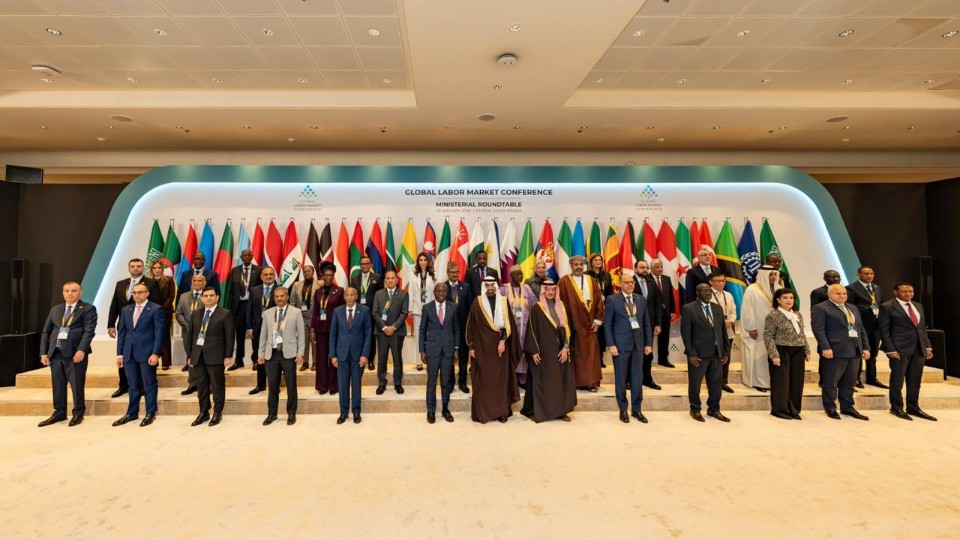
Dhaka: The third edition of the Global Labor Market Conference (GLMC) 2026 concluded on January 27 in Riyadh with the signing of 90 strategic agreements and memoranda of understanding aimed at strengthening labor markets and benefiting more than six million people worldwide.
Held at the King Abdul Aziz International Conference Center under the patronage of the Custodian of the Two Holy Mosques, King Salman bin Abdulaziz Al Saud, the conference brought together more than 10,000 participants, including 40 labor ministers and over 200 international experts from more than 100 countries, read a press release.
Organized by Saudi Arabia’s Ministry of Human Resources and Social Development (HRSD) under the theme “Future in Progress,” the two-day event focused on developing practical solutions to current and emerging labor market challenges.
The agreements signed during GLMC 2026 covered four key priority areas: skills development and leadership capacity-building through international training partnerships and professional accreditation; accelerating digital transformation and the use of advanced technologies and artificial intelligence; expanding flexible employment and freelance opportunities; and promoting sectoral and sustainable development partnerships that directly link training with labor market needs.
Vice Minister of Human Resources and Social Development for Labor, Dr. Abdullah bin Nasser Abuthnein, delivered the closing remarks, emphasizing that GLMC is designed as a year-round platform for continuous collaboration, partnership building, and knowledge exchange beyond the conference days.
As part of its research initiatives, GLMC released two major reports in cooperation with the World Bank. The first, “What Works for Work: A Guidebook to Proven and Promising Employment Solutions,” aims to support policymakers in designing effective labor market programs amid rapid economic and technological changes. The second report, “A Decade of Progress,” provides a comprehensive review of Saudi Arabia’s labor market transformation since the launch of Vision 2030, highlighting structural reforms that improved efficiency and inclusivity.
At the opening of the conference, Minister of Human Resources and Social Development Eng. Ahmed bin Sulaiman Al-Rajhi chaired a high-level ministerial roundtable attended by 40 labor ministers and the Director-General of the International Labour Organization (ILO), where participants agreed on six key measures to help shape the future of work.
GLMC 2026 also marked the graduation of the first cohort of the Labor Market Academy, consisting of 36 participants from 34 countries, and the launch of its second cohort with representatives from 31 countries. In addition, a policy hackathon was held focusing on first-job opportunities and improving employment system efficiency.
Side events included the celebration of the 10th anniversary of the “Musaned” platform and the launch of the Career Guidance platform by the Human Resources Development Fund.
The successful conclusion of GLMC 2026 highlights Saudi Arabia’s growing role in shaping global labor market policies through innovation, international cooperation, and workforce empowerment, setting the stage for continued reforms and collaboration in the years ahead.
K