

Top News

Dhaka : The interim government's tenure in the aviation sector leaves behind a mixed but consequential record. While its short mandate limited scope for large-scale transformation, it did manage to deliver several long-pending policy reforms that the industry had been demanding for years. At the same time, failure to operationalize major infrastructure projects, lingering safety lapses, and weak execution diluted the overall impact of those achievements.
Three decisions stand out as positives in the interim government's "amalnama" (record of deeds): the policy move to separate the Civil Aviation Authority of Bangladesh (CAAB)'s regulatory and operational roles, a long-awaited reduction in punitive airport surcharges imposed on airlines, and progress in easing blocked airline funds and remittance pressures. Yet these gains were accompanied by delays in opening the Third Terminal at Hazrat Shahjalal International Airport (HSIA), stalled international ambitions at Cox's Bazar and Sylhet, idle modernization investments, and a series of safety incidents that underscored persistent execution gaps.
Separating CAAB: A structural reform long overdue
The most significant policy decision taken during the interim government's tenure was the move to split CAAB into two distinct entities - an independent aviation regulator and a separate operator responsible for airport management and air navigation services.
The decision, formally communicated to CAAB by the Ministry of Civil Aviation and Tourism on January 28, addresses a structural flaw that had plagued Bangladesh's aviation governance for decades. Under the existing framework, CAAB simultaneously regulated aviation safety and operated airports and air navigation services, creating an inherent conflict of interest.
Industry stakeholders, aviation experts, and international bodies such as the International Civil Aviation Organization (ICAO) had long warned that this dual role undermined effective oversight. The issue was again highlighted in the investigation report of a high-level committee formed to probe the October 2025 fire at HSIA's cargo village, which pointed to regulatory weaknesses and poor enforcement of safety standards.
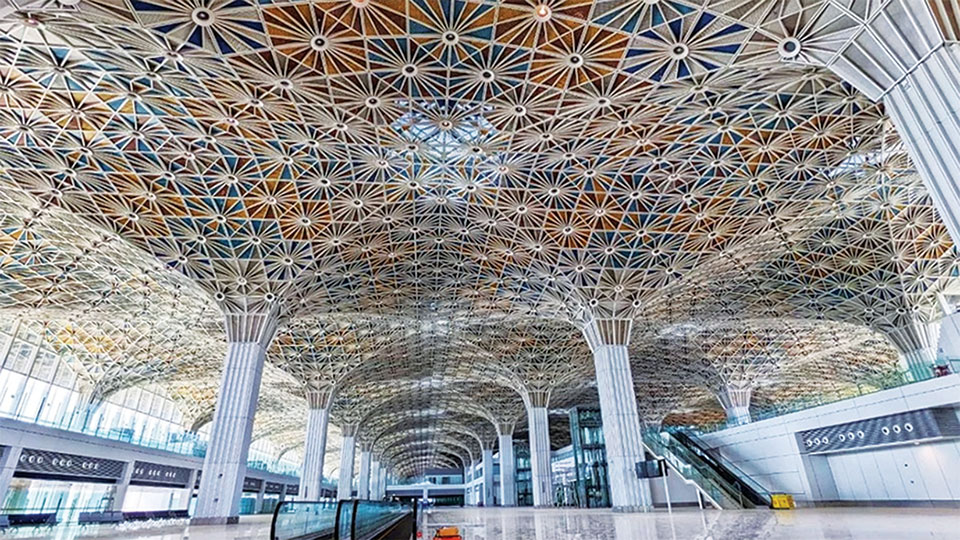
Interim govt failed to deliver on one of the most critical infrastructure milestones - the opening of HSIA's Third Terminal
The separation is widely viewed as mandatory for Bangladesh to achieve the US Federal Aviation Administra-tion's (FAA) Category 1 status under its International Aviation Safety Assessment program. Without Category 1, Bangladeshi airlines remain barred from operating direct flights to the United States and face restrictions on expanding code-sharing arrangements with US carriers. FAA requirements clearly stipulate that the regulator must be independent and free from operational control - a condition Bangladesh failed to meet for years.
Beyond international certification, stakeholders said, the reform will improve transparency, accountability, and service delivery, allowing regulators to focus on safety oversight while operators concentrate on efficiency, infrastructure, and customer service.
Airport surcharge cut: A lifeline for airlines
Another major achievement was the reduction of airport payment surcharges, a move hailed by airline operators as a breakthrough after years of financial distress.
Previously, airlines faced a surcharge of six percent per month on overdue aeronautical bills under the Civil Aviation Rules, 1984 - meaning unpaid dues could balloon by 72 percent annually. This punitive regime trapped airlines in a cycle where penalties far exceeded principal liabilities, contributing to the suspension or collapse of several private carriers.
Under the revised structure, airlines now have 30 days to clear bills without surcharge. Delays beyond that period attract gradually escalating penalties, with the effective annual surcharge capped at around 14.25 percent.
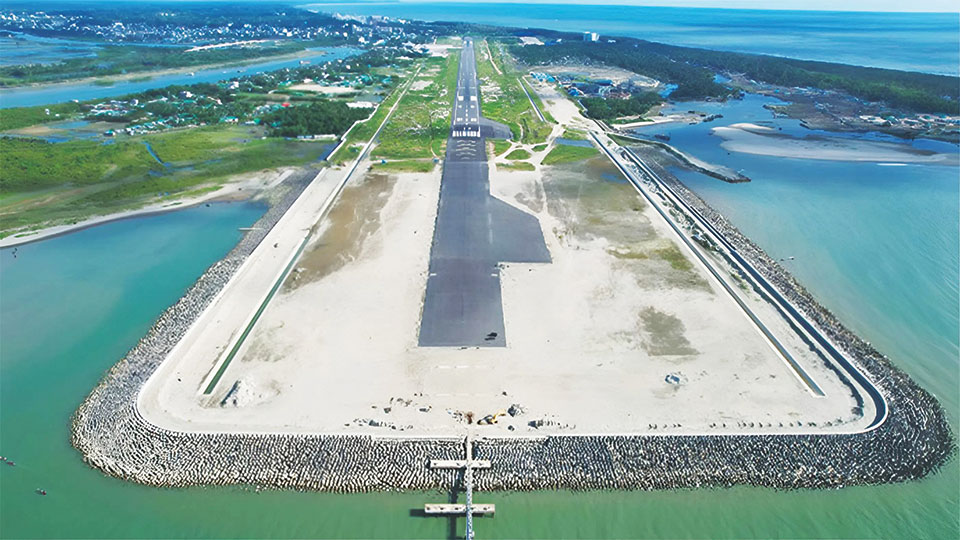
Without any scheduled international flight operation, Cox's Bazar Airport's international status was suspended
CAAB data show that total outstanding dues of local airlines stand at BDT 7,351.45 crore, of which nearly 78 percent consists of surcharges alone. Industry insiders said, the reform corrects a long-standing distortion and gives airlines much-needed breathing space to stabilize operations.
While immediate fare reductions are unlikely, airline executives believe improved cash flow will allow carriers to invest in fleet maintenance, on-time performance, and service quality, strengthening competition and sustainability in the domestic market.
Blocked airline funds: Measurable progress
The interim government also made progress in reducing blocked airline funds, a chronic issue linked to foreign exchange shortages and remittance restrictions.
Earlier in 2024, Bangladesh was among the countries with the highest levels of blocked airline revenues, estimated at over USD 320 million, according to the global airline body International Air Transport Association (IATA). By 2025, the amount of airline funds blocked in Bangladesh had fallen to around USD 32 million - a significant improvement compared to previous years.
Airlines said, easing repatriation pressures helped foreign carriers manage lease payments, fuel bills, and maintenance costs abroad, reducing the risk of flight cuts or market exits. Improved remittance flows are also seen as essential for sustaining international connectivity and restoring confidence among global airlines operating to Bangladesh.
T3 at HSIA: A costly asset sitting idle
Despite these reforms, the interim government failed to deliver on one of the most critical infrastructure milestones - the opening of the Third Terminal at Hazrat Shahjalal International Airport.
The terminal, built at an estimated cost of around BDT 21,000 crore, is one of the largest aviation infrastructure projects in Bangladesh's history. The bulk of the funding - roughly BDT 15,000 crore - came from a long-term loan from the Japan International Cooperation Agency (JICA).
Although construction is largely complete, the terminal remains unopened due to unresolved issues, including failure to appoint an operator and finalize operational readiness. The delay carries serious financial consequences. Loan repayment obligations have already begun, even though the terminal is not generating any revenue. Meanwhile, the government continues to incur maintenance costs, while warranties on sophisticated systems such as baggage handling and security equipment risk expiring unused.
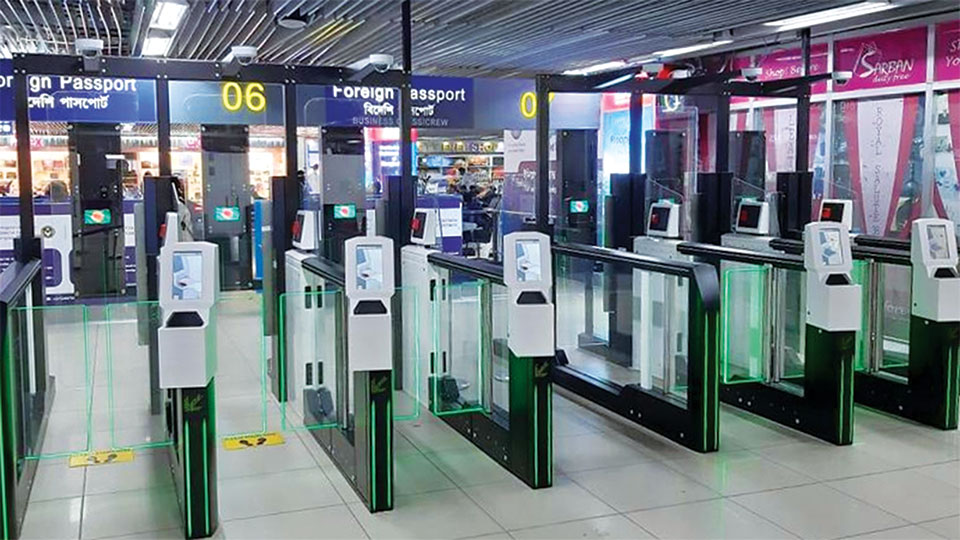
E-gates at HSIA, costing about BDT 34.55 crore, remain largely non-operational
Aviation analysts warned that each month of delay turns the terminal into a growing fiscal burden and deprives the airport of potential revenue from passenger charges, retail rents, landing fees, and expanded international operations.
Cox's Bazar Int'l Airport: Investment without returns
Cox's Bazar Airport was declared an international airport amid high expectations of boosting tourism and regional connectivity. However, no scheduled international flight has operated so far, and the international status was later suspended.
The airport upgrade - including runway expansion into the sea - has cost over BDT 1,700 crore, with the runway extension alone estimated at around BDT 1,500 crore. The failure to attract international airlines has raised concerns over planning, market assessment, and coordination between infrastructure development and commercial strategy.
Sylhet cargo operations stall
Sylhet's Osmani International Airport briefly launched international cargo operations, offering hope to exporters in the north-east. However, the service was soon halted, reportedly due to weak demand, lack of diversified cargo, absence of testing and packaging facilities, and logistical bottlenecks.
Business leaders say the suspension reflects poor preparation and a failure to build a sustainable cargo ecosystem beyond initial announcements.
Idle e-gates, safety concerns
At HSIA, modern e-gates installed under a project costing about BDT 34.55 crore remain largely non-operational, contributing little to easing passenger congestion. Frequent flyers and airport users see the idle e-gates as another example of infrastructure investment failing to translate into service improvement.
The interim government's record is defined by meaningful reforms but weak execution. Structural separation of CAAB, surcharge reduction, and easing of blocked airline funds addressed long-standing demands and laid groundwork for future progress. Yet delays in operationalizing infrastructure, underutilized investments, and unresolved safety issues tempered those gains.