
Top News
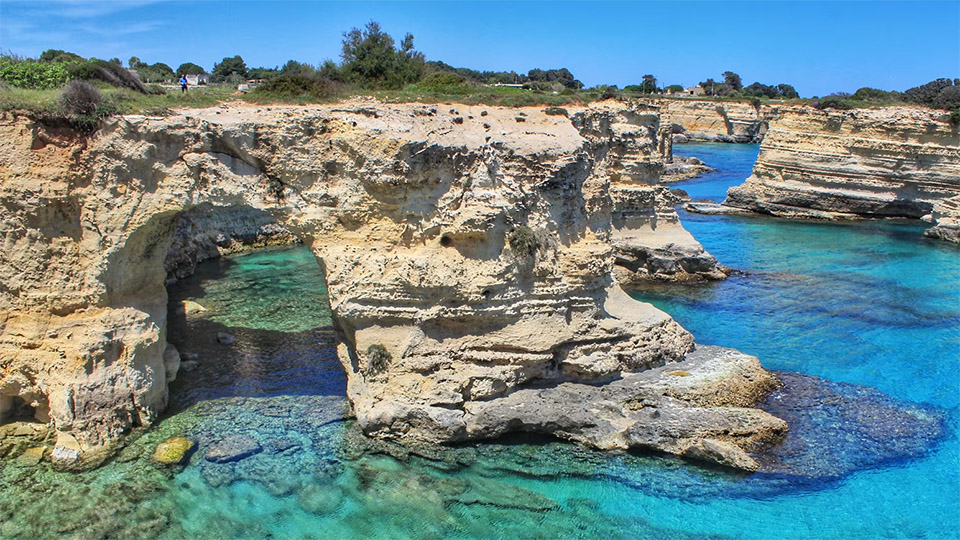
(Before) The stone arch on the coast of Salento has attracted romantically inclined couples for centuries – Photo: Sara Libetta/iStockphoto/Getty Image
Dhaka: A celebrated coastal landmark in southern Italy, long associated with romance and marriage proposals, has collapsed following severe storms that swept through the region over Valentine’s Day weekend.
The natural rock formation known as Faraglioni di Sant’Andrea, often called the “Lovers’ Arch,” once stood along the dramatic cliffs of Salento in the Puglia region — the heel of Italy’s boot. For generations, couples gathered beneath the stone arch to exchange kisses, pop the question, or mark anniversaries. Local lore held that a kiss shared under the arch guaranteed everlasting love.
That tradition came to an abrupt end when powerful winds and heavy seas battered the Adriatic coastline, causing the already fragile rock structure to give way. By the end of the storm, the arch had collapsed into rubble.
Maurizio Cisternino, Mayor of Melendugno, the municipality nearest to the site, described the loss as deeply personal for the community. Speaking to the media, he said the destruction represents not only emotional heartbreak but also a significant setback for local tourism.
Landmark shaped by nature, claimed by it
The arch was the product of centuries of natural erosion. Relentless winds and pounding waves gradually carved the calcarenite cliffs along Puglia’s Adriatic coast into the distinctive opening that became one of the region’s most photographed attractions. In earlier centuries, the cliffs served as lookout points to spot approaching pirates. By the late 1700s, however, the area had become synonymous with romance.
In recent years, social media amplified the site’s popularity, drawing thousands of visitors eager to capture engagement photos and sunset backdrops. Because the location was freely accessible, officials say there is no precise count of how many people visit annually. Hotels, guesthouses, and resorts — some named in homage to the arch — emerged nearby to cater to the steady stream of couples.
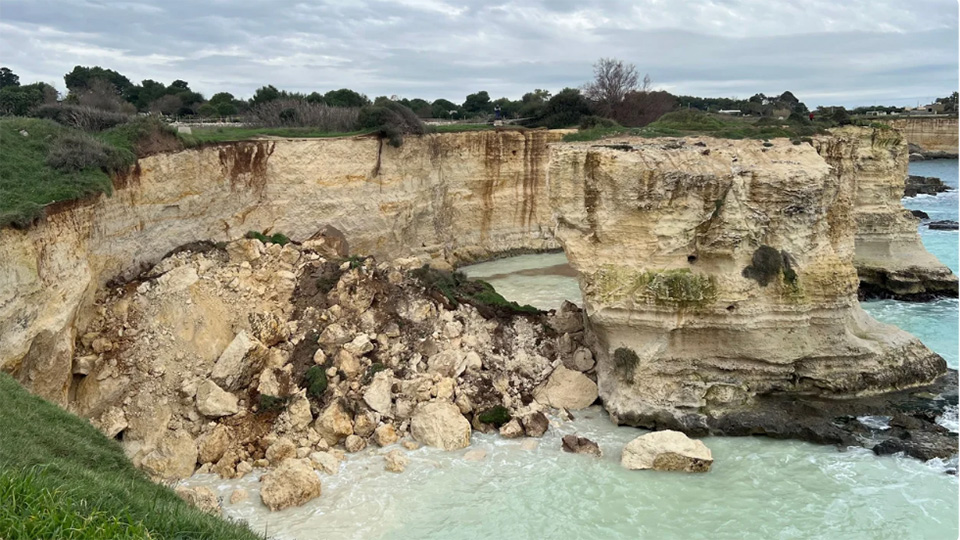 (After) The coastal landmark, celebrated for love, has collapsed following storms over Valentine’s Day weekend – Photo: Getty Images/Shutterstock
For many locals, the collapse carries deep sentimental weight. Lorenzo Barlato, who proposed to his wife overlooking the arch more than four decades ago, wrote online that he had looked forward to returning again. Now, he said, only photographs remain of what he called a small piece of paradise.
Warnings, extreme weather
The destruction did not come entirely without warning. Authorities had previously voiced concerns about the site’s vulnerability to coastal erosion. In 2024, local officials sought EUR 4.5 million in funding for preservation efforts but were unsuccessful in securing the grant.
Recent extreme weather appears to have accelerated the inevitable. Warmer sea temperatures linked to climate change are believed to intensify Mediterranean storms. The arch had already suffered structural damage during Cyclone Harry in January before the Valentine’s Day storm delivered the final blow.
“It was a tragedy we feared would happen one day,” Cisternino, a local, told Italian media, adding that the timing was unexpected. He later reflected that nature had both created and reclaimed the formation, noting that the coastline today looks very different from how it did decades ago.
Part of a wider pattern
The collapse comes amid a series of destructive weather events across southern Italy. In Sicily, landslides recently caused homes to tumble into a ravine in the town of Niscemi. Flooding elsewhere has resulted in fatalities, including a man killed when his house gave way near Rome.
What remains of the Lovers’ Arch will not be rebuilt. Local authorities said, the debris will gradually be carried out to sea by the tides. Puglia’s tourism councilor, Francesco Stella, likened the moment to a funeral — the end of an era for a place once considered among Italy’s most romantic settings.
With the arch gone, Salento loses not only a natural wonder but also a symbol woven into countless personal stories of love.
T