

Korean Air, Asiana finalize merger plan ending five-year saga

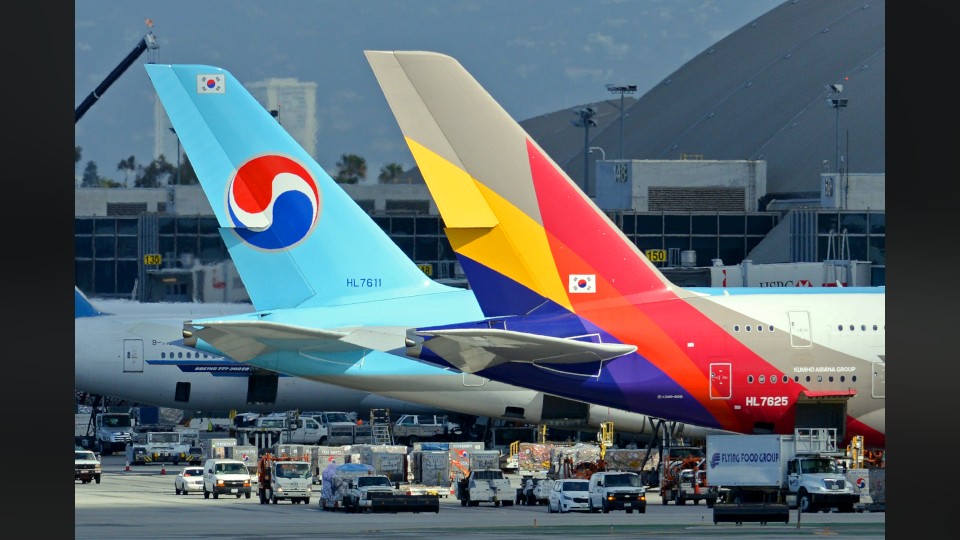
Dhaka: Korean Air and Asiana Airlines have approved their long-anticipated merger, setting December 17, 2026, as the date for Korean Air to emerge as South Korea's integrated flag carrier.
The boards of both airlines approved the merger agreement on May 13, with formal contract execution scheduled for May 14. Once complete, Korean Air will absorb all of Asiana's assets, liabilities, rights, obligations, and personnel.
The consolidation process traces back to November 2020, when Hanjin Group, the parent of Korean Air, first approved the acquisition of Asiana Airlines. At the time, the South Korean government and state-led creditors had provided KRW 3.6 trillion (USD 2.67 billion) in liquidity support to stabilize Asiana amid pandemic-driven losses.
Korean Air oversaw Asiana's financial and operational restructuring throughout the acquisition, including full repayment of public funds.
Merger terms
The merger ratio has been set at one share of Korean Air for every 0.2736432 shares of Asiana Airlines, calculated using a weighted average of closing prices over recent trading periods under Korea's Capital Markets Act. Korean Air's capital is projected to increase by approximately KRW 101.7 billion (USD 75 million).
Korean Air will conduct the transaction as a small-scale merger under Korea's Commercial Act. Under this provision, a board resolution will substitute for a general shareholder meeting, while Asiana Airlines will convene an extraordinary general meeting in August to approve the merger.
What comes next
Following contract execution, Korean Air will submit a merger application to the Ministry of Land, Infrastructure, and Transport. In June, the airline will apply for Operations Specifications amendments to standardize Asiana's aircraft and safety systems under Korean Air's existing Air Operator Certificate.
Once domestic approvals are finalized, Korean Air will file with international aviation authorities to align safety management systems and operational protocols across its expanded network.
Korean Air is also finalizing investments to support its expanded operation, including lounge renewals, catering updates, and terminal relocations. Flight crew training programs will be standardized across both carriers.
On the facilities side, the airline plans to remodel its Operations and Customer Center, Cabin Crew Training Center, and Aviation Health and Medical Center. MRO capacity will be expanded, including a new engine maintenance plant near Incheon International Airport.
Five years in the making
The merger required regulatory approvals from over a dozen jurisdictions, arriving in stages across multiple years. Turkish, Taiwanese, Thai, Philippine, Malaysian, and Vietnamese approvals came in 2021; Singapore, South Korea, Australia, and China followed in 2022; the United Kingdom in 2023; and Japan, the European Union, and the United States in 2024.
Korean Air completed its acquisition of a 63.88% stake in Asiana in December 2024. The May 14 contract execution marks the final major step before the two airlines formally become one.
V