

Top News

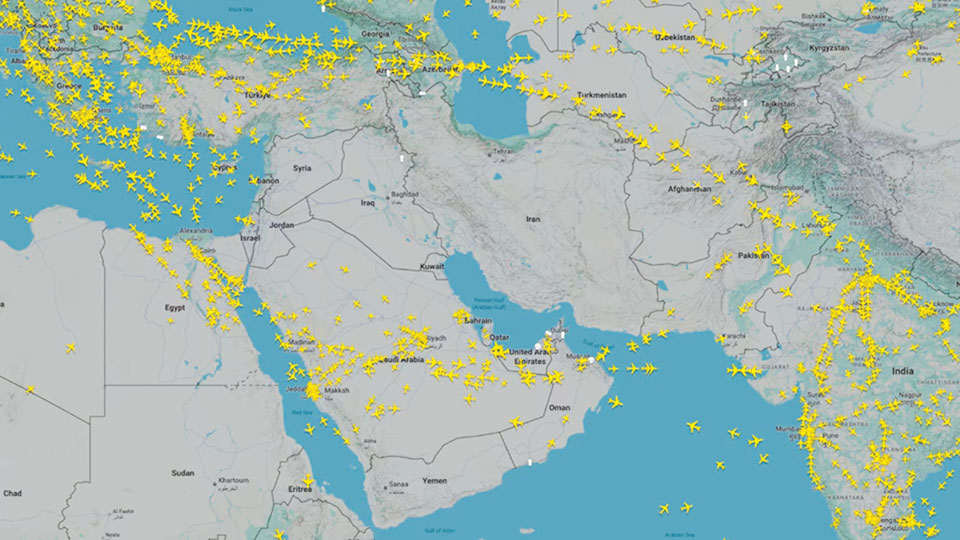
Dhaka : The ongoing conflict in the Middle East has begun to inflict significant economic damage on Bangladesh's aviation and travel-related industries. With the Gulf region serving as one of the most important air travel corridors for Bangla-desh, the sudden suspension and cancellation of flights have created a ripple effect across airlines, airports, hotels, and several service sectors.
As of March 13, 2026, a total of 447 flights between Dhaka and various Middle Eastern destinations have already been cancelled, according to the Civil Aviation Authority of Bangladesh (CAAB). The number is expected to rise sharply over the next few days, potentially reaching around 500 cancelled flights by March 15, as airlines continue to adjust their schedules in response to safety concerns and operational disruptions caused by the war.
The consequences of these cancellations are being felt most directly by CAAB and the national carrier Biman Bangladesh Airlines, both of which rely heavily on revenues generated from international flight operations.
Losses from airport, ground handling services
Every international flight operating to and from Dhaka generates multiple streams of income for airport authorities and service providers. These include landing and parking fees, aeronautical navigation charges, passenger service charges, security fees, and ground handling services.
In Bangladesh, ground handling services for all foreign airlines are provided by Biman Bangladesh Airlines, making the national carrier directly affected by any drop in international flight movements.
Industry estimates suggest that airlines typically pay around USD 7,000 in combined charges for a narrow-body aircraft and about USD 12,000 for a wide-body aircraft during a standard turnaround at Dhaka airport.
Based on current projections, of the approximately 500 cancelled flights, around 185 were narrow-body aircraft and 215 wide-body aircraft, with the remainder representing mixed operations.
A rough calculation indicates that the combined loss from aeronautical and ground handling charges alone could reach approximately USD 4-5 million within just a few days. This represents a substantial blow to both CAAB's operational revenue and Biman's ground handling income.
Biman spokesperson Boshra Islam said, they are not only losing ground handling fees but also the revenue generated from air ticket sales.
How airlines are losing revenue from cancelled flights
The conflict has already begun affecting private airlines in Bangladesh.
Kamrul Islam, General Manager (Public Relations) of US-Bangla Airlines, said the airline is losing around 600-700 returnee passengers daily due to reduced Middle East operations.
Previously, the airline operated multiple flights to Dubai, Abu Dhabi, and Sharjah. However, flights to Sharjah and Abu Dhabi remain suspended, while services to Qatar have also been halted. The airline has announced that flights on the Sharjah route will resume from April 13, followed by Abu Dhabi from April 14.
Kamrul added that with an average one-way airfare of around BDT 50,000, the airline is losing a substantial amount of revenue each day.
Meanwhile, domestic airlines are also feeling the impact due to a decline in transit passengers.
Sohel Majid, Director (Marketing and Sales) of NOVOAIR, said, ticket cancellations have risen sharply on Sylhet route.
"Each Sylhet flight now sees 20-25 ticket refunds, nearly 40 percent of our passenger load," he said.
Many of these passengers previously traveled via Middle Eastern carriers to destinations in Europe and elsewhere. With flights through Gulf hubs reduced, demand for domestic transit travel has dropped significantly.
However, Majid noted, the impact remains manageable as NOVOAI operates on a smaller network, currently serving Cox's Bazar, Sylhet, Saidpur, and Chattogram routes.
Hotel sector also feels the impact
The disruption has also struck the hospitality industry in Dhaka, particularly hotels that regularly host airline crews during overnight layovers.
Many Middle Eastern carriers operating wide-body aircraft typically schedule crew layovers in Dhaka, with flight crews spending a night at city hotels before continuing their return journeys.
A standard wide-body aircraft usually carries around 12 to 15 crew members, including pilots and cabin crew.
With approximately 215 wide-body flights cancelled, an estimated 3,000 crew room nights have been lost in Dhaka hotels.
Given that the average cost of accommodation, meals and related services for an airline crew member can reach around USD 250 per person per night, the total loss to the hotel sector is estimated at about USD 750,000.
Several leading hotels in Dhaka, including Inter-Continental Dhaka, Pan Pacific Sonargaon Dhaka, Le Méridien Dhaka, and Radisson Blu Dhaka Water Garden traditionally host airline crews and are among those feeling the impact.
Hoteliers said, the business loss is not only related to the decline in airline crew stays but also to the aftereffects of the war, including the cancellation of various international events and a drop in business travelers.
Star hotels have lost around 25-30 percent occupancy since the Middle East war began on February 28.
A general manager of a five-star hotel in Dhaka said, they have faced cancellations worth around BDT 70 lakh over the past 10 days, equivalent to roughly 10 percent of the hotel's projected monthly revenue.
Government revenue from passengers falls too
The cancellation of hundreds of flights has also reduced government income derived from passengers traveling abroad.
Each international passenger departing Bangladesh pays a number of taxes and fees, including travel tax, embarkation fees, security charges, and excise duties. On average, these charges collectively amount to about USD 45 to USD 55 per passenger.
Assuming an average of around 250 passengers per flight, the cancellation of 500 flights translates to approximately 125,000 passengers who could not travel during this period.
Based on these estimates, the government could lose over USD 6 million in passenger-related taxes and fees as a result of the disruption.
Airport retail, transport services also hit
The drop in passenger traffic is also affecting businesses operating within and around airports.
Duty-free shops, airport restaurants, retail outlets, and service counters depend heavily on international passengers. With tens of thousands of passengers unable to travel, spending at these facilities has dropped significantly.
Industry estimates suggest that passengers typically spend around USD 20 to USD 30 per person on retail purchases, food, and other services at the airport.
Using a conservative estimate of USD 25 per passenger, the loss to airport retail businesses could reach over USD 3.1 million.
In addition, transportation providers - including airport taxis, limousine services, ride-sharing operators, and logistics companies - are also losing income due to the sudden reduction in airport activity.
Total economic impact
When all these factors are considered together, the financial impact becomes substantial.
Preliminary estimates suggest that Bangladesh has faced total revenue losses approaching USD 15-16 million within just a few days of disruption in aviation operations.
These losses span multiple sectors including aviation authorities, airlines, hospitality businesses, retail operators, transportation providers, and government revenue streams.
A vulnerable aviation corridor
Bangladesh's aviation sector is particularly sensitive to disruptions in the Middle East because of the country's strong travel links with the Gulf region. Millions of Bangladeshi migrant workers live and work in countries such as Saudi Arabia, the United Arab Emirates, Qatar, Kuwait, and Oman, making these routes among the busiest international corridors for Dhaka.
Airlines from the Gulf region also account for a significant share of passenger and cargo traffic at Hazrat Shahjalal International Airport.
If the conflict persists and flight disruptions continue, the economic impact on Bangladesh could grow even larger in the coming weeks.
For now, aviation stakeholders are closely monitoring developments, hoping stability returns soon to one of the most vital regions for Bangladesh's international air connectivity.