

Top News
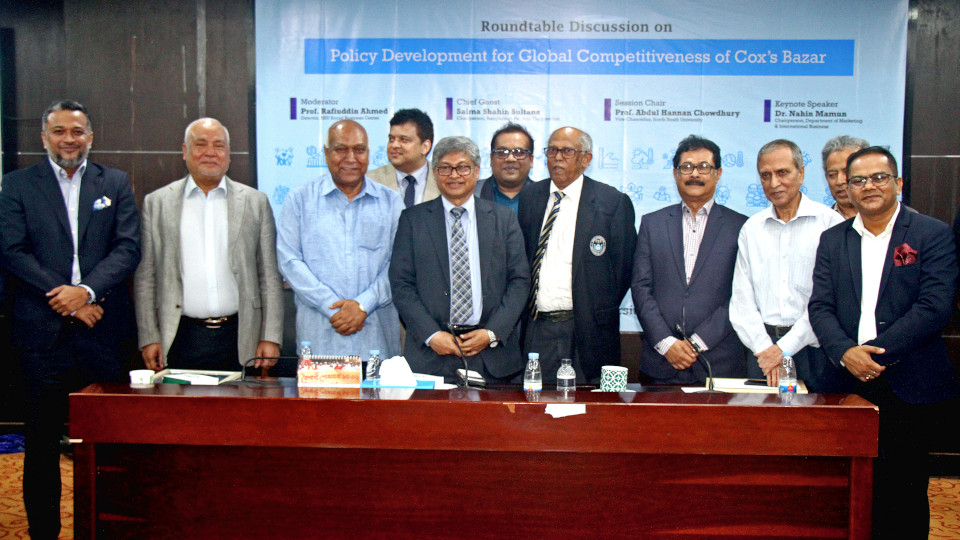
Dhaka: North South University (NSU) hosted a roundtable discussion titled “Policy Development for Global Competitiveness of Cox’s Bazar” on April 29 at the university's premises in the capital. The event brought together policymakers, academics, and industry experts to explore sustainable pathways for transforming Cox’s Bazar into a globally competitive destination.
Saima Shahin Sultana, Chairman of Bangladesh Parjatan Corporation, attended the discussion as the Chief Guest, while Professor Abdul Hannan Chowdhury, Vice Chancellor of NSU, chaired the session. The roundtable was moderated by Dr. Rafiuddin Ahmed, Director of NSU Social Business Center. Dr. Nahin Mamun, Chairperson of the Department of Marketing and International Business, delivered the keynote address.
Akhtaruzzaman Khan Kabir, former Chairman of Bangladesh Parjatan Corporation; Mofizur Rahman, Managing Director of Novoair; Professor AKM Waresul Karim, Dean of the School of Business and Economics at NSU; Dr. Santush Kumar Deb, Professor of the Department of Tourism and Hospitality Management at Dhaka University; Jamiul Ahmed, former Chairman of Tourism Developers Association of Bangladesh and Centre for Tourism Studies (CTS); and Kazi Wahidul Alam, Editor of The Bangladesh Monitor, were present among the distinguished participants.
The keynote address focused on five instruments for enhancing the global competitiveness of Cox's Bazar: 1. Bangladesh Muslim-Friendly Hospitality Standard, 2. Integrated Coastal Zone Management and Single Window Authority, 3. Special Tourism Zone (STZ) and Sovereign Blue Bond, 4. Industrial Repurposing and Local Tourism First Policy, and 5. Open Skies, Long-Stay Visa and Fintech Integration.
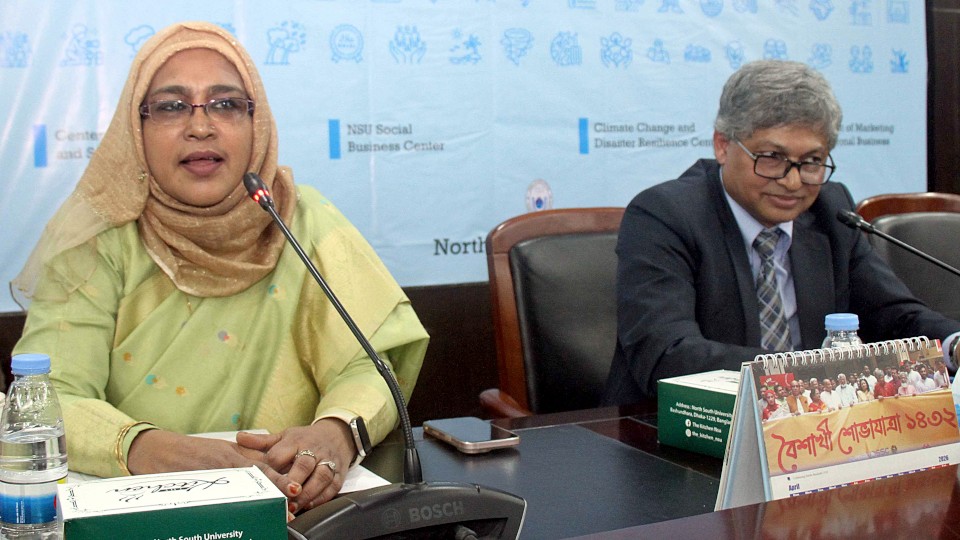
The discussants shared their insights on these instruments and deliberated on practical implementation strategies and challenges regarding tourism development. They also presented relevant statistics, identified shortcomings, and offered recommendations. Policy level changes, diversified amusement facilities, modern and sustainable infrastructure, digital integration, proper branding and marketing efforts, and environmental sustainability measures were highlighted as key priorities.
In her speech as the chief guest, Sultana said Cox's Bazar could be a promising destination. It has untapped potential. However, overtourism and poor governance, along with environmental degradation, inadequate waste management, and lack of responsible practices, have hindered its development. She emphasized coordinated efforts to transform Cox's Bazar and the overall tourism sector landscape of Bangladesh.
Session chair Professor Chowdhury said Cox’s Bazar is overrated compared to global standards due to weak governance, poor planning and policymaking, and lack of a proper tourism ecosystem. He stressed improving connectivity, safety, and services, encouraging entrepreneurship and private sector investment, protecting the environment, and focusing on realistic, locally competitive strategies rather than global comparisons to ensure sustainable tourism development.
The roundtable discussion was jointly organized by Center for Social Impact and Sustainability (CSIS), Social Business Center (SBC), Center for Climate Change and Disaster Resilience (CDR), and the Department of Marketing and International Business of North South University.
V