

While this budget prioritizes deep-impact projects over broader operational spending, stakeholders doubt it is insufficient to pull off govt's development plans
Stakeholders worry lower budget to impact already underdeveloped sector
MoCAT receives less budget for FY'25-26 than last fiscal

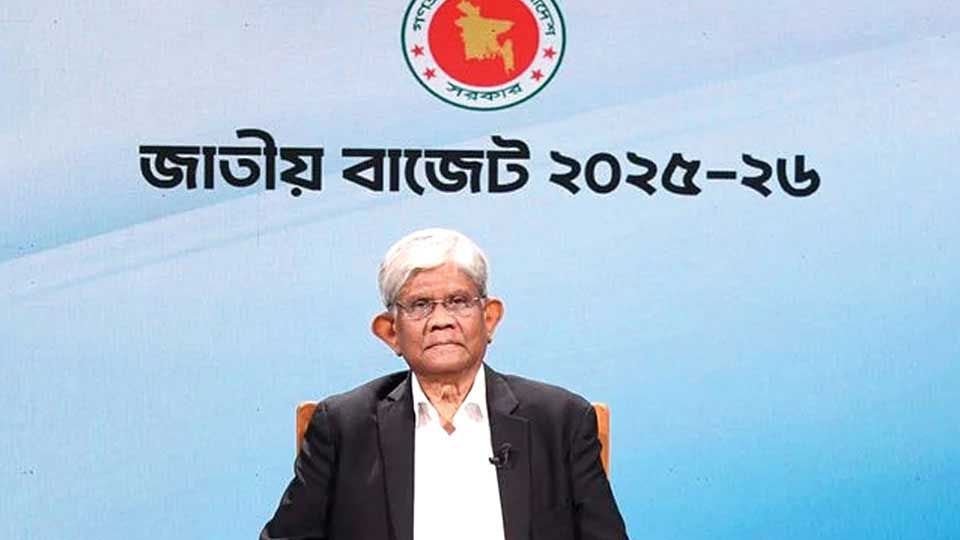
Dhaka : The Ministry of Civil Aviation and Tourism has been allocated with BDT 2,455 crore budget for the fiscal year 2025-2026, announced on June 2, marking a significant decrease-almost half-from the revised allocation of BDT 4,878 crore in FY-2024-25. The leaner FY-2025-2026 allocation reflects a strategic shift to prioritize deep-impact projects over broader operational spending by the government. However, industry stakeholders worry the lower budget for the coming fiscal will severely impact the already underdeveloped sector, as it is not enough to pull off the development initiatives the government itself promises.
Of the total budget allocation for the coming fiscal year, BDT 2,401 crore has been allocated for ADP (development) and BDT 54 crore for operational expenses. Compared to the revised FY-2024-25 allocation of BDT 4,878 crore, this marks a significant decrease, though the earlier original FY-2024-25 budget was even higher at BDT 5,695 crore. Hence, industry stakeholders worry the final budget allocation for civil aviation and tourism could be even lower than the currently proposed one.
What this budget means for aviation
Airlines operating in the country will be enjoying some fuel and leasing incentives from now onwards. For instance, customs duty on jet fuel and aviation spirits have been cut to 3-10 percent, while VAT has been waived on aircraft lease rent. These measures aim to lower ticket prices and bolster both national and private carriers.
Furthermore, the government promises to focus on developing the aviation infrastructure of the country. For instance, funds are flowing into runway widenings, terminal expansions, and cargo operations at key airports like Dhaka, Cox's Bazar, Sylhet, and Chattogram, plus rollout of modern security systems. These build on prior investments such as Dhaka Airport's new Terminal Three and Cox's Bazar Airport's runway extension.
However, Kamrul Islam, General Manager-Public Relations, US-Bangla Airlines, talking to The Bangladesh Monitor, stressed that the lower budget of the coming fiscal will be insufficient to implement these large-scale development plans of the government.
Furthermore, many long pending demands of the airlines operating in the country are still left ignored-which, otherwise, would have helped the industry flourish further, claimed Kamrul Islam. For instance, he mentioned, the aeronautical charges in Bangladesh for landing, parking, security, and route navigation are still way higher than the neighboring countries.
On the other hand, surcharges in Bangladesh are still through the roof-72 percent a year-compared to other countries in the region where those are 12-18 percent a year. Earlier, country's aviation stakeholders had urged the government to reduce surcharge to 12 percent a year but to no avail, informed Kamrul Islam.
Another move to bring down airfare could be further repatriation of airline blocked funds, stressed Kamrul Islam. As foreign airlines operating in Bangladesh are unable to fully repatriate funds due to the US dollar crisis prevalent in the latter, carriers are cutting flights to and from the country. This is leading to more passenger pressure and demand for the other airlines, resulting in higher airfare overall.
It may be mentioned here, as of end April 2025, Bangladesh has seen the amount of airline blocked funds reduce to USD 92 million from USD 196 million in October 2024, according to the International Air Transport Association. However, the nation still stands among the top five countries (fifth to be exact, compared to third previously) blocking majority of the total blocked airline funds globally.
What it means for tourism
As part of the government's long-term vision for the tourism sector, it is moving ahead with its 25 year Tourism Master Plan, targeting eco-, heritage-, and business-tourism pillars. Funded projects span diverse locations: Tanguar Haor, Nijhum Island, Sundarbans, Pahar-pur, and Padma Bridge area. Destination Management Organizations are being established, alongside certification and special training programs for tour guides and operators. In a month or so, Bangladesh Tourism Board is expected to announce the final version of the Tourism Master Plan, according to tourism sector representatives.
However, apart from that, tourism alone fares poorly in the 2025-2026 national budget, said industry insiders. According to them, tourism has always been less prioritized, while aviation has been more valued, in terms of allocating budget for the respective sectors.
Taufiq Rahman, Chief Executive of Journey Plus (tour operator/DMO), talking to The Bangladesh Monitor, said, the budget allocated for tourism is decreasing year on year.
This could be because the Finance Ministry cannot have faith in national tourism organizations and the concerned ministry representatives to effectively utilize more budget allocated for the development of the sector, expressed Taufiq Rahman.
By halving this year's budget compared to the previous year, it is evident the government does not see much promise in the sector or the proposals of the national tourism organizations working to develop the industry, he informed.
He also fears, the national tourism organizations will refrain from attending global travel fairs abroad due to the budget cut in the coming fiscal year.
Already the country with immense tourism potential is suffering from zero to poor marketing and branding activities, due to lacking enough budget for such promotional works. With more budget cuts, the situation will only worsen, claimed Taufiq Rahman.
Currently, it is paramount for the tourism sector to hugely invest on infrastructure, connectivity, facilities, as well as manpower recruitment and training, urged Taufiq Rahman.
Discrepancy between plans, budget
While the overall allocation is smaller than the previous fiscal's, the bulk of the budget is supposed to target capital projects-primarily the ADP-reflecting a shift from broad operations to strategic, infrastructure-led investment.
Despite the headline reduction in funding, the government's narrative emerging from the FY-2025-26 budget is one of focused transformation: carrying forward long-term aviation infrastructure upgrades; realigning budgets toward capital investment rather than recurring expenses; and laying the groundwork for a sustainable tourism push across key ecological and heritage sites.
However, industry stakeholders doubt the government's aim of strategic recalibration. They fear, the story might not stay true to the government's vision of "lower in quantity, but richer in purpose".