
Top News
Dhaka: The 1,000-bed Bangladesh–China Friendship General Hospital in Nilphamari will not only serve people of northern Bangladesh but is also expected to emerge as a major medical tourism destination for patients from neighboring countries, Chief Adviser Professor Muhammad Yunus has said.
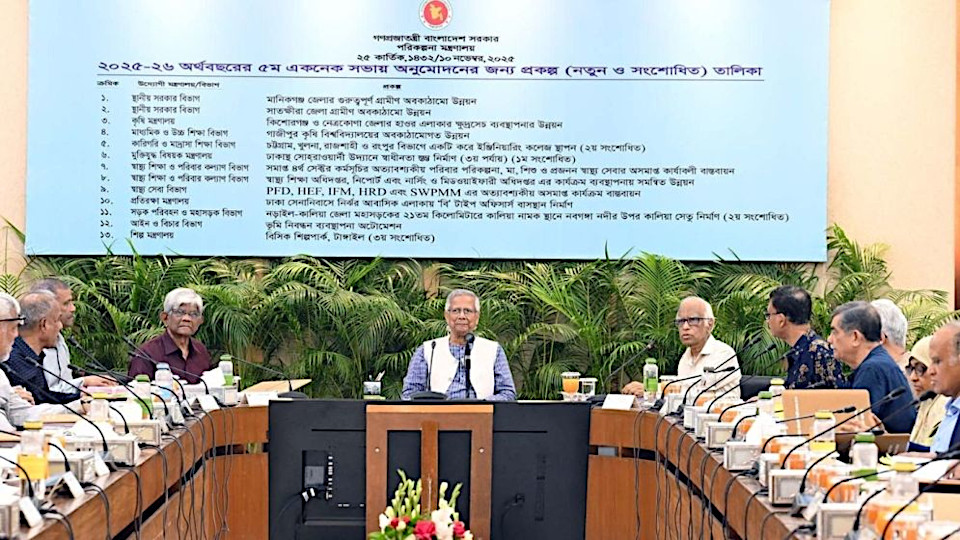
Speaking at the meeting of the Executive Committee of the National Economic Council (ECNEC) on Sunday, after approval of the project, Professor Yunus said the hospital would open up new opportunities for medical tourism in Bangladesh, read a press release of the press wing of CA.
“Once implemented, this hospital will attract patients not only from within the country but also from neighboring nations such as Nepal and Bhutan seeking advanced and specialized treatment,” the chief adviser said.
He noted that with modern infrastructure, state-of-the-art medical equipment, and specialized healthcare services, the Nilphamari hospital has the potential to develop into a regional healthcare hub in South Asia. This, he added, would reduce Bangladesh’s reliance on overseas treatment while creating new economic opportunities through the inflow of foreign patients.
The ECNEC meeting was chaired by Chief Adviser Professor Muhammad Yunus. Under the initiative of the Health Services Division of the Ministry of Health and Family Welfare and implemented by the Directorate General of Health Services, the project will be carried out from January 2026 to December 2029.
The total estimated cost of the project is Tk 24.5935 billion, of which Tk 1.7927 billion will be financed by the Bangladesh government, while the remaining amount will be covered by Chinese grant assistance.
Under the project, a modern 10-story hospital building will be constructed in Nilphamari Sadar Upazila, along with dormitories and residential facilities for doctors, nurses, and healthcare workers; a director’s bungalow; necessary auxiliary infrastructure; and advanced medical equipment.
The hospital will provide specialized services in nephrology, cardiology, oncology, neurology, and other disciplines. It will also feature a modern emergency department, ICU, CCU, and HDU facilities, advanced diagnostic services, and fully equipped operation theaters to ensure treatment for complex and long-term illnesses.
Highlighting the broader impact, the Chief Adviser said the hospital would help reduce excessive pressure on Dhaka- and Rangpur-based medical facilities and promote decentralization of healthcare services.
“This initiative is not just an infrastructure project; it is a strategic investment in improving the quality of healthcare and positioning Bangladesh as a credible destination for medical tourism in the region,” he said.
Once operational, the hospital is expected to create significant employment opportunities, with plans to recruit around 893 doctors, 1,197 nurses, and 1,410 other staff members. The government believes the project will reduce treatment-related costs and travel hardships for millions of people in the northern region while bringing long-term, sustainable improvements to the country’s healthcare system.
Officials added that with international-standard facilities and specialized care, the Nilphamari Bangladesh–China Friendship Hospital could play a key role in establishing Bangladesh as a reliable and attractive medical tourism hub in South Asia.
K
Share this post
Also on Bangladesh Monitor