
Top News
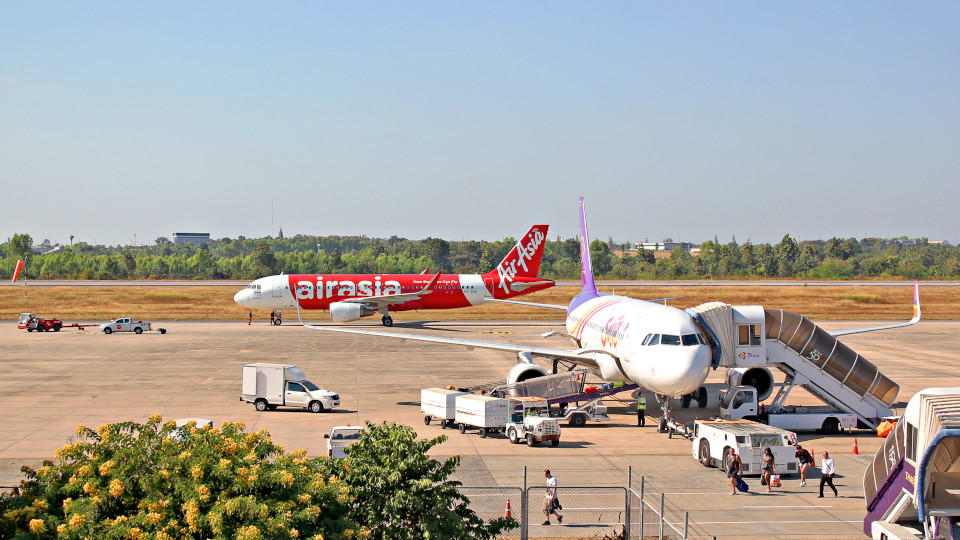
Dhaka: The Civil Aviation Authority of Thailand (CAAT) said the country’s aviation industry watched a total of 145.1 million passengers last year, including 67 million domestic and 78 million international travelers. The total figure represents a 3.54% increase year-on-year, adding 4.9 million passengers.
The numbers are still lower than pre-pandemic levels in 2019, when Thailand had seen a higher number of Chinese visitors. However, the shortfall was partially offset by visitors from Central Asia, the Middle East, and faraway countries.
The CAAT noted international conflicts, heightened geopolitical tensions, and airspace restrictions due to the disputes between Pakistan and India, Israel and Iran, and Russia and Ukraine were the key challenges in 2025, which placed additional pressure on airlines worldwide.
Despite these constraints, Thailand’s aviation sector demonstrated resilience and improved efficiency throughout the year. Passenger numbers stood at 161.81 million in 2019, fell to 140.6 million in 2024, and rose again to 145.1 million in 2025, reflecting a continued recovery trend.
New high-growth destinations were added during the year, particularly in Oceania. Australia recorded 1.77 million passengers, while new direct routes were launched linking Thailand with Pacific Island nations, helping diversify the country’s tourism base.
India and Russia remained key source markets. India recorded 5.95 million passengers, surpassing its 2019 level of 4.85 million, while Russia accounted for 4.22 million passengers, CAAT data showed.
Thai airlines operated 238 aircraft in 2025, compared with 279 in 2019, yet still managed to handle 92% of pre-Covid domestic passenger volumes. Chinese passengers recovered to around 75% of pre-pandemic levels during the high season at year-end.
Looking ahead, Thailand’s aviation industry will place stronger emphasis on environmental sustainability, complying with the International Civil Aviation Organization’s Carbon Offsetting and Reduction Scheme for International Aviation (Corsia) and expanding the use of sustainable aviation fuel.
V
Share this post
Also on Bangladesh Monitor