
Top News
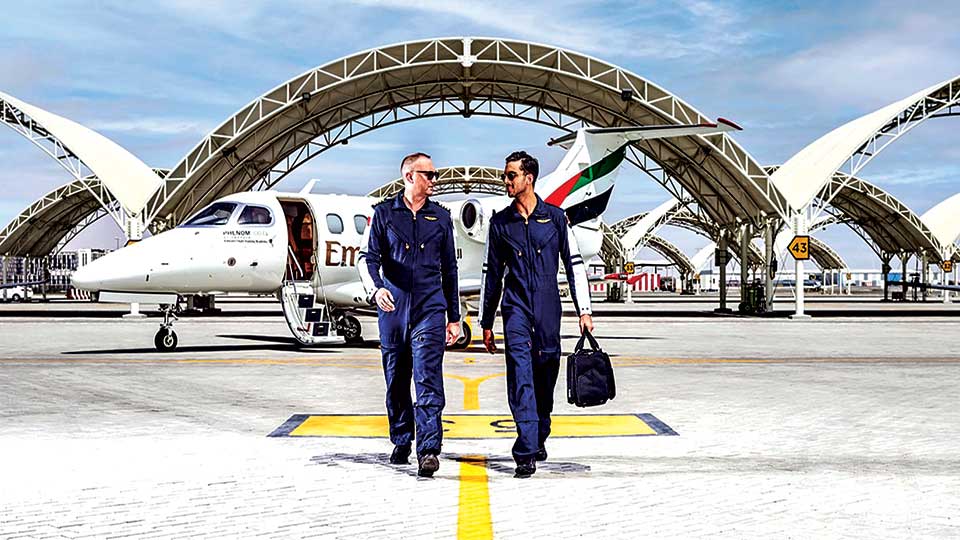
Dhaka : Boeing predicted the global need for 804,000 pilots between 2020 and 2040 while noting the demand for corporate pilots is expected to grow by 5 per cent annually. This leaves a global gap of 34,000 pilots by 2025 while Asia Pacific, with a faster growth trajectory is projected to have a shortage of 23,000 pilots by 2029. On top of it, there have been recent instances that showed the country's national carrier Biman Bangladesh Airlines suffering severely from the lack of quality pilots. In this context, the state-of-the-art Emirates Flight Training Academy in Dubai can come to the rescue.
Explore the Emirates Flight Training Academy (EFTA) in Dubai South, Dubai World Central (DWC), which offers facilities like their own 1 million sqft long airport, dedicated fully lighted 1800 m long runway, 24/7 operations, ILS capability, parallel taxiway, 24 parking bays all shaded soon to be extended to 36, air traffic control tower, fire and rescue services, maintenance hangar, GPS landing system, MRO, and five state-of-the-art simulator facilities, which no cadet will find in Bangladeshi flying schools.
Capt Abdulla Al Hammadi, Vice President of EFTA said this recently at a media briefing at his office in Dubai.
Emirates arranged a trip for aviation and tourism reporters from five media houses in Bangladesh to get a first-hand experience about the airline's operations, flight training academy and SkyCargo facilities.
"The challenging ATPL (Airline Transport Pilot License) programme uses the latest cutting edge technology with bespoke software created by Boeing for EFTA. Through a mix of self-learning and training with our experts, the course takes you from zero flying hours to the level of first officer - with the exclusive chance to apply to Emirates straight from graduation," added Al Hammadi.
Using state-of-the-art technology and flight training in advanced multiengine aircraft, one can learn the skills to fly a Boeing 777 aircraft to the level of a commercial airline pilot, he further mentioned.
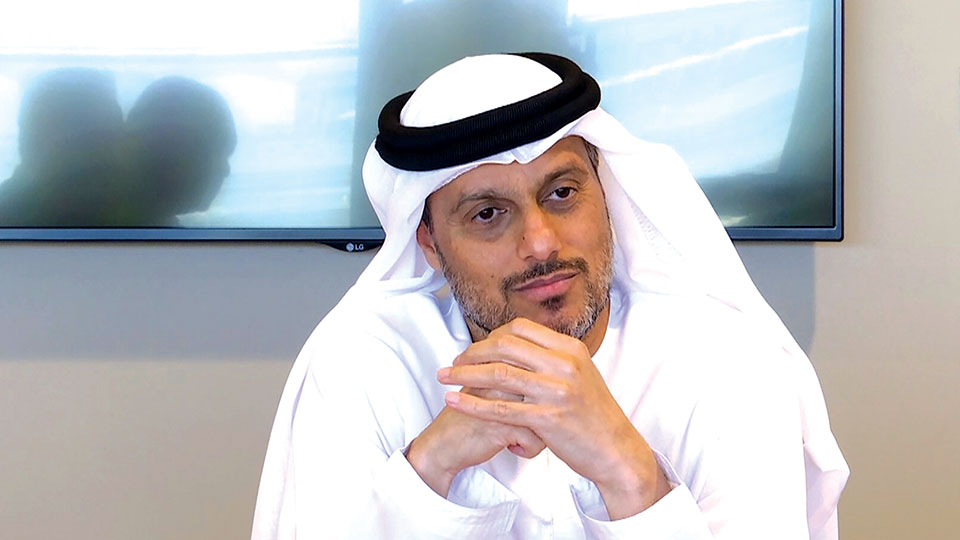 Capt Abdullah Al Hammadi
There are at least 27 aircraft under EFTA, including 22 Cirrus SR22 G6, which is the backbone of the EFTA fleet. Besides, EFTA has five Embraer Phenom 100EV aircraft.
"We also have three more Diamond DA42 aircraft coming to the fleet. Hence, by end of March or starting of April, we will have 30 aircraft in total under EFTA," added Al Hammadi.
"The training begins with two weeks of classroom-based instruction on the Cirrus SR22 G6 aircraft, followed by over 196 hours of simulator and aircraft flying instruction. After which a trainee will be ready to take the Commercial Pilot License (CPL) flying skills test," claimed Capt Al Hammadi.
"Our continuously advancing technology and progressive curriculum empower cadets to go beyond the extraordinary and become world-class pilots," Hammadi noted.
Located in proximity to Al Maktoum International Airport in Dubai South, the main building features 36 interactive classrooms equipped with software designed by Boeing specifically for EFTA, while its flight operations centre provides cadets with complete hands-on training with the latest equipment and technology.
He also mentioned their fully-operational flight operations centre is dedicated to EFTA cadets only, making flight training part of everyday life at the academy.
"This implies that you will have the opportunity to gain a complete operational experience in one holistic environment," he expressed.
"Join an international team of cadets on our campus in Dubai and live in your own serviced apartment at the academy with all your meals included in the course fee. There are shops, a mosque, and a fitness centre with a pool and spa when it's time for a break," said Capt Al Hammadi.
Any Bangladeshi student who passed A levels with mathematics and physics (science) as mandatory subjects can apply for Emirates Flight Training Academy (EFTA)'s training programme online through the website https://www.emiratesflighttrainingacademy.com.
Further passing EFTA's selection process and medical clearance, one will be able to enroll as a cadet at the academy and after completing the ultramodern training programme, one can graduate as a world-class pilot from Emirates Flight Training Academy.
Currently, there are 300 cadet pilots of 15 nationalities at the academy against a capacity of 600.
The total cost of the 21-months long training programme at EFTA is USD 181,000 all-inclusive or BDT 2 crore per student. This includes accommodation, recreational facilities, meals from Emirates Flight Catering, room service in every two weeks, uniform, laundry, course and exam fees, among others, stressed Capt Al Hammadi.
The Vice President of the academy mentioned that they have established EFTA in 2019 for students of all countries to secure the supply of pilots for Emirates airline. So far, over 100 cadets graduated from the AED 1 billion worth academy and all the students joined Emirates airline, shared Capt Hammadi.
It may be mentioned here, by 2032, it is estimated Middle East alone would need 18,000 pilots and 36,000 in the next 20 years. However, what has become more of a worrying issue is the shortage of instructors to train the cadet pilots.
Capt Al Hammadi mentioned due to the shortage of pilots currently, airlines are recruiting instructors from flying schools to fly their planes. This is leaving the schools with a gap of instructors to train new pilot students.
EFTA, currently, has 35 instructors, said Capt Al Hammadi, sharing that they are planning to double the number in the next two years.
Since Bangladeshi flying academies do not even come close to the standard and facilities of EFTA, Capt Al Hammadi expressed, "If Bangladesh wants, EFTA can help Bangladesh's flight academy for improvement."
Furthermore, as Biman Bangladesh Airlines has been seen suffering from the lack of quality pilots, the Vice President of Emirates Flight Training Academy also opined that they can be a supplier of quality pilots for our national carrier.
Also on Bangladesh Monitor