
Top News
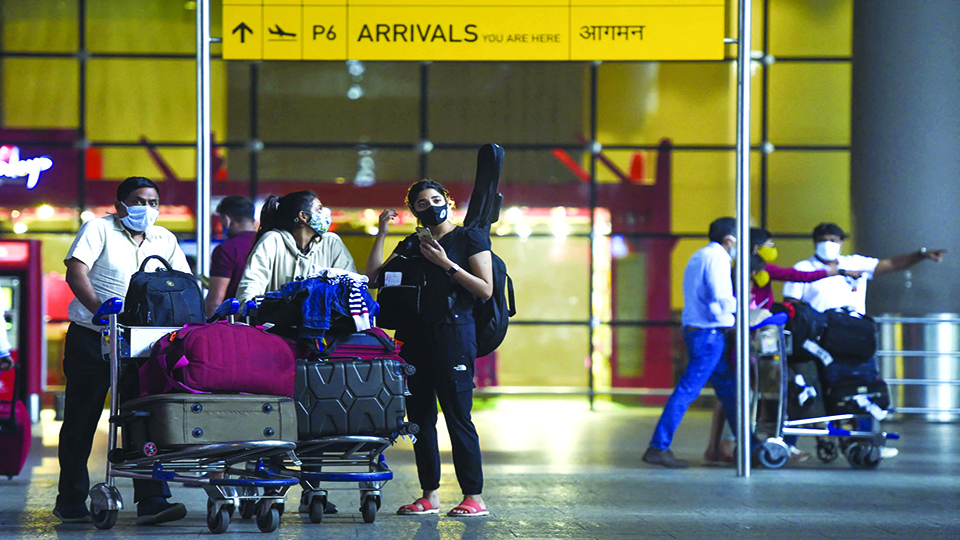
Geneva : The International Air Transport Association (IATA) announced full-year global passenger traffic results for 2021 showing that demand (revenue passenger kilometers or RPKs) fell by 58.4 per cent compared to the full year of 2019. This represented an improvement compared to 2020, when full year RPKs were down 65.8 per cent versus 2019.
Because comparisons between 2021 and 2020 results are distorted by the extraordinary impact of Covid-19, unless otherwise noted all comparisons are to the respective 2019 period, which followed a normal demand pattern.
International passenger demand in 2021 was 75.5 per cent below 2019 levels. Capacity, (measured in available seat kilometers or ASKs) declined 65.3 per cent and load factor fell 24.0 percentage points to 58.0 per cent.
Domestic demand in 2021 was down 28.2 per cent compared to 2019. Capacity contracted by 19.2 per cent and load factor dropped 9.3 percentage points to 74.3 per cent.
Total traffic for the month of December 2021 was 45.1 per cent below the same month in 2019, improved from the 47.0 per cent contraction in November, as monthly demand continued to recover despite concerns over Omicron. Capacity was down 37.6 per cent and load factor fell 9.8 percentage points to 72.3 per cent.
Ticket sales for future domestic and international travel deteriorated since November. Tickets sold for travel at any point in the future were at 45 per cent of 2019 levels in the first half of January - a deterioration compared with 50 per cent in December and 56 per cent in November. This suggests that the traditionally less busy January-February period will be weaker than in the absence of Omicron.
Impact of omicron measures
Omicron travel restrictions slowed the recovery in international demand by about two weeks in December. International demand has been recovering at a pace of about four percentage points/month compared to 2019. Without Omicron, we would have expected international demand for the month of December to improve to around 56.5 per cent below 2019 levels. Instead, volumes rose marginally to 58.4 per cent below 2019 from -60.5 per cent in November.
Asia-Pacific airlines' full-year international traffic plunged 93.2 per cent in 2021 compared to 2019, which was the deepest decline for any region. It fell 87.5 per cent in the month of December, a bit better than the 89.8 per cent decline in November. Full year capacity was down 84.9 per cent compared to 2019. Load factor fell 44.3 percentage points to 36.5 per cent.
"As Covid-19 continues to evolve from the pandemic to endemic stage, it is past time for governments to evolve their responses away from travel restrictions that repeatedly have been shown to be ineffective in preventing the spread of the disease, but which inflict enormous harm on lives and economies. A New Year's resolution for governments should be to focus on building population immunity and stop placing travel barriers in the way of a return to normality," said Willie Walsh, Director General, IATA.
Also on Bangladesh Monitor