
Breaking News
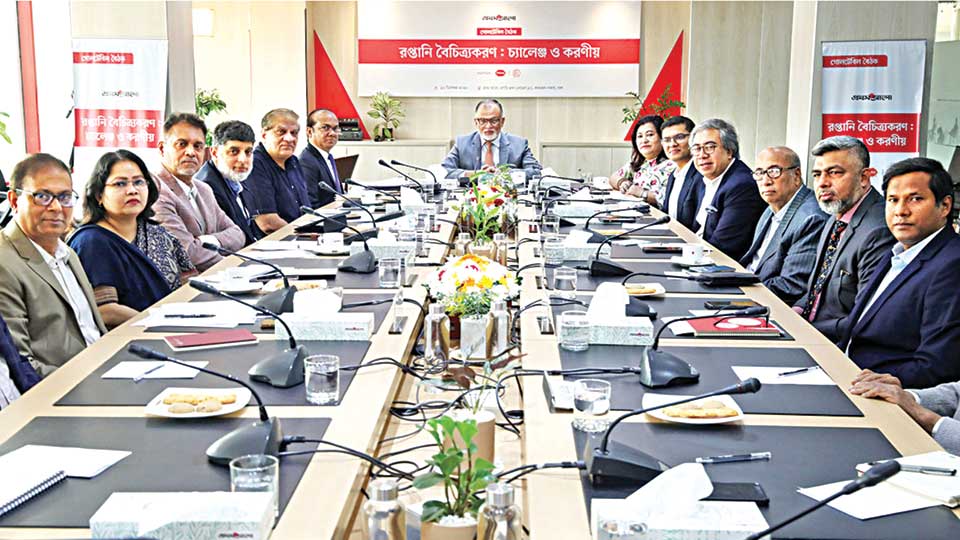
Commerce Adviser Sk Bashir Uddin seen with business leaders and top executives at roundtable on export diversification at Prothom Alo office in Karwan Bazar on December 10
Dhaka : Bangladesh's export earnings remain heavily dependent on the garment sector, with business leaders warning that long-standing discussions on diversification have produced limited progress.
At a roundtable in Dhaka on December 10, they identified persistent problems - poor quality control, weak certification systems, costly logistics, and capacity gaps in SMEs - as major obstacles to expanding into new export sectors.
The roundtable, titled "Export Diversification: Challenges and the Way Forward," was organized by Pran-RFL Group and Prothom Alo, bringing together leading industrialists and government officials.
Rupali Chowdhury, Managing Director of Berger Paints Bangladesh, said outdated testing and certification systems force local industries to send products abroad for approval. She stressed that Bangladesh needs globally recognized laboratories and an upgraded BSTI to support sectors ranging from agriculture to pharmaceuticals.
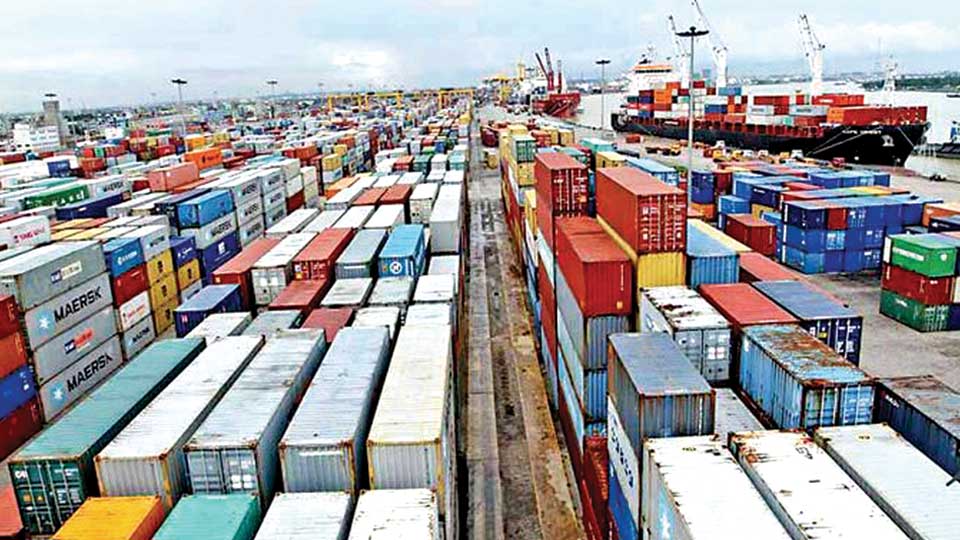
Pran-RFL Chairman Ahsan Khan Chowdhury emphasized the urgent need to broaden exports, criticizing inefficiencies in port and customs operations. He said high logistics and air freight costs are undermining competitiveness, especially compared to regional rivals.
Pharmaceutical industry leader Syed S Kaiser Kabir said regulatory complexity and negative perceptions of entrepreneurs are hurting the sector. Simplifying foreign investment rules and securing US regulatory approvals would significantly boost Bangladesh's credibility, he added.
HSBC Bangladesh CEO Mahbub ur Rahman noted that despite overall export growth, non-garment sectors have failed to scale. He called for identifying sectors with billion-dollar potential and giving SMEs easier pathways to export.
Export Promotion Bureau Vice-Chairman Mohammad Hasan Arif said commercial wings at foreign missions are ineffective and urged the creation of a dedicated trade promotion agency similar to Jetro or Kotra.
Commerce Adviser Sk Bashir Uddin cautioned against viewing free trade agreements as quick fixes, noting that an FTA with China could worsen the trade imbalance despite duty-free access. He warned that unless Bangladesh tackles structural inefficiencies and high business costs, true diversification will remain out of reach.
Also on Bangladesh Monitor