

Top News
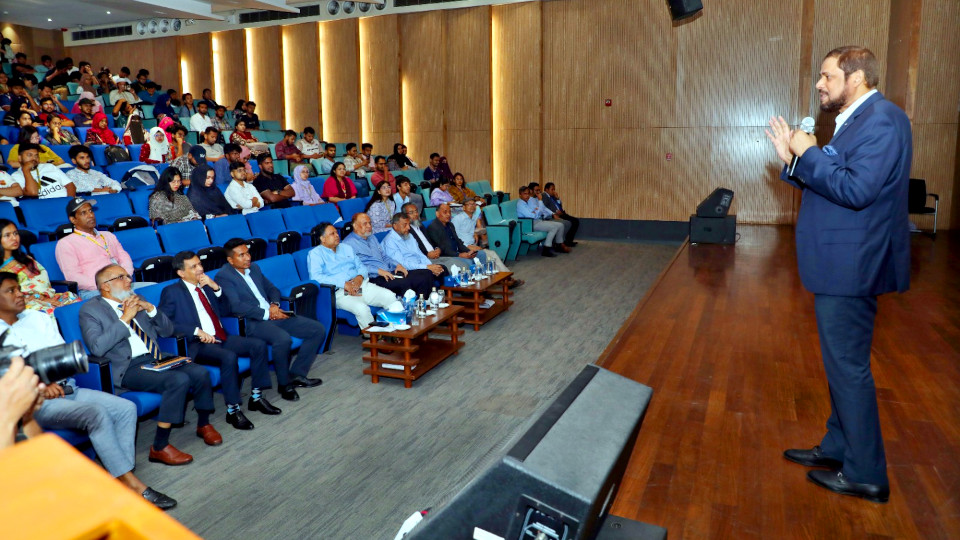
Dhaka: Bangladesh’s aviation sector is heading toward a significant shortage of skilled professionals as rapid infrastructure expansion accelerates, experts warned at a seminar held in the capital on April 20.
The seminar, titled “Aviation Profession in Bangladesh — Opportunities, Emerging Trends and Career Pathways,” was jointly organized by the University of Asia Pacific (UAP) and AVIANOMICS at the UAP Auditorium in Farmgate, Dhaka.
Delivering the keynote, aviation expert Prasanta Kumar Chakraborty said the country’s aviation industry is at a “tipping point,” driven by major infrastructure developments, including the expansion of Hazrat Shahjalal International Airport and the internationalization of Cox’s Bazar Airport.
“With growing global connectivity, Bangladesh will require a large pool of skilled aviation professionals in the next decade,” he said, noting that opportunities are expanding beyond traditional roles to include engineers, data analysts, safety specialists, and aviation managers.
The seminar highlighted a widening gap between industry demand and the current supply of trained professionals, underscoring the need for stronger collaboration between academia and the aviation sector.
Chairman of the UAP Board of Trustees K. M. Mozibul Hoque attended the event as chief guest, while Md. Saiyed Bin Abdullah, Special Assistant to the Prime Minister on Youth Employment, joined as special guest. The session was chaired by Acting Vice Chancellor Mohiuddin Ahmed Bhuiyan.
Speakers emphasized that addressing the skills gap will require early career planning, hands-on training, and greater exposure to real-world aviation operations. Saiyed Bin Abdullah urged students not to wait until graduation, encouraging them to prepare early and explore entrepreneurship, assuring government support for young innovators.
Highlighting institutional efforts, Mozibul Hoque said UAP is committed to bridging academic knowledge with industry needs through practical training, certificate courses, and placement support.
Professor Bhuiyan noted that the aviation sector now offers diverse career pathways ranging from flight operations and air law to drone technology and green aviation, adding that UAP plans to integrate aviation-related modules into its curriculum and explore introducing a minor in Aviation Management.
As part of the event, UAP and AVIANOMICS announced a strategic partnership to provide specialized training, guest lectures, and internship opportunities in aviation management, aeronautical engineering, and aviation safety.
More than 300 students, faculty members, and professionals attended the seminar, which concluded with an interactive question-and-answer session on scholarships, certifications, and the role of artificial intelligence in aviation.
K