

Top News
Dhaka : Air transport in Bangladesh is forecast to grow by 160 per cent in the next 15 years based on the current trends. This would result in an additional 12.1 million passenger departures by 2038. If met, this increased demand would support approximately USD 2.1 billion of the country's GDP and around 140,000 jobs.
International Air Transport Association (IATA) said this in its economic report on the country's aviation industry titled "The importance of air transport to Bangladesh" published recently.
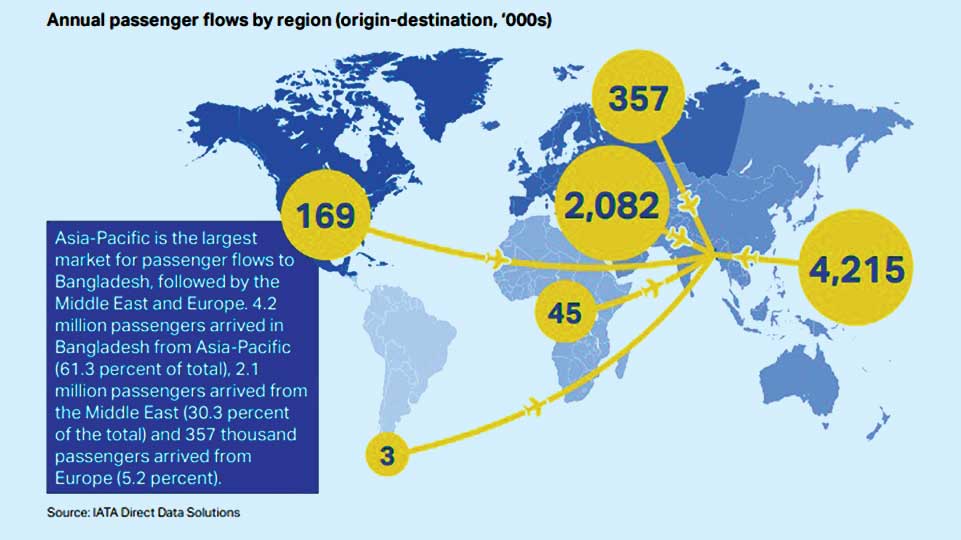
In the report, IATA stated, Asia-Pacific is the largest market for passenger flows to Bangladesh, followed by the Middle East and Europe. 4.2 million passengers arrived in Bangladesh from Asia-Pacific (61.3 per centof total), 2.1million pas-sengers arrived from the Middle East (30.3
per cent of the total) and 357 thousand passengers arrived from Europe (5.2 per cent) in the last few years.
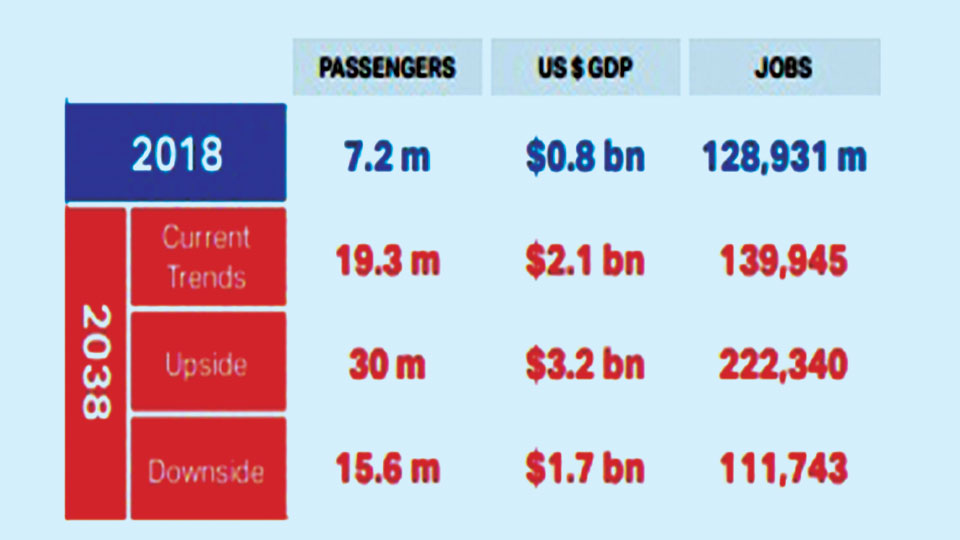
Pax departure, GDP support, and job creation forecast till 2038
As per the report, top five international tourist arrivals (all modes of transport) by country of residence to Bang-ladesh are: India, Japan, United Sta-tes, United King-dom, and Australia.
Top five busiest direct flights arrivals to Bangladesh are: India, United Arab Emirates, Malaysia, Saudi Arabia, and Singapore.
Contribution to economy
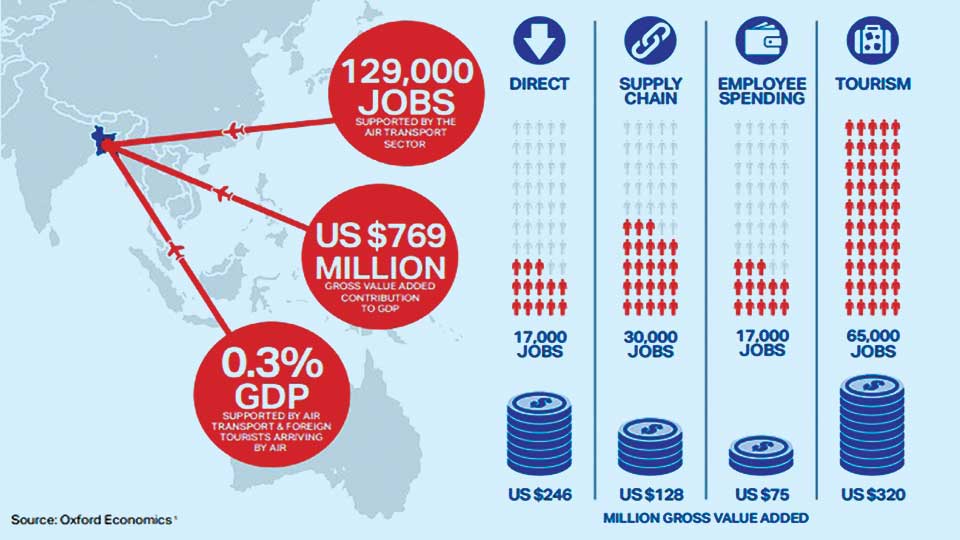
IATA, in its report, said, airlines, airport operators, airport on-site enterprises (restaurants and retail), aircraft manufacturers, and air navigation service providers employ 17,000 people in Bangladesh. Additionally, by buying goods and services from local suppliers the sector supported another 30,000 jobs. On top of this, the sector is estimated to support a further 17,000 jobs through the wages it pays its employees, some or all of which are subsequently spent on consumer goods and services.
Foreign tourists arriving by air to Bangladesh, who spend their money in the local economy, are estimated to support an additional 65,000 jobs. In total 129,000 jobs are supported by air transport and tourists arriving by air.
The air transport industry, including airlines and its supply chain, are estimated to support USD 449 million of GDP in Bangladesh.
The report further stated spending by foreign tourists supports a further USD 320 million of the country's GDP, totaling USD 769 million. In total, 0.3 per cent of the country's GDP is supported by inputs to the air transport sector and foreign tourists arriving by air.
Moreover, if the forecast of IATA is met, the increased demand would support approximately USD 2.1 billion of the country's GDP and around 140,000 jobs by 2038.
It may be mentioned here, to measure Bangladesh's air transport's impact on its economy, IATA looked at several factors.
"The most important benefits from air transport go to passengers and shippers and the spillover impacts on their businesses. The value to passengers, shippers and the economy can be seen from the spending of foreign tourists and the value of exports. A key economic flow, stimulated by good air transport connections, is foreign direct investment, creating productive assets that will generate a long-term flow of GDP," said IATA.
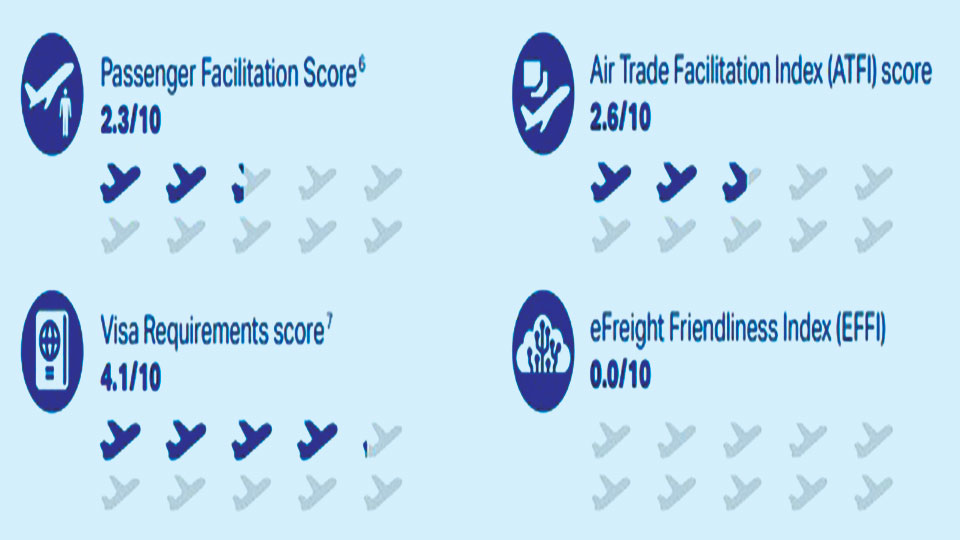
Travel ease, visa openness, trade facilitation vital
According to IATA, Bangla-desh's passenger facilitation (2.3/10) scores below the average of Asia-Pacific (4.4/10). On the World Economic Forum's Travel and Tourism Competiti-veness Index, the country ranks 53rd out of 140 countries for visa openness.
In all these scores, higher is better, said IATA.
On the other hand, Bangladesh's facilitation of air cargo through its regulations ranks 117th out of 124 countries in terms of the Air Trade Facilitation Index (ATFI) and last in terms of the eFreight Friendliness Index (EFFI) globally.
"If air transport's unique contribution is the bridges it creates between cities, then the flows of goods, people, investment and ideas that stimulate economic development must flow unimpeded to maximise their contribution to consumers and the wider economy," concluded IATA in the report.