

Top News
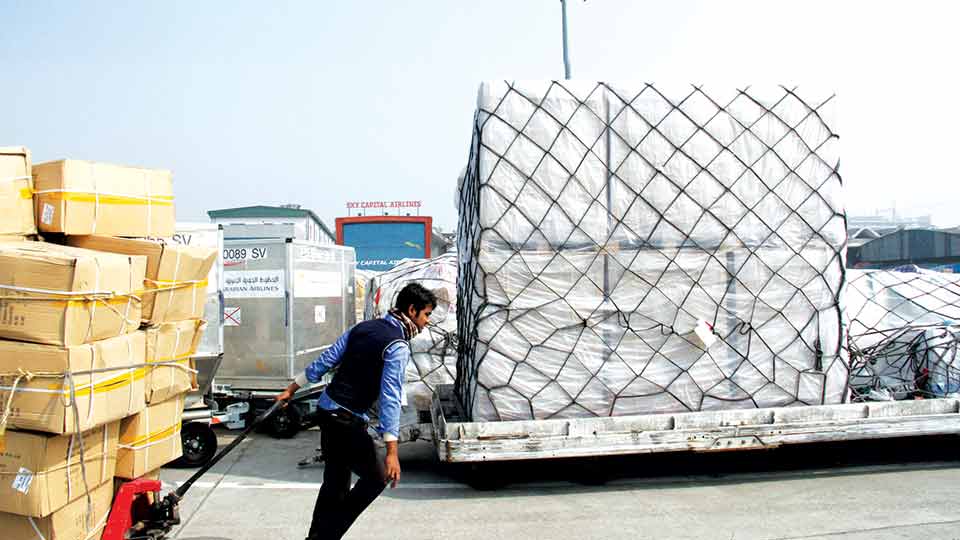
Cargo getting prepared to be loaded into aircraft for export at Hazrat Shahjalal International Airport
Dhaka : Bangladesh civil aviation lost the opportunity to earn over BDT 156 crore from export cargo handling over the 8000 metric tonnes of the country's cargo transshipped by Delhi Airport (DEL) to various destinations worldwide in 2023.
Even after having enough capacity at Hazrat Shahjalal International Airport (HSIA) in the capital, the amount of cargo transshipped by DEL last year resulted in a missed opportunity for the airport's operator Civil Aviation Authority of Bangladesh and the ground handler Biman Bangladesh Airlines to earn the aforementioned staggering number.
Talking to The Bangladesh Monitor, industry stakeholders informed, HSIA's annual export cargo capacity usually is over two lac tonnes. Moreover, during the peak season, the annual capacity goes over 2.5 lac tonnes even.
Therefore, industry stakeholders are bewildered wondering why the country needed to setup another cargo hub at Delhi Airport, even after having adequate capacity at Dhaka Airport which is way more than the demand.
It was said, due to the geopolitics-related disruption in cargo movement via the Red Sea, Dhaka's cargo exports to third countries are being routed by air via Delhi since February 2023. Earlier, it was only through Kolkata airport.
However, industry insiders in Bangladesh sung a different tune while talking to The Bangladesh Monitor. According to them, the civil aviation fees and handling charges at HSIA for export cargo is the highest in the region.
Freight forwarders exporting cargo through HSIA claimed, they pay ten US cents to the airport's operator Civil Aviation Authority of Bangladesh and eight US cents to the ground handler Biman Bangladesh Airlines for each kg of cargo.
The fees are so high that it is cheaper to send cargo via trucks from Dhaka to Delhi and from there, ship them by air to various destinations in the world. Even after considering two-days of transportation cost via trucks and Delhi airport fees, it costs USD 1-1.5 per kg less to ship cargo from Delhi Airport compared to Dhaka Airport, stressed industry insiders.
Country's freight forwarders further claimed, even the same airlines who operate flights at Delhi Airport charge less than what they do at Dhaka Airport.
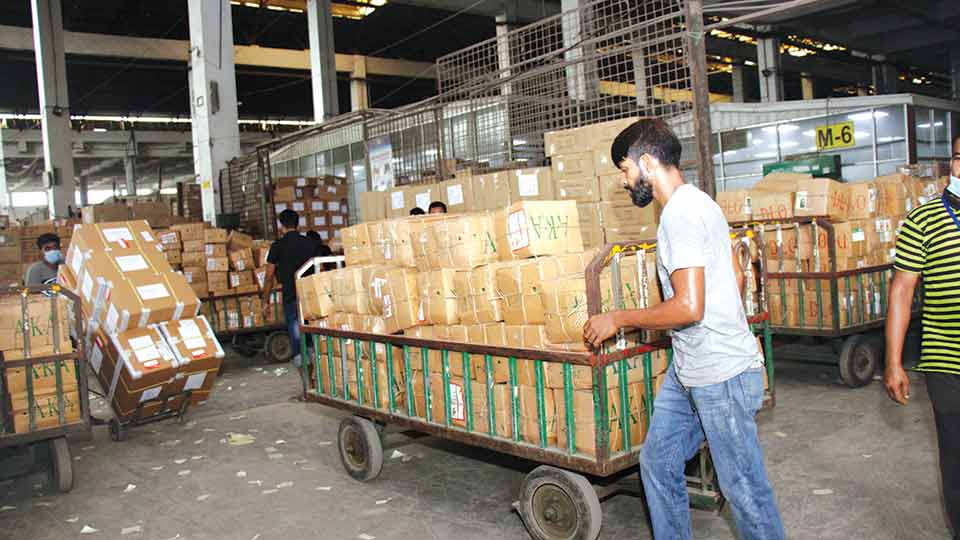
Cargo cartons seen inside cargo village at HSIA_Photo : Monitor
Another issue that increases the export cost from Dhaka Airport compared to other countries in the region, as mentioned by industry insiders, is the service negligence of the ground handler Biman.
They claimed, even after paying Biman for ground handling services, the airlines have to appoint 60-70 additional staff for the same purposes anyway.
Another major crisis is the frequent breakdown of scanning machines at Dhaka Airport, informed industry stakeholders. They pay 10 cents per kg for cargo scanning purposes.
With three days of money, authorities can get a new machine, said stakeholders. Yet, the airport does not have any backup scanner, sighed forwarders.
On top of it, when machines remain down, besides delay in deliveries, stakeholders also fall prey to corruption, as then they have to pay BDT 1500 per tonnes to the authorities to reserve early spots, expressed industry insiders.
Furthermore, another surprising issue is that there seems to be no repairer or maintenance personnel at the airport for the machines.
Industry stakeholders also informed that not only Delhi, but also Dubai, Singapore and Colombo are taking over our fair share of Bangladeshi export cargo. Country's forwarders are sending cargo by sea to the aforementioned cities and then by air to several destinations in Europe. The primary reason being-the process still costs USD 1.5 less per kg than exporting through HSIA.
This way, the Civil Aviation Authority of Bangladesh, Biman Bangladesh Airlines and the country as a whole is missing out on massive earning opportunities. If this market was tapped, it could have contributed further to the country's economy and employment generation, stressed industry stakeholders.
Another unusual phenomenon, stakeholders claimed, is the fact that unlike other countries in the world, cargo air fare in the country is not charged in Bangladeshi currency. Rather, it is charged in USD.
More shockingly, Biman is the one who decides the conversion rate of USD to BDT as per their own self-interest, further mentioned the stakeholders.
To eradicate these issues and restore smooth export cargo operations, industry stakeholders urged the authorities to consult with them before implementing any policy.
They stressed the necessity of backup scanning machines at the airport. They also expect machine repairers or maintenance personnel to be on standby. Insiders insisted the authorities to not create any crisis deliberately for personal gain.
Security should be ensured at the airport to prevent cargo theft that hampers the country's image, stressed the stakeholders.
Lastly, industry insiders urged the authorities to reduce airport charges to help flourish the country's export cargo industry and tap the market it is losing to neighbouring nations.