CAAB sparing no effort to ensure int'l standard aviation security
With the regulatory body's efforts, Dhaka-Toronto direct flights are one step closer


With the regulatory body's efforts, Dhaka-Toronto direct flights are one step closer
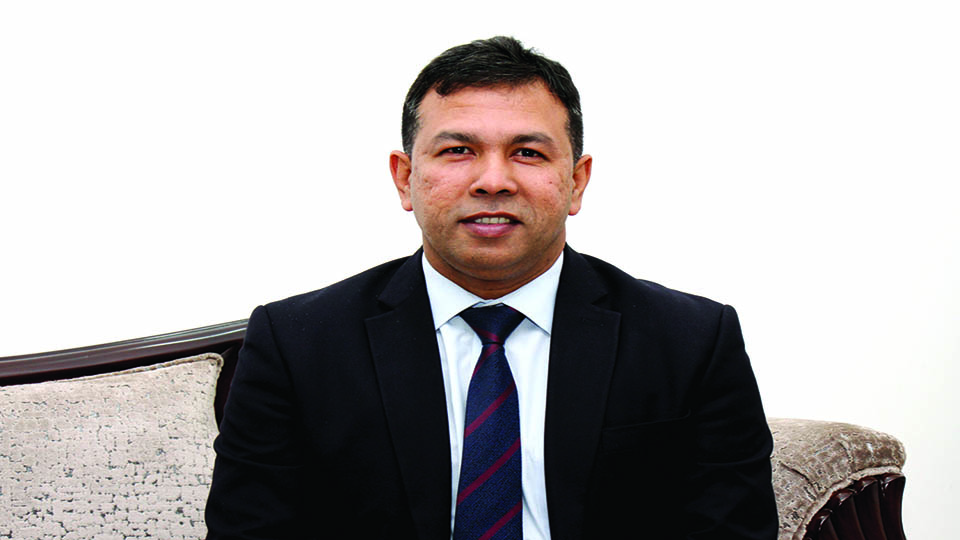
Dhaka : The Civil Aviation Authority of Bangladesh is leaving no stone unturned in its efforts to ensure the security protocol of Dhaka Airport is up to the standard Canada seeks to allow direct flights from Dhaka to Toronto.
Group Captain Abu Saleh Mahmud Mannafi, Member (Security) of Civil Aviation Authority of Bangladesh said this while speaking to The Bangladesh Monitor on December 5 at his office in the capital.
Preparations for Dhaka-Toronto direct flights are underway as a team of Transport Canada from December 5-9 carried out an inspection of Hazrat Shahjalal International Airport in the capital and Biman Bangladesh Airlines - one of the integral steps in the process to allow the flag carrier to operate direct flights on the route.
One of the top priorities CAAB and its security department recently facilitated was this, mentioned Mannafi. "Canada will not give Biman permission to operate directs flights until they think our aviation security status and manpower are up to the mark," he added.
The findings of this inspection will be key to allowing direct flights from Dhaka to Toronto by the Canadian government, Mannafi said, hoping soon the country could have direct flights to Canada.
Further explaining the importance of aviation security, Group Captain Abu Saleh Mahmud Mannafi, mentioned five essentials to ensure better aviation security of the country at the moment: awareness, data driven coordination platform, state-of-the-art training institute, more qualified manpower and research-driven database.
And these are exactly what the Security Department of the Civil Aviation Authority of Bangladesh is currently working on desperately, claimed the Member Security.
Now, the country's aviation security department is comparatively new as it was formed following an act in 2017. Hence, the task and role of the regulatory body are not properly delineated yet to other stakeholders of aviation. This makes it hard for the stakeholders, subject to the department’s enforcement, to accept and follow its directives.
"Member Security heads aviation security under the leadership of Air Vice Marshal M Mafidur Rahman, Chairman, Civil Aviation Authority of Bangla- desh. We are the regulatory body and the operators should be subject to our directives," said Group Captain Abu Saleh Mahmud Mannafi.
"As a result, ensuring security has become a challenge currently. Thus, building awareness about the matter among operators is crucial to ensure aviation security," he added.
Need of digital coordination platform
All eight airports and the entire aviation security of the country must be regulated and controlled under one unified command, and that has to be the chief of aviation security, mentioned Mannafi.
Therefore, one of the first priorities of the aviation security department right now is to establish a well-coordinated platform. This will allow the department to improve further in the areas that require it, he claimed.
The aviation security department is currently in efforts to define and delineate a command control structure and coordination platform with database and information management system, mentioned the Member Security, adding, through this platform they have to ensure the flow of information from end to end while continuously monitoring it. After that, they have to do gap analysis, carry out corrective actions and then report.
Need training institute, more manpower
The Civil Aviation Authority’s organogram allows the strength of 1604 people. The present actual strength is hovering between 850-900 with less than 500 effectively employed for pure security function. This is not sufficient to ensure security at all the airports in the country, said Mannafi.
Thus, the aviation security department highly needs more manpower. And they have to be even better if we are to reach the standard of the aircraft, we are handling, mentioned the Member Security.
Aircraft such as Boeing 777, 737, 787, Airbus 320 etc are all equipped with cutting-edge technology. Hence, the maintenance, security and safety regulation works of those aircraft carried out by the concerned people should be at par with the aircraft's technology standard. It requires manpower with more knowledge on technical aspects, claimed Mannafi.
This can only be ensured with better training of manpower. Therefore, the civil aviation is going to establish a state-of-the-art academy and training center, he further said, claiming, the planning stage is complete and further works are underway.
Database, research for cargo
To solve the cargo issues that often come up at Dhaka Airport, the aviation security department of CAAB is on its way to develop an information management system for the airport's cargo village.
The issues faced sometimes at the cargo village is due to the fact the flow of information is not faster than the flow of material. Hence, quantitative expression is essential to solve this, the Member Security expressed.
"We have identified 11 problem statements at cargo village of HSIA. We will be bringing a consultant, an expert on the subject matter, to make a quantitative expression of the problem statements," said Mannafi.
This is a research-based empirical study that the aviation industry must have, claimed the Group Captain, and this requires a grant for research purposes, he added.
Cox's Bazar Airport security development
Security development works are underway to help make Cox's Bazar Airport international, mentioned the Member Security. For this purpose, CAAB is demolishing the illegally existing Jhinuk Market standing in CAAB's property near the Cox's Bazar Airport runway.
"Such an illegal establishment near the runway is a risk to passengers. Not to mention, it comes in the way of helping Cox's Bazar Airport reach international standard needed to flourish the region's tourism," claimed Mannafi.
For this purpose, he mentioned 20 Air Force personnel have been deployed in the area and more to come as the Air Force will be giving a full-fledged security plan for Cox's Bazar Airport.
"They will operate security services at the airport initially on ad hoc basis. Then we will form a committee including them under the directive of the honourable Prime Minister," said Mannafi.
Moreover, Mannafi mentioned, they have identified four weak systems in the parameter security at Cox's Bazar Airport. "We have already started to carry out initiatives for this purpose which include putting up walls, linking wires and demolishing other illegal establishments."
Need unified approach to security
There are two layers of aviation security, explained Abu Saleh Mahmud Mannafi. The first or the outer layer should be performed by the police along the parameter and, if needed, by air force too.
At the second or inner layer within the security restricted area inside the airport, few of the core functions should be jointly performed by CAAB and Air Force.
However, for this purpose, Mannafi claimed they need more than 800-900 people which they currently have since it is a 24/7 job across eight airports in the country.
"We need at least 7-8 thousand people based on the tremendous potential of growth we have," Mannafi said.
EDS at HSIA operational now
Group Captain Abu Saleh Mahmud Mannafi mentioned that finally the two new Explosive Detection Systems at Hazrat Shahjalal International Airport in the capital are operational, ending the complains of several EU-bound exporters of the country.
The two new EDS machines, each with a capacity of 300 tons, have been given by JICA which awaited validation before being operational. Recently, an EU consultant came to Dhaka Airport and carried out the validation work. Once done, from early December, the EDS machines finally became operational, noted the Member Security.
He further mentioned, CAAB has also ordered three new EDS machines to further bolster cargo scanning operations at the airport.
Visionary mindset
"We are making far-fetching plans and acting accordingly. A visionary mindset is crucial currently to develop the aviation security of the country. Hence, we are foreseeing what awaits in the future and how we can strengthen the system to adapt to it," said Mannafi.
"5-6 years later, we will reap the benefits of what we have started today. We will see our aviation sector thrive and reach a global standard," concluded the Member Security of CAAB.




Download The Mobile App