

Top News
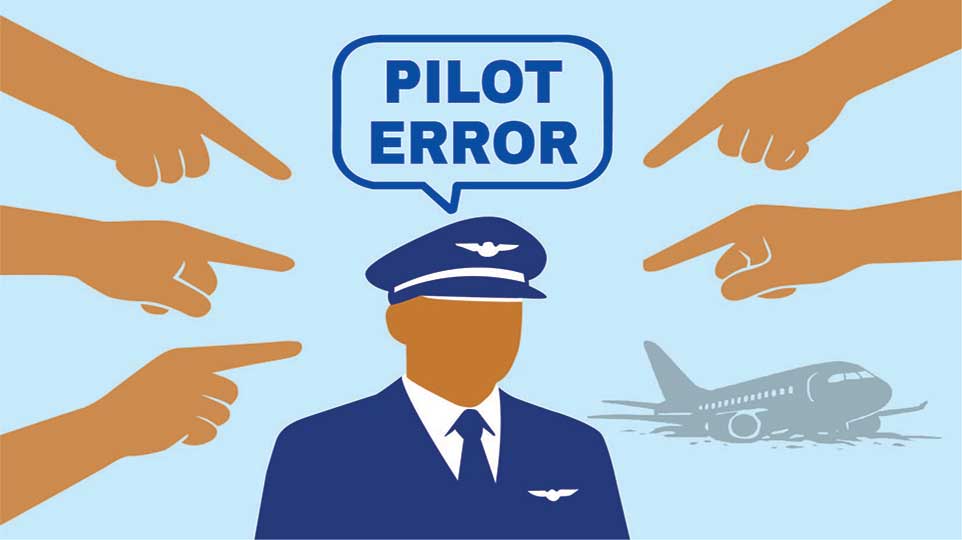
Dhaka : In the aftermath of almost every fatal air accident, the world waits anxiously for the official inquiry report. When it finally arrives, one familiar phrase too often dominates the conclusion - "pilot error."
It is a convenient verdict. When the pilots themselves have perished and can no longer defend their actions, it becomes easy for investigators to wrap up the report by putting the blame on human failure - sparing deeper scrutiny of possible lapses in aircraft maintenance, technical integrity or systemic oversight. The dead, after all, cannot speak.
In recent times, inquiry committees have found pilots at fault in several tragic crashes - including the Air India aircraft that went down in Ahmedabad, and the Air Force fighter jet that crashed onto the Milestone School in Dhaka.
These horrifying accidents claimed innocent lives both in the air and on the ground. Yet in both instances, as in many before, the narrative quickly settled on pilot error - as though the complex chain of engineering, maintenance, and procedural safeguards had no bearing at all.
History, however, tells a different story.
The 2009 crash of Air France Flight 447 over the Atlantic was initially blamed on poor crew handling, only for later evidence to show that faulty pitot tubes had provided false speed readings, leaving the pilots helpless.
In the 2018 Lion Air Flight 610 tragedy - the first of the Boeing 737 MAX disasters - the official report cited inadequate pilot response, though subsequent investigation revealed serious design flaws in Boeing's flight control system and weak maintenance oversight by the airline.
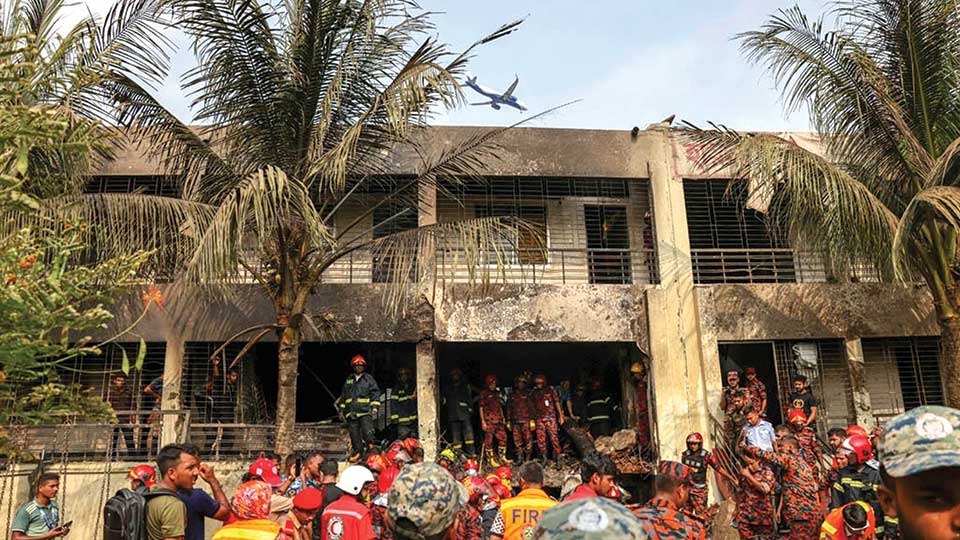
Aftermath of Milestone School plane crash in Dhaka - Photo: Monitor
Likewise, the 2021 Sriwijaya Air crash involved a long-malfunctioning autothrottle system that had failed dozens of times before the final flight, yet the ultimate conclusion still focused on the pilots' inability to correct the asymmetry in thrust.
These examples reveal a troubling pattern.
When a pilot dies in an accident, he or she is no longer there to explain what went wrong in the cockpit. In such cases, the absence of a living voice makes it far too easy for inquiry boards to end the story with "human error" - protecting more powerful stakeholders such as aircraft manufacturers, maintenance organizations, and sometimes even insurers.
No one denies that pilots make mistakes; they are, after all, human. However, aviation accidents are seldom the result of a single act or omission. They are the tragic culmination of a chain of failures - in design, maintenance, training and oversight. To attribute everything to the final human link is not only unjust, but dangerously simplistic.
Investigators often cite the Black Box as the final authority - the mechanical witness that records every word exchanged in the cockpit and every command transmitted to Air Traffic Control. However, even this so-called truth-teller has its limits. It captures what the pilots said or did in their final moments, not why they were forced into those decisions. A faulty instrument, an undiagnosed maintenance defect, or a flawed aircraft system can push a crew into chaos, but the recordings rarely reveal those up-stream failures.
In many cases, selective interpretation of the Cockpit Voice Recorder reinforces the "human error" narrative, because the machine cannot record corporate negligence, regulatory oversight failure or the silent pressure of operational economics. The Black Box tells us what happened inside the cockpit - not what failed outside it.
Behind every pilot who loses their life stands a grieving family - parents, spouses, children - who must bear not only the pain of loss but also the stigma of blame. For them, the phrase "pilot error" is more than a technical conclusion; it is a lifetime of silent embarrassment and unanswered questions.
If aviation safety is to advance further, accident investigation must evolve beyond this culture of convenient conclusions. Independent inquiry boards must look with equal vigor into maintenance practices, regulatory enforcement, manufacturer accountability, and operational pressures that may have contributed to an accident. Transparency, not tokenism, is what restores public confidence and honors the memories of those lost.
In aviation, every link in the chain matters. When we blame only the one that broke last, we risk ignoring the cracks that caused it to fail.