Bangladesh boasts two state-of-the-art radars now


Bangladesh boasts two state-of-the-art radars now
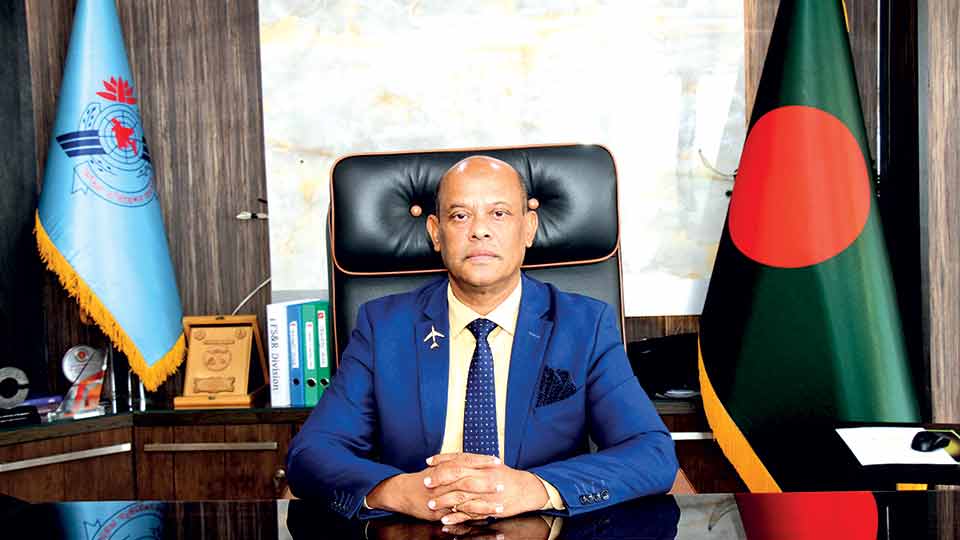
Dhaka : Surveillance of the country's entire airspace will be fully automated by early 2025, thanks to the new state-of-the art radar installed at Hazrat Shahjalal International Airport in the capital.
Air Vice Marshal Md Monjur Kabir Bhuiyan, Chairman of Civil Aviation Authority of Bangladesh, informed about the long-awaited development while talking to The Bangladesh Monitor at his office in the capital recently.
With an aim to enhance the surveillance capacity of Bangladesh's airspace, the new cutting-edge radar has been installed at Dhaka Airport. The logistics supplier for the project is Thales of France, represented locally by Aeroness International Limited.
With this, surveillance of the country's entire airspace will be easier, faster and more accurate, once the new radar system is fully operational. Further-more, full operation of the airport's ultramodern radar system will also improve aircraft safety.
The world's most advanced radar system, featuring facilities like Helmet, AD, SB and multilateration, can detect the exact location of aircraft. Accurate images of the position and speed of all types of aircraft will be captured in the airspace up to 280 nautical miles from Dhaka.
The modern system will also cover a large area of the Bay of Bengal, up to the exclusive economic zone of Bangladesh.
The move is also expected to generate significant revenue from overflying fees. Currently, the overflying charge is going to India and Myanmar, which according to International Civil Aviation Organisation rules, amount to about USD 500 per use of airspace.
Having settled the maritime boundary dispute with India and Myanmar, Bangladesh is now in efforts to reclaim its Flight Information Region (FIR) in the airspace. The installation of the radar is part of the efforts to take control over the airspace.
India and Myanmar have already agreed to Bangladesh's efforts in changing the FIR. The maritime boundary dispute with Myanmar was settled in 2012 and with India in 2014.
However, since it is a diplomatic process that has to go through a UN body intermediary, it will take some time to reclaim the airspace, claimed CAAB Chairman.
Moreover, Dhaka Airport's new radar is not the only one in the country. The one in Chattogram has also been modernised.
Communication sensors have been installed at airports countrywide, aiming to enhance flight safety and boost revenue. These sensors facilitate both communication and surveillance.
While the old radar relied solely on primary mode, the new radar supports secondary mode as well. This upgrade enables airports to monitor air traffic and manage take-offs and landings from any location, automating the entire surveillance and control system.
Additionally, the authorities have implemented not just a radar but a comprehensive system.
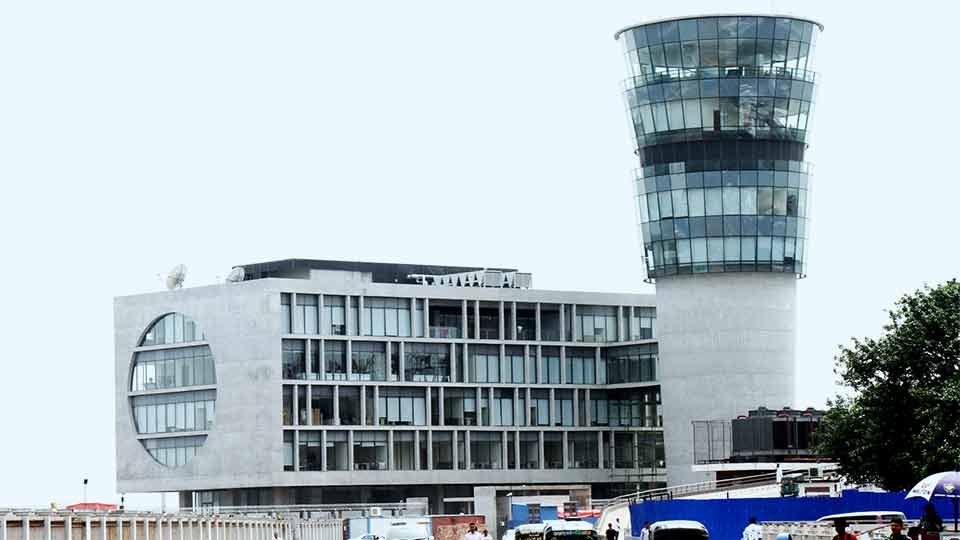
New state-of-the-art air traffic control tower at Dhaka Airport's premise _Photo : Monitor
Along with the radar, a new Air Traffic Control (ATC) tower and an operation building at the airport have been established. The steel structure for the radar tower was imported from France and construction of the ATC tower and the operation building is complete.
T3 progress
Despite the completion of 98 per cent of the works at the Third Terminal of Dhaka Airport, it will not be possible to open the terminal for passengers in October 2024 as planned earlier, informed the Chairman.
The reason behind the delay is that the consultant commissioned to recommend the vendor to run the terminal and determine the terms and conditions for the vendor is yet to submit its report.
Also, the airport is still to receive all the necessary machines. Once they arrive, integration works will begin which will take some time, expressed the Chairman.
In September 2023, the Public-Private Partnership Authority under the Prime Minister's Office inked a deal with the International Finance Corporation, a concern of the World Bank Group, for transaction advisory service on the operation and maintenance of the third terminal.
The ousted Awami League government had decided to operate and maintain the Third Terminal by a Japanese consortium under a public-private partnership.
The Japanese company will be responsible for the operational activities of the terminal, while CAAB will be in charge of security. Ground handling activities will be carried out by Japan and Biman Bangladesh Airlines, the current ground handler, will work under them.
IFC's report was supposed to recommend the operating cost and the distribution of profit between CAAB and the vendor. Once the IFC report comes through, the government will examine the report and then sign the agreement with the vendor, as per CAAB Chairman.
However, CAAB has already commenced manpower training, mentioned Bhuiyan.
Meanwhile, the Chairman has asked the Japanese company to at least handover the tarmac facilities.
Furthermore, the CAAB Chairman urged the Japan International Cooperation Agency to allow them additional time to repay loan payments.
CAAB has asked Japan to start collecting loan payments after two years from now. It may be mentioned here, by December 2024, the authority was supposed to commence replaying the loan dues.
However, due to the ongoing US dollar crisis, CAAB will not be able to do so, hence, asked for additional time, the Chairman explained.




Download The Mobile App