

Top News

Dhaka: The International Air Transport Association (IATA) reported continued strength in both global passenger and air cargo markets for August 2025, reflecting resilient demand across the aviation sector despite economic headwinds and geopolitical uncertainties.
Passenger demand reaches record levels
Global passenger traffic, measured in revenue passenger kilometers (RPKs), grew by 4.6 percent in August compared with the same month last year, while total capacity expanded by 4.5 percent. The global load factor stood at 86.0 percent, marking a record high for the month.
International passenger demand increased 6.6 percent year-on-year, with capacity rising by a similar 6.5 percent and a load factor of 85.8 percent, also a record for August. Domestic traffic saw a 1.5 percent increase, with capacity up 1.3 percent and a load factor of 86.3 percent.
Regional trends in passenger markets
The Asia-Pacific region led global passenger growth with a 9.8 percent year-on-year rise, fueled by robust travel demand in China and Japan. Middle Eastern carriers followed with an 8.2 percent increase, supported by strong connecting traffic through regional hubs.
Latin American airlines recorded a 9.0 percent increase, while African carriers saw a solid 7.1 percent rise in demand, outpacing capacity growth and improving load factors. European airlines reported a 5.3 percent increase, maintaining stable capacity and load factors. Meanwhile, North American carriers posted modest growth of 1.8 percent, with a slight dip in load factors for the fourth consecutive month.
Domestic markets contributed just 13 percent of the global RPK increase in August, compared with 25 percent a year earlier, as international travel continued to dominate global demand.
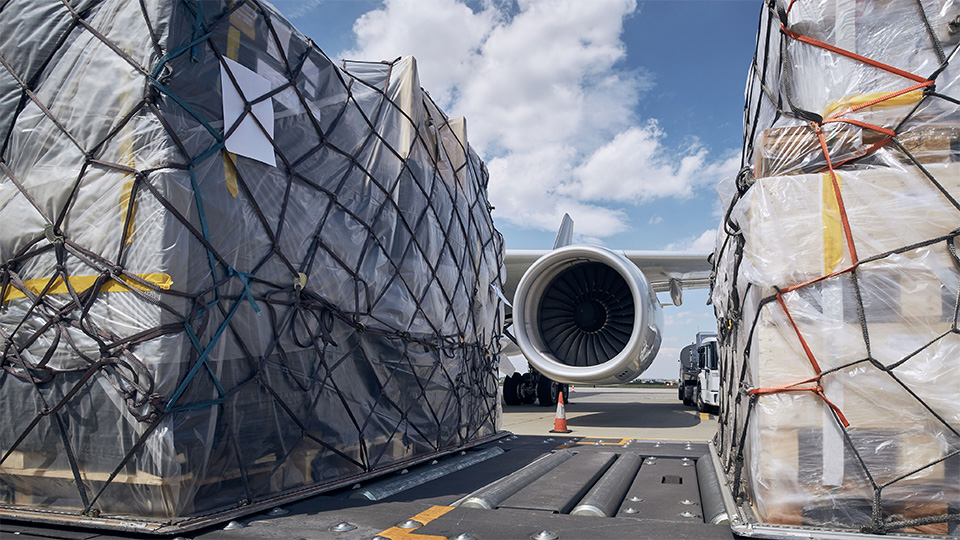
Air cargo continues growth streak
Air freight volumes also expanded in August, extending their run of year-on-year gains for a sixth consecutive month. Global cargo demand, measured in cargo ton-kilometers (CTKs), rose 4.1 percent compared to August 2024, while capacity (ACTKs) increased 3.7 percent. International cargo demand grew slightly faster at 5.1 percent.
According to IATA, the cargo sector benefited from shifts in global trade routes and increased demand for air transport of high-value goods.
A number of key economic indicators supported this growth. Global goods trade expanded 4 percent year-on-year in July, while jet fuel prices fell 6.4 percent from the previous year—the fourteenth straight month of declines. Global manufacturing sentiment improved, with the purchasing managers’ index (PMI) climbing to 51.75, the strongest level since mid-2024.
Regional cargo highlights
The Asia-Pacific region again led growth, recording a 9.8 percent year-on-year increase in cargo demand, driven by strong performance on intra-Asia and Europe–Asia routes. African airlines posted the highest regional growth rate at 11.0 percent, supported by expanding trade with Asia.
European and Latin American carriers saw moderate gains of 3.2 percent and 2.1 percent, respectively, while Middle Eastern airlines reported a 2.7 percent increase. North American carriers were the only ones to record a decline, with demand falling 2.1 percent compared to last year.
Trade lane data showed significant growth on the Europe–Asia, Within Asia, Africa–Asia, and Middle East–Asia corridors, while routes such as Asia–North America and Within Europe saw slight contractions.
Sustained growth amid shifting dynamics
IATA noted that both passenger and cargo markets are on track to end 2025 on a strong note, supported by rising consumer confidence, growing tourism demand, and recovering global trade. However, supply chain constraints in aircraft production and uncertainty around global tariffs could influence growth patterns going forward.
- T