

Top News
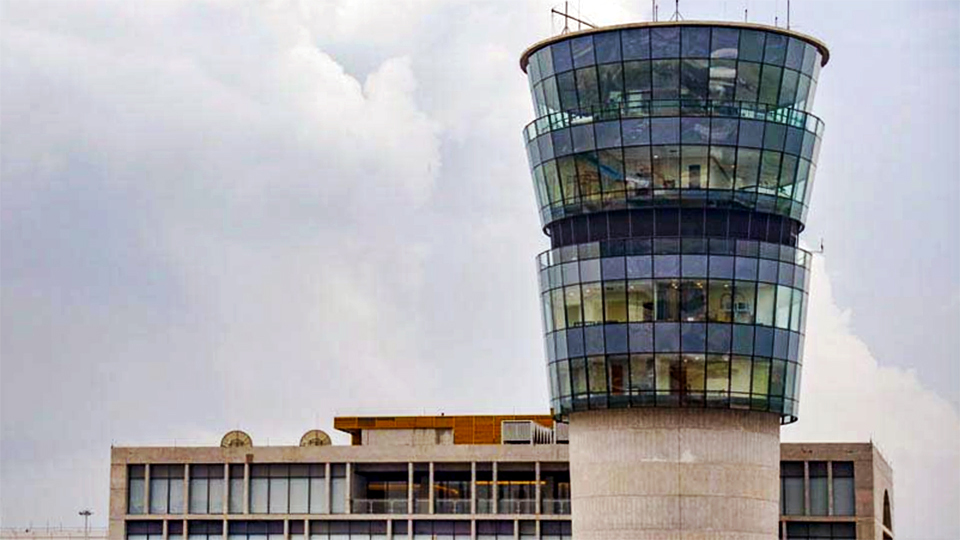
Dhaka: The capital’s main international airport has been running its air traffic communication system without satellite-based connectivity for nearly two months, prompting concern among aviation professionals about operational resilience and safety — particularly during the winter fog season.
Hazrat Shahjalal International Airport in Dhaka, the busiest aviation hub in Bangladesh, depends on constant and reliable communication between pilots and air traffic controllers to manage take-offs, landings, and aircraft movement on the ground. Although flight operations are continuing as scheduled, experts warn that the airport is currently relying on a system that was originally designed only as a backup.
Why reliable air traffic communication is crucial
Air traffic communication plays a vital role in maintaining flight safety, especially when visibility is poor due to fog. In such conditions, pilots depend heavily on ground-based navigation aids like radar, Instrument Landing Systems (ILS), and uninterrupted communication with controllers.
Even a brief failure in these systems can increase risk, disrupt flight schedules or force aircraft to divert to other airports. Traditionally, satellite-based Very Small Aperture Terminal (VSAT) networks serve as the primary communication backbone for air traffic management, with fiber-optic connections acting as secondary support.
What is different now
According to aviation sources, the Civil Aviation Authority of Bangladesh (CAAB) is currently managing air traffic communications through fiber-optic internet links, as the satellite-based system remains inactive.
Experts say this situation is far from ideal.
“Fiber connections are meant to support the system, not replace it,” said an aviation analyst. “If there is a cable fault, power failure or network outage—which is not uncommon—the impact on airport operations could be severe.”
The concern is heightened by seasonal fog, which already places extra pressure on aviation infrastructure. Specialists caution that a communication failure during dense fog could result in suspended operations, widespread diversions or even a temporary shutdown of the airport.
Official response
As per reports, Air Traffic Management (ATM) official Air Commodore Noor-e-Alam said that the disruption is linked to satellite signal interference and that investigations are ongoing.
“This appears to be a case of satellite jamming,” he said. “The source has not yet been identified, but efforts are underway to resolve the issue. Airport operations remain normal at this time.”
What led to the satellite problem
Bangladesh Telecommunication Regulatory Commission (BTRC) has confirmed that the issue involves interference within the frequency band used for satellite-based air traffic communication.
According to an official memorandum, the VSAT system used by CAAB experienced temporary disruption due to unidentified signals detected in the 4540–4546 MHz frequency range. This spectrum is allocated to the BS-1 satellite operated by Bangladesh Satellite Company Limited (BSCL).
Following a request from BSCL, BTRC’s Spectrum Monitoring Branch carried out a joint investigation with BSCL on October 20 last year. Using spectrum analysis equipment, the team detected two short-lived signal spikes in the affected band. However, because the signals were brief and unstable, their origin could not be traced.
To avoid future disruptions, BTRC has advised shifting CAAB’s VSAT operations to a different frequency band. A formal recommendation was sent on December 10 to the managing director of BSCL, with copies forwarded to CAAB leadership and senior BSCL officials. The latest internal documentation on the matter is dated December 14.
How global airports manage risk
At major international airports, air traffic systems are built with multiple layers of redundancy. Satellite, fiber-optic, microwave and radio communication systems typically operate in parallel, ensuring that the failure of one does not disrupt operations.
These safeguards are particularly important during low-visibility conditions, when pilots rely entirely on instrument guidance and controller instructions.
Aviation experts say Dhaka airport’s current setup underscores the need for stronger contingency measures.
“Restoring satellite connectivity should be treated as urgent,” said one specialist. “Backup systems should never become the primary line of defense.”
Why the issue is critical now
With winter fog already causing delays and diversions at Dhaka airport, any additional technical weakness could worsen operational challenges. Experts warn that unless satellite communication is restored promptly and redundancy improved, risks will increase during peak fog periods.
Although authorities maintain that flights are operating normally for now, industry observers say the situation highlights the importance of proactive system maintenance, secure spectrum management and long-term investment in aviation safety infrastructure.
T