

Top News
Dhaka: As Bangladesh’s aviation industry enters a crucial growth phase, debates over granting Fifth and Sixth Freedom traffic rights to foreign airlines have resurfaced. While such liberalization may appear progressive under the banner of global connectivity, the reality is that it poses a serious long-term threat to the sustainability of our national aviation sector, foreign exchange reserves, and employment opportunities.
What is the Fifth Freedom?
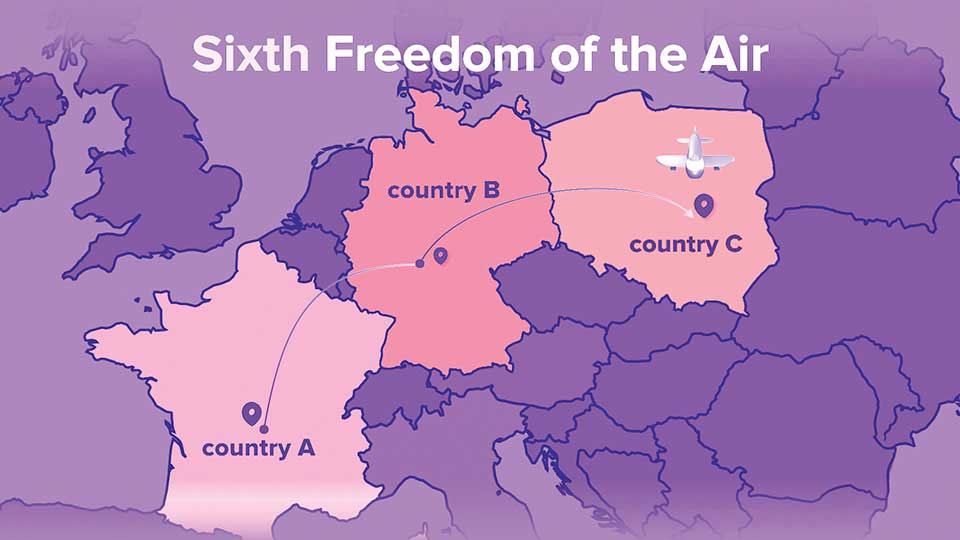
The Fifth Freedom of the Air allows an airline from one country to carry passengers or cargo between two other countries as part of a route connected to its home base. The Sixth Freedom extends this further, enabling foreign carriers to transport passengers between two foreign countries via their home country.
In practical terms, this means a foreign airline operating a Bangkok–Dhaka–Kathmandu route could sell tickets on the Dhaka–Kathmandu leg, directly competing with Bangladeshi airlines for their own passengers.
Why others, but Bangladesh shouldn’t yet
Aviation hubs such as Singapore, the UAE, and Qatar use these freedoms strategically, with strong national carriers, massive investments, and world-class infrastructure. Crucially, they have negligible local passenger bases, so they lose nothing by offering liberal rights to foreign carriers, while they make sure, they enjoy similar benefits for their own carriers as well.
Bangladesh, by contrast, has a young aviation industry still in its formative stage and a vast ethnic passenger and cargo market. Granting broad Fifth or Sixth Freedom rights now, without ensuring reciprocal benefits, would effectively hand over a rapidly growing market to already dominant foreign airlines.
The hidden costs of over-liberalisation
The potential consequences are far-reaching. Foreign airlines would siphon off passenger and cargo revenue, leading to heavy foreign exchange outflow.
Local airlines, including Biman Bangladesh Airlines, US-Bangla Airlines, NOVOAIR, and Air Astra (which plans to expand internationally), would face falling load factors, shrinking market share, and weakened profitability. Financial stress could force cost-cutting, staff downsizing, slower fleet modernization, and reduced investment in training and skill development. At the same time, the government would suffer a substantial loss of tax and fee revenue.
According to IATA, Bangladesh’s air traffic is projected to double from 12.5 million to 25 million movements within the next decade. This growth potential has already drawn interest from major global carriers eager to expand their presence here. Granting them unrestricted freedoms now would allow them to dominate the skies before local airlines are ready — relegating Bangladeshi carriers to secondary roles in their own market.
Charting a ‘Bangladesh First’ strategy
To meet the surging demand for passenger and cargo services, Bangladesh must prioritize the growth of its national carrier and private airlines, not facilitate foreign dominance. This requires enabling policies such as: Reduction of excessive taxes and fees; Rationalization of aeronautical and non-aeronautical charges; Aligning operating costs with regional benchmarks
Currently, Bangladesh’s aviation cost base is among the highest in South Asia, severely undermining local competitiveness. Reducing these costs would empower domestic carriers to expand faster, add new routes, and increase capacity, ultimately transforming the market into a buyer’s market, where competition drives affordability and service quality.
Lessons from others
Globally, most developing nations grant Fifth and Sixth Freedom rights only on reciprocal and selective bases. Countries like India and Indonesia protect their home airlines by ensuring, they receive equal privileges abroad before allowing such access.
Bangladesh should follow a similarly cautious, strategic approach. Currently, Bangladeshi carriers are performing commendably across the Middle East, South Asia, the Far East, Europe, and North America. However, they lack the fleet strength, technological sophistication, and operational scale to leverage Fifth and Sixth Freedom rights effectively. In the past, even when Biman Bangladesh Airlines enjoyed these rights, it failed to capitalize on them.
Rather than exposing our carriers to unfair competition from financially superior foreign airlines, policymakers should focus on policy protection, institutional support, and gradual capacity building.
The way forward
The Civil Aviation Authority of Bangladesh (CAAB) and the Ministry of Civil Aviation and Tourism must refrain from granting additional Fifth or Sixth Freedom rights at this stage, except on strictly reciprocal and need-based routes, where mutual benefits are evident and local operators are safeguarded.
Conclusion
Bangladesh’s aviation industry holds enormous potential as a major employer, economic driver, and a vital enabler of trade, tourism, and global connectivity. But to realize this promise, our skies must first serve our own growth.
Liberalization without preparation will only make us passengers in our own market. The path forward is clear: Support local airlines, rationalize costs, strengthen regulatory protection and build an aviation ecosystem that grows on Bangladesh’s own wings, not borrowed ones.
Bangladesh must protect its skies today to secure its aviation future tomorrow.
-N