Unregulated Umrah market putting pilgrims, agencies at risk : HAAB leaders
Govt-approved operators seek tighter oversight as Bangladesh's Umrah industry undergoes rapid transformation


Govt-approved operators seek tighter oversight as Bangladesh's Umrah industry undergoes rapid transformation
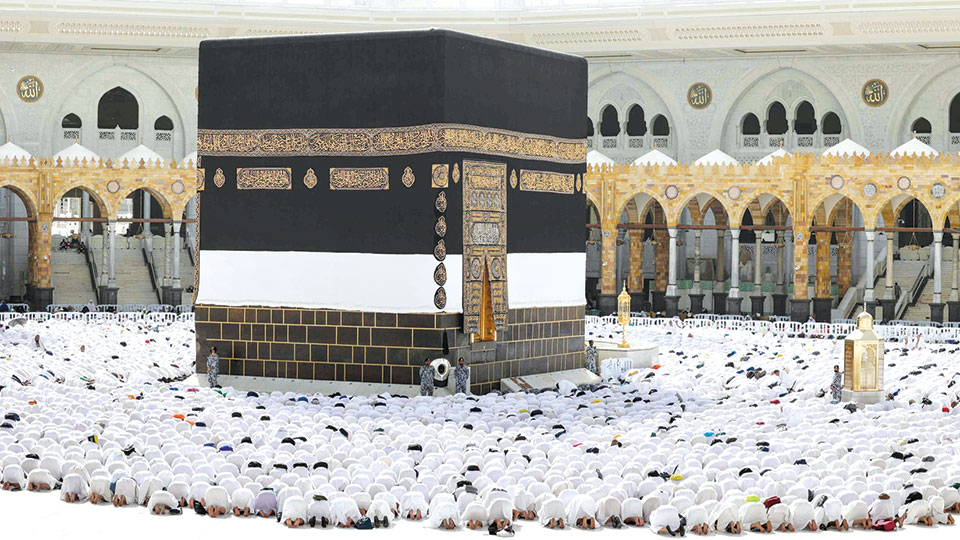
Dhaka : The Umrah industry in Bangladesh is witnessing a dramatic shift. While the number of Bangladeshi pilgrims travelling to Saudi Arabia for Umrah continues to surge, licensed agencies claim the sector is gradually slipping beyond regulatory control, exposing pilgrims to fraud, financial irregularities, and service uncertainty.
According to leaders of the Hajj Agencies Association of Bangladesh (HAAB), nearly four lakh Bangladeshis have performed Umrah so far in the current 2026 season - reflecting a strong post-pandemic recovery and growing religious travel demand among the country's Muslims.
However, despite the robust growth, government-approved Hajj and Umrah operators say, they are struggling to survive in an increasingly open and loosely monitored market.
In exclusive interviews with The Bangladesh Monitor, Syed Golam Sarwer, Managing Director of Challenger Travels and Tours and President of HAAB, and Farid Ahmed Mazumder, Managing Director of Golden Bengal Tours and Travels and Secretary General of HAAB, expressed concern over what they describe as an "unfair and unsustainable" business environment for licensed operators.
Nearly 4 lakh Bangladeshis performed umrah
Saudi Arabia's continued expansion of religious tourism facilities, simplified visa procedures, and digital platforms such as Nusuk have made Umrah more accessible than ever before.
HAAB leaders estimate that approximately four lakh Bangladeshi pilgrims travelled to Makkah and Madinah for Umrah during the current season - one of the highest figures in recent years.
Unlike Hajj, which operates under strict quota management and government oversight, Umrah can be performed year-round, creating a highly dynamic and competitive market.
Industry insiders say Bangladesh's Umrah traffic has grown significantly over the last decade, driven by rising middle-class in-come, im-proved air connectivity, easier visa processing, and increased religious motivation among travellers.
"Anyone can now sell Umrah"
According to HAAB leaders, the biggest challenge facing the sector today is the absence of effective regulatory exclusivity for licensed agencies.
"In Hajj operations, only government-approved agencies are allowed to organize pilgrim travel. However, in Umrah, anyone can now arrange packages online through Nusuk," said Syed Golam Sarwer.
Saudi Arabia's digital transformation of pilgrimage management has enabled individuals and informal operators to independently arrange visas, hotels, transport, and religious services without relying on licensed Bangladeshi agencies.
While the system has made Umrah easier and more accessible for pilgrims, licensed operators argue that it has simultaneously weakened accountability mechanisms in Bangladesh.
"There is no accountability when unapproved individuals or online operators handle pilgrims," Sarwer said. "Pilgrims often become victims of fraud, hotel complications, transport problems, or visa-related hassles in Saudi Arabia."
He added that government-approved agencies provide end-to-end services - including visa processing, air tickets, accommodation, local transportation, religious guidance, and emergency support - ensuring safer and more reliable travel experiences.
Industry operators claim that many informal agents disappear after collecting payments, leaving pilgrims stranded or forced to spend additional money abroad.
1,300 approved agencies- but half are barely operating
Bangladesh currently has around 1,300 government-approved Hajj and Umrah agencies, according to HAAB leaders. However, only around 600 remain operational.
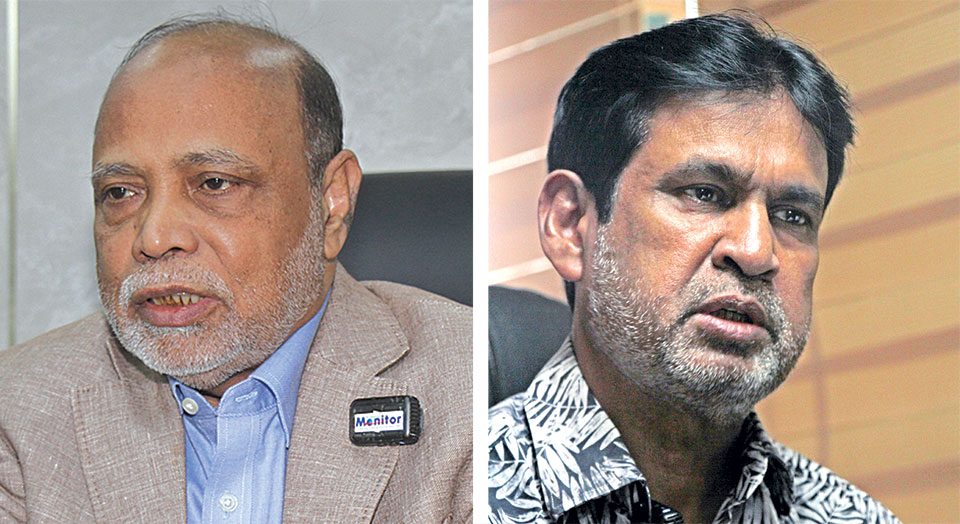
Syed Golam Sarwer (left) and Farid Ahmed Mazumder (right)
"The rest are either inactive or struggling to survive," said Farid Ahmed Mazumder.
Operators blame the situation on the unrestricted nature of the Umrah market, which allows individuals and unauthorized intermediaries to operate without bearing the financial and regulatory obligations imposed on licensed agencies.
HAAB leaders noted that approved agencies pay nearly BDT 20 lakh for obtaining licenses, along with annual renewal fees ranging between BDT 1 lakh and BDT 2 lakh.
"Despite making these investments, agencies are losing business because anyone can operate Umrah services informally," Mazumder said.
Industry stakeholders warn that if the situation continues, many licensed operators may permanently exit the sector, potentially weakening Bang-ladesh's organized pilgrimage infrastructure.
Airfare driving up umrah costs
HAAB leaders identified high airfare as the single largest reason behind the rising cost of Umrah packages from Bangladesh.
"Air ticket prices in Bangladesh are significantly higher compared to many other countries," said Mazumder. "Taxes and airfare structures are major contributors."
Umrah package prices from Bangladesh currently range from around BDT 1.2 lakh for economy group packages to BDT 3 lakh or more for premium packages with luxury accommodation and shorter walking distances from Haram.
Industry estimates suggest airfare alone often accounts for nearly 40 to 50 percent of the total package cost, particularly during peak seasons such as Ramadan and school holidays.
Recent Hajj package announcements also highlighted the importance of airfare costs. The government reduced Hajj airfare by nearly BDT 13,000 for the 2026 season to make pilgrimage more affordable for Bangladeshi pilgrims.
Operators believe similar interventions in Umrah airfare structures could significantly reduce overall travel costs.
Digitalization changed the market
Saudi Arabia's Nusuk platform has revolutionized pilgrimage management globally by enabling pilgrims to directly access visas, hotels, transport bookings, and pilgrimage permits online.
While the move aligns with Saudi Arabia's Vision 2030 objective to expand religious tourism, Bangladeshi agencies say the rapid digital transition has disrupted traditional agency-based business models.
In the past, pilgrims relied heavily on au-thorized agencies for every stage of Umrah planning. Today, many travelers attempt to arrange the journey independently using online platforms and social media-based intermediaries.
Industry insiders say this has created a parallel "unregulated Umrah economy" where many transactions occur outside official financial and legal frameworks.
Concerns over hundi transactions
HAAB leaders also raised concerns about informal money transfers associated with unauthorized Umrah operations.
According to Sarwer and Mazumder, licensed agencies send payments legally through banking channels using IBAN-based international transfers for hotel bookings, transport, and other Saudi-side expenses.
However, they allege that many unauthorized operators rely on hundi channels for transferring money abroad.
"This creates financial irregularities and causes foreign currency leakage," they said.
The HAAB leaders stressed that legal banking systems for Umrah payments already exist and are being used by approved agencies.
"Government-approved agencies are already sending money legally through IBAN. The system is in place," Mazumder noted.
They argued that stronger enforcement against unauthorized operators would help ensure better financial transparency while protecting Bangladesh's foreign currency reserves.
Push for greater regulation
HAAB is now calling on the government to bring Umrah operations under a regulatory structure similar to Hajj.
The association believes only government-approved agencies should be allowed to organize Umrah pilgrimages.
"Keeping Umrah operations limited to approved agencies would ensure accountability, discipline, and better service quality," Sarwer said.
Industry leaders say such measures would help eliminate fraud, strengthen consumer confidence, ensure proper monitoring, and stabilize the licensed agency ecosystem.




Download The Mobile App