

Top News
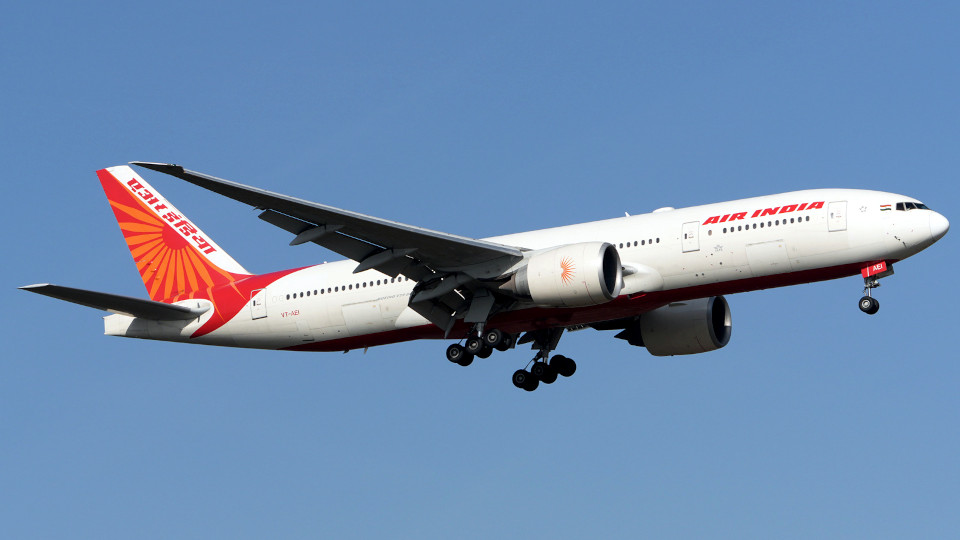
Dhaka: An Air India Boeing 777 bound for Vancouver in Canada made a costly mid-route turnaround on Thursday, March 19, returning to Delhi after more than seven hours in the air, with conflicting accounts emerging over what actually caused the incident.
Air India confirmed that Flight AI185, operating the Delhi–Vancouver route, "returned to Delhi due to an operational issue and in line with established standard operating procedures." The airline said all passengers and crew disembarked safely upon arrival back in Delhi.
Ground teams provided affected passengers with hotel accommodation. The flight departed again for Vancouver the following morning with the same passengers onboard.
According to multiple Indian media reports, the aircraft departed Delhi Indira Gandhi International Airport at 11:34 local time on March 19 and touched down at the same airport at 19:19. The decision to turn around was reportedly made when the aircraft was already over Chinese airspace near Kunming.
The media outlets attributed the incident to an aircraft-assignment error. Specifically, claiming that Air India dispatched a Boeing 777-200LR when its operational approvals for service into Canada cover only the Boeing 777-300ER variant.
However, some other media reports dispute this explanation, arguing the issue had nothing to do with Canadian entry documentation for the 777-200LR type as a whole, noting Air India's 777-200LRs have operated flights to Canada before without issue.
This alternative account points instead to a specific subfleet. Air India originally took delivery of eight Boeing 777-200LRs between 2007 and 2010 and sold five to Etihad Airways in 2014. The airline later leased five aircraft previously retired by Delta Air Lines during the pandemic. The aircraft operating Flight AI185, registered as VT-AEI, is one of these former Delta jets, which are currently being phased out of Air India's fleet.
The reported problem centers on oxygen requirements for terrain-critical routing. Air India's Delhi–Vancouver service flies near the Hindu Kush mountain range, bypassing both Afghan and Pakistani airspace. Such a routing demands additional emergency oxygen, as a potential emergency descent over high terrain can require longer than the approximately 12 minutes that the ex-Delta jets' passenger oxygen systems are capable of supplying.
Air India's legacy 777-200LRs were equipped to meet this requirement, but the former Delta aircraft have not undergone the same modifications, reportedly because they are not a permanent part of the fleet.
This is not the first time the matter has drawn regulatory attention. India's Directorate General of Civil Aviation (DGCA) fined Air India in January 2024 for operating these leased jets on long-range, terrain-critical routes without the required emergency oxygen arrangement. A separate earlier incident was reportedly averted after a pilot identified the shortfall and the aircraft was rerouted away from the high-altitude terrain.
Air India declined to publicly confirm or address either explanation, leaving the precise cause of the March 19 turnaround officially unresolved.
V