

Top News
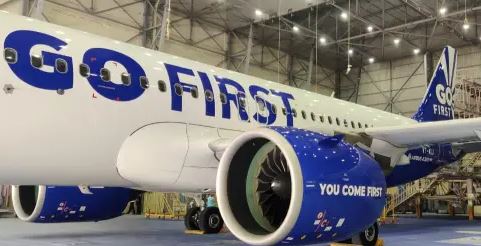
Cash-strapped Indian airline Go First filed for bankruptcy on Tuesday , blaming "faulty" Pratt & Whitney engines for the grounding of about half its fleet.
The move marks the first major airline collapse in India since Jet Airways filed for bankruptcy in 2019, and underscores the fierce competition in a sector dominated by IndiGo and the recent merger of Air India and Vistara under the Tata conglomerate.
Go First's total debt to financial creditors was 65.21 billion rupees as of April 28, it said in a bankruptcy filing with the National Company Law Tribunal.
The company had not defaulted on any of those dues as of April 30, but had defaulted on payments to operational creditors, including 12.02 billion rupees to vendors and 26.60 billion rupees to aircraft lessors, it said in the filing.
In a statement, Go First said its filing followed a refusal by Pratt & Whitney, the exclusive engine supplier for the airline's Airbus A320neo aircraft fleet, to comply with an arbitration order to release spare leased engines that would have allowed the airline to return to full operations.
Grounded aircraft "due to Pratt & Whitney's faulty engines" ballooned from 7pc of its fleet in December 2019 to 50pc in December 2022, the airline said, costing it 108 billion rupees ($1.32 billion) in lost revenues and additional expenses.
Kaushik Khona, CEO, Go Airlines, says the losses are tremendous and it is only because of Pratt & Whitney. “A very well known firm has evaluated the loss which we have suffered till date starting from June 2020. April-May 2020 was anyways non operational period. Even if we calculate from June 2020 till date, we have lost almost $1 billion because of the aircraft on ground compensation, which we should be getting. I do not think there is any different reason for losses, and if at all, we had these engines available, we would have been far more profitable. The claim of compensation alone is around Rs 8,000 crore. It is a huge dent on Indian aviation caused by Pratt & Whitney. Based on Pratt & Whitney’s performance, I think every airline in India has been suffering. ”
Pratt & Whitney said in a statement that it was "committed to the success of our airline customers, and we continue to prioritize delivery schedules for all customers."
"P&W is complying with the March 2023 arbitration ruling related to Go First. As this is now a matter of litigation, we will not comment further," it added.
In February, the boss of Raytheon Technologies (RTX.N), which owns Pratt & Whitney, acknowledged that its GTF engines had had reliability issues.
Pratt & Whitney has also been quoted in Indian media as saying it was affected by industry-wide supply chain pressures and that it expects those to ease later this year, which would support increased output of new and overhauled engines.
Analysts have said bigger rival IndiGo has been able to withstand the impact better, thanks to its larger fleet and a deeper pocket.
Go First, owned by the Wadia Group and formerly known as GoAir, said on its website that it had cancelled flights scheduled for May 3 to May 5 due to "operational reasons".
"The government of India has been assisting the airline in every possible manner," India's Civil Aviation Minister Jyotiraditya Scindia said in a statement. "The issue has also been taken up with the stakeholders involved."
The collapse could boost rival airlines as the industry tries to meet a surge in post-pandemic air travel.
"The sudden disruption in operations is likely to benefit other players and increase airfares due to supply constraint," wrote Jinesh Joshi, a research analyst with Prabhudas Lilladher.
SURPRISE MOVE
The move took Go First's lenders by surprise, two bankers aware of the matter told Reuters.
The lenders met Go First's management a few weeks ago, but no intimation was given, one of the bankers said. Lenders will meet soon to assess the situation and decide on a future course of action, they said.
"I am a little stunned to hear of them file for bankruptcy," said Mark Martin, CEO at aviation consulting firm Martin Consulting LLC. "I still feel that this might not be the end of Go First. This must be a vehicle and a means for somebody new to take over."
Go First's problems, which forced it to delay its planned $440 million IPO in 2021, led to an erosion in its market share to 6.9% in March from 8.4pc in January, latest data from the Indian aviation regulator showed.
-B
Share this post
Also on Bangladesh Monitor