
Top News
Dhaka: Several airlines that used to be popular among air travellers have disappeared. Some merged while others ceased operations and vanished. Financial problems, competition from other burgeoning airlines, labour issues, and plane crashes, among others, led them disappear into extinction.
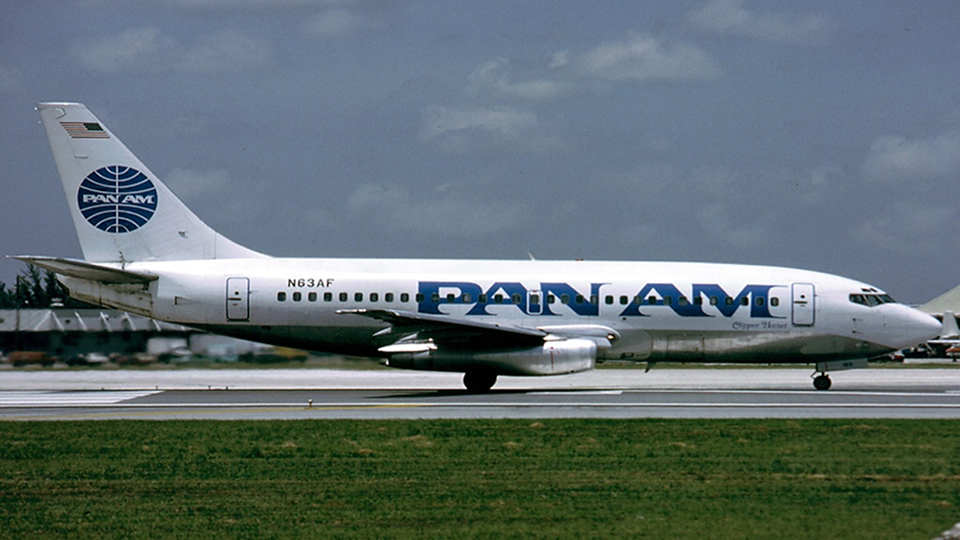
Pan American World Airways
Pan American World Airways is at the top of the list. Once recognised as one of the world’s leading airlines, Pan American World Airways was a founding member of the International Air Transport Association (IATA).
In its illustrious years, Pan American World Airways was the leading international air carrier in the United States for more than half a century, running from 1927 to 1991.
However, deregulation and increased competition led to the airline’s decline; on the other hand, the increased cost of fuel and declining international travel also contributed to the demise of the airline.
Moreover, the infamous Lockerbie crash of Pan Am Flight 103 in 1988 was what finally grounded the airline.
Pan Am ran for another three years after the incident. However, it became non-operational by the end of 1991.
Continental Airlines
Continental Airlines was incorporated as Varney Speed Lines in 1934 and started off transporting mail and passengers to the west. However, the airline soon began flying to Mexico. Continental Airlines purchased Pioneer Airlines in 1953, established a Los Angeles hub in the 1960s, and pioneered economic fares between Chicago and Los Angeles to ramp up its operation.
Like most defunct airlines, the deregulation of the industry and labour troubles could be pointed out as reasons for Continental Airlines’ dwindled fortune.

Deregulation and labour troubles combined led to its bankruptcy in 1983.
However, unlike some airlines on this list, Continental Airlines survived bankruptcy and emerged with increased profit margins due to reduced labour costs.
However, in 2010 Continental Airlines merged with United Airlines utilising stock swap. Hence, it is most fitting to describe it as a defunct airline despite its merger with United Airlines, given that it is no longer registered as an operational airline.
Trans World Airlines
Trans World Airlines (TWA) could not survive the deregulation of the aviation industry and the increased cost of aviation fuel. The airline, which started as two companies in 1926 as Western Air Express and 1928 as Transcontinental Air Transport, merged in 1930 to become TW&A.
Billionaire Howard Hughes acquired the airline in 1940, an acquisition that lifted its status to become a primary international carrier.
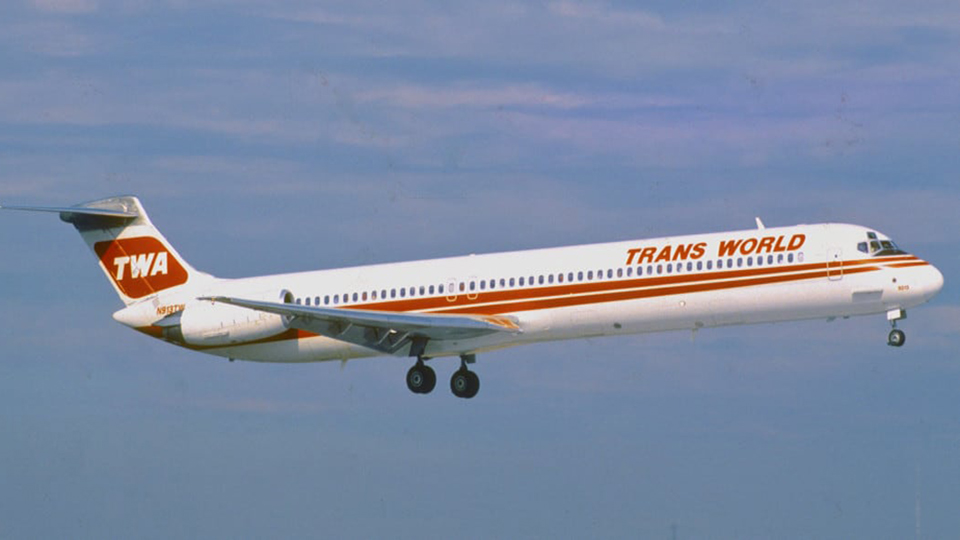
Most people in the aviation industry plausibly know the airline as a luxury carrier and a trailblazer in technological innovations in air travel.
The airline resorted to borrowing money to stay afloat and nearly went bankrupt in the early 1960s. However, Hughes sold his stock in 1965, and the airline seemed to recover.
The airline faced deregulation and the increased cost of fuel. Furthermore, it experienced complex financial problems, which led to the declaration of bankruptcy in 1992 and then again in 1995.
TWA suffered a significant plane crash resulting in 1996.
The airline struggled for another five years and then declared bankruptcy again in 2001 before selling to American Airlines.
- T
Share this post
Also on Bangladesh Monitor