
Top News
Dhaka : Bangladesh's aviation sector has long been viewed primarily through the lens of point-to-point travel - serving migrant workers, business travelers, and a growing number of leisure passengers. Yet as regional air traffic re-bounds and Asia's skies become increasingly competitive, a larger question is beginning to surface among policymakers and industry stakeholders: can Bang-ladesh realistically position itself as a regional aviation transit hub?
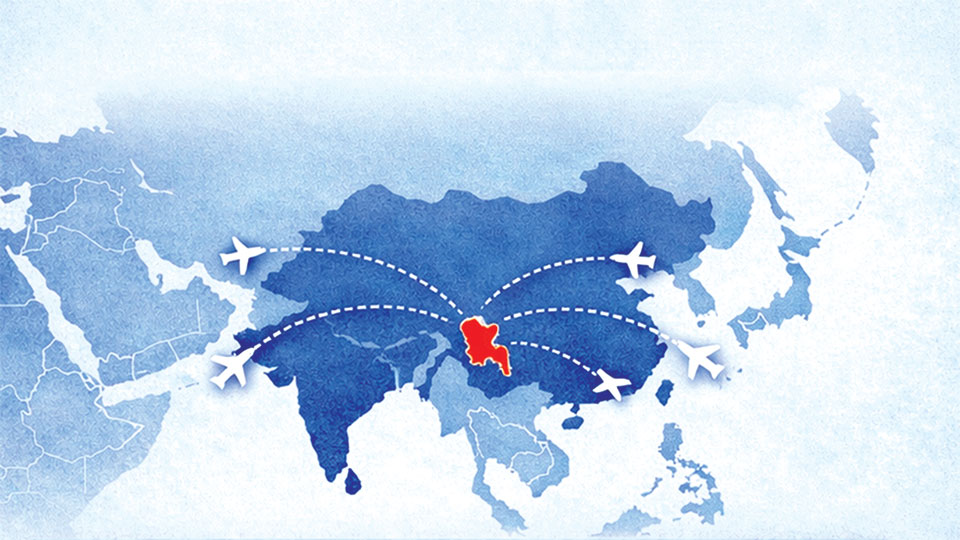
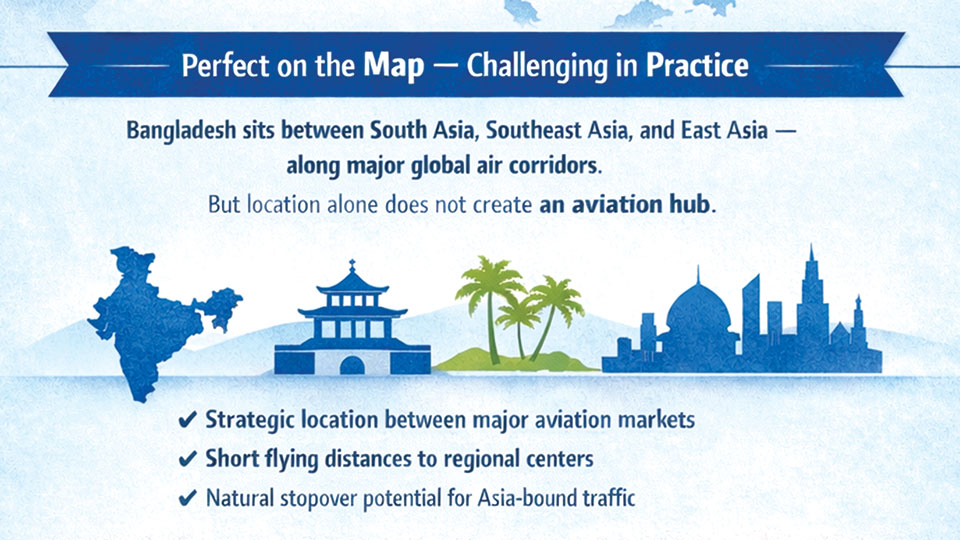
Geographically, the country is well placed. Sitting between South Asia, Southeast Asia, and East Asia, Bangladesh lies along some of the world's busiest air corridors. Flights connecting India, China, Southeast Asia, and the Middle East routinely pass close to Bangladeshi airspace. In theory, Dhaka - and potentially Chattogram - could serve as a natural stopover point for regional and long-haul traffic. In practice, however, this potential remains largely untapped.
Infrastructure : Progress, but not full picture
The most visible step toward hub ambitions is infrastructure development, particularly at Hazrat Shahjalal International Airport (HSIA) in Dhaka. The upcoming Terminal 3, equipped with modern passenger handling systems and expanded capacity, is expected to significantly ease congestion and improve service quality.
Aviation experts noted, however, that infrastructure alone does not create a hub. "You can build a modern terminal, but without transfer-friendly processes, competitive airlines, and supportive policies, hub traffic will not materialize," one industry insider explained.
At present, Bangladesh's airports are designed primarily for origin-and-destination passengers. Transit facilities - such as seamless baggage transfers, short connection times, and dedicated transit lounges - are limited. For a hub-and-spoke model to work, airports must prioritize speed, efficiency, and passenger experience for connecting travelers.
Airline capacity, network limitations
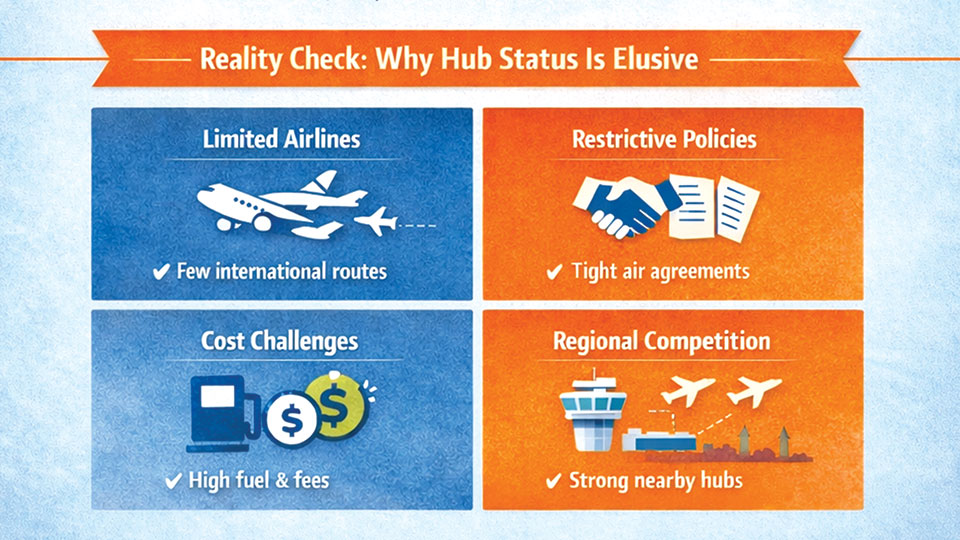
A strong hub requires strong home-based airlines capable of feeding traffic into the system. Bangla-desh's aviation landscape remains relatively narrow in this regard. Biman Bang-ladesh Airlines operates several international routes, particularly to the Middle East, South Asia, and parts of Southeast Asia, but its network depth and frequency are limited compared to major regional carriers.
Private airlines, while active domestically, have minimal presence on international routes. This restricts route diversity and reduces Bangladesh's ability to attract transit passengers who seek multiple onward connection options.
By contrast, successful hubs such as Dubai, Doha, and Singapore were built around aggressive airline expansion strategies, supported by government policy and commercial freedom. Without similar route liberalization and airline strengthening, Bangladesh's hub ambitions may struggle to gain traction.
Policy, bilateral constraints
One of the most significant barriers to hub development lies in air service agreements and regulatory frameworks. Bangladesh maintains relatively restrictive bilateral agreements with many countries, limiting frequencies, destinations, and fifth-freedom rights - key elements for transit traffic growth.
Fifth-freedom rights allow airlines to carry passengers between two foreign countries via their home base, a cornerstone of hub operations. Without broader liberalization, airlines have little incentive to route traffic through Bangladesh rather than established hubs elsewhere.
Additionally, high operating costs - including fuel prices, taxes, and airport charges - make Bangladesh less attractive as a transfer point. Transit passengers are highly price-sensitive, and even small cost differences can influence airline routing decisions.
Competition in crowded region
Bangladesh's hub aspirations must also be viewed within a highly competitive regional context. India is rapidly upgrading its airports and expanding airline capacity. Southeast Asian hubs such as Kuala Lumpur and Bangkok continue to invest heavily in connectivity and passenger experience. Meanwhile, Middle Eastern hubs dominate long-haul transit traffic between Asia, Europe, and Africa.
To compete - even at a secondary level - Bangladesh would need a clear niche strategy. Aviation analysts suggested that Dhaka could position itself as a regional connector for secondary cities in South and Southeast Asia, rather than attempting to rival mega-hubs outright.
Role of cargo, mixed hub potential
While passenger transit faces challenges, air cargo presents a more immediate opportunity. Bangladesh's strong export base - particularly in readymade garments - already generates significant air freight demand. Developing a combined passenger-and-cargo hub model could strengthen the country's aviation value proposition.
Improved cargo handling facilities, cold-chain infrastructure, and faster customs processes could attract regional cargo flows, creating economies of scale that also benefit passenger operations.
Gradual, realistic path forward
Most experts agreed that Bangladesh is unlikely to become a mega transit hub in the near future. However, that does not mean the ambition is misplaced. A gradual, realistic approach - focusing on regional connectivity, selective route expansion, and improved passenger experience - could allow the country to carve out a meaningful role in Asia's aviation network.
As Bangladesh's economy grows and its aviation infrastructure modernizes, the question may shift from whether the country can become a transit hub to how strategically it chooses to pursue that goal. The answer will depend not just on runways and terminals, but on policy choices made today that shape the skies of tomorrow.
Also on Bangladesh Monitor