

Top News
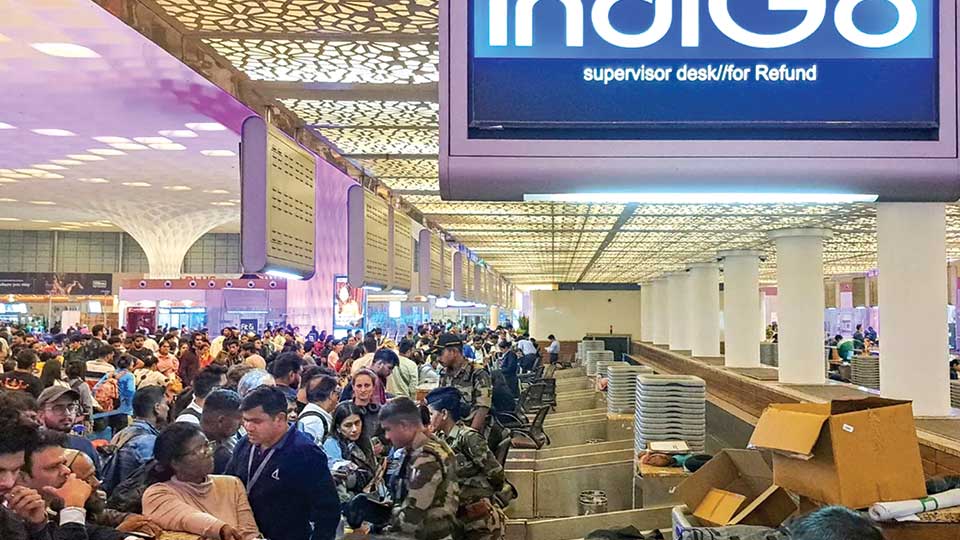
Dhaka : India's largest airline, IndiGo, is facing a major operational and regulatory crisis after cancelling over 3,000 flights in the first week of December, stranding thousands of passengers. Officials attributed the disruption to poor pilot roster planning and the implementation of stricter flight duty and rest rules.
The DGCA has deployed personnel to IndiGo's headquarters to monitor flight operations, crew rostering, refunds, and on-time performance. Authorities have also ordered the airline to cut 10 percent of its winter schedule, potentially cancelling more than 200 flights daily. Federal Aviation Minister Ram Mohan Naidu said the reduction was necessary to restore stability, while assuring that all destinations would continue to be served. The airline must submit its revised schedule to the regulator by December 17.
IndiGo operates over 2,200 daily flights and controls more than 60 percent of India's domestic market. Analysts warn that trimming capacity could exacerbate the aviation crisis, as other carriers like Air India and SpiceJet lack spare capacity. Analysts noted that while the cut may help passengers in the long term, it could increase costs in the short term.
Pilot associations claim "artificial crisis"
Pilot groups, including the Airline Pilots' Association of India (ALPA), have accused IndiGo of creating an "artificial crisis" by over-scheduling flights despite staffing shortages. They urge the DGCA to scrutinize flight approvals and emphasize the need for realistic rostering to maintain safety.
IndiGo's management denies these claims, stressing full compliance with safety rules. CEO Peter Elbers posted a video message stating that operations have "fully stabilized."
Financial, market implications
The crisis has already affected IndiGo financially, with shares down 15 percent since December 1, reflecting concerns over operational disruption and higher crew costs under the new rules. Analysts warned that the airline could face further penalties.
While IndiGo reports operations are normalizing, hundreds of daily cancellations and delays continue. Reducing capacity may ease short-term disruptions, but analysts note it could create ripple effects in India's constrained aviation market, potentially increasing fares.
The DGCA, federal aviation ministry, pilot groups, and investors will closely monitor IndiGo's recovery over the coming weeks, focusing on operational stability, crew management, passenger satisfaction, and compliance with regulatory directives.
Bottom line
The IndiGo crisis highlights the delicate balance between safety, operational planning, and corporate strategy in Indian aviation. With stricter duty rules now in force, the airline must restore trust, stabilize its network, and navigate regulatory scrutiny, all while maintaining dominance in a competitive domestic market.
Also on Bangladesh Monitor