
Top News
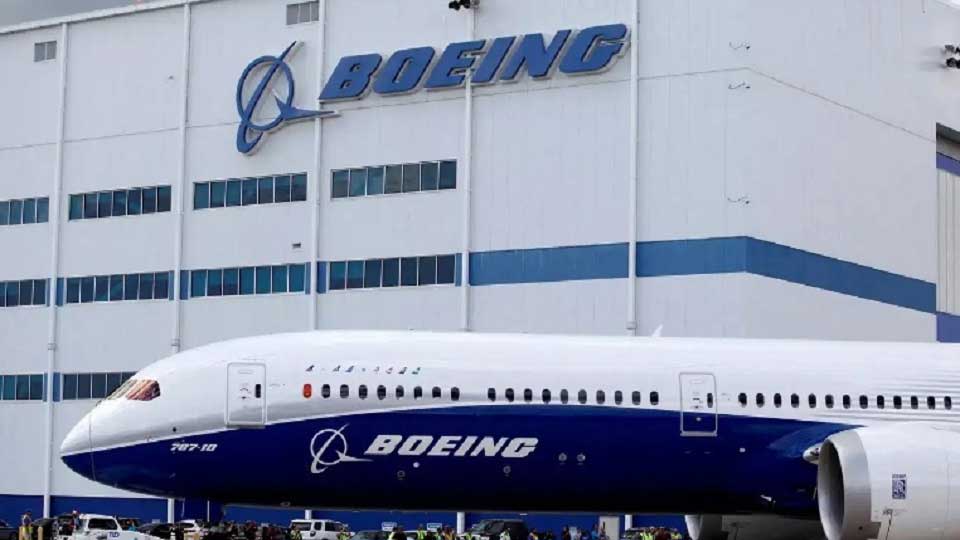
Dhaka: world's largest aircraft manufacturer Boeing projects that the global commercial aviation fleet will nearly double to around 49,600 aircraft by 2044, with most of that growth driven by new production over the next 20 years.
The updated forecast, released yesterday, falls slightly below last year’s projection and comes ahead of the Paris Air Show, which opens tomorrow.
Emerging markets “with expanding middle classes, dynamic and competitive airline networks and sustained aviation investment” will represent more than 50 per cent of the commercial fleet in 2044, up from nearly 40 per cent in 2024, Boeing said.
But the forecast also shows the effects of supply chain difficulties in the wake of the Covid-19 pandemic.
“The supply chain has probably had a small role in our slight reduction in deliveries over the next 20 years,” Boeing vice president of Commercial Marketing Darren Hulst said at a briefing on Tuesday.
The briefing came before Thursday’s deadly Air India crash of a Boeing 787 Dreamliner.
Following the crash, which has killed at least 279 people, Boeing CEO Kelly Ortberg and commercial plane chief Stephanie Pope cancelled plans to attend.
The Boeing forecast projects annual passenger growth of 4.2 per cent, above the 2.3 per cent annual growth in GDP.
“New aircraft deliveries haven’t been able to keep up with the demand,” said Hulst, who estimates that problem has resulted in a “cumulative shortage” of some 1,500 to 2,000 planes.
But Hulst expects the cadence of deliveries to pick up between now and the end of the current decade.
Of the 43,600 new planes required between now and 2044, an estimated 21,100 will replace existing fleet and 22,500 will be needed to address rising demand in China and emerging markets.
These figures indicate an expected dramatic expansion of the global air fleet over four decades from 2004, when the fleet consisted of just 16,780 planes.
In a sign of how the aviation market has changed, the 10 biggest aviation companies in 2004 accounted for 45 per cent of the global fleet and were dominated by companies from North American and Europe.
But today’s top 10 account for just 30 per cent of the market and are composed of a greater share of companies from Asia and the Middle East — a region that had no companies in the top 10 in the earlier period.
-B
Share this post
Also on Bangladesh Monitor