
Top News
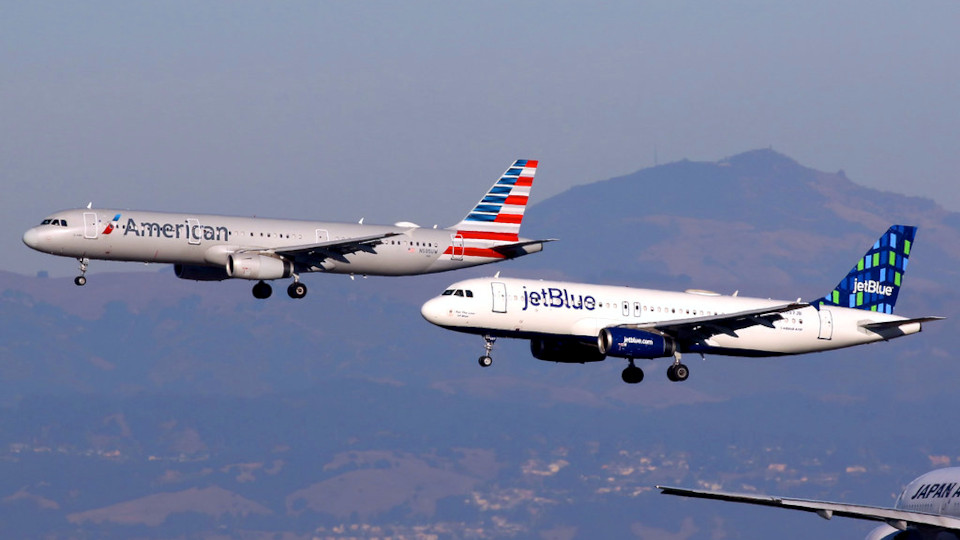
Dhaka: San Francisco International Airport (SFO) is bracing for significant operational disruptions after the Federal Aviation Administration (FAA) moved to permanently end parallel landings, a long-standing practice that has supported the airport’s high traffic capacity.
The US civil aviation regulatory agency has determined that simultaneous landings on runways separated by just 750 feet pose safety concerns. As a result, aircraft will now be required to conduct staggered approaches instead of side-by-side visual landings.
The decision marks a major shift for SFO, which has relied on parallel landings since the 1970s to handle growing passenger demand efficiently.
Under the new rule, the airport’s maximum arrival rate is expected to drop sharply from 54 flights per hour to around 36. This reduction is likely to trigger widespread delays, particularly during peak travel periods.
The impact will be compounded by ongoing infrastructure work. Starting March 30, one of the airport’s north-south runways, 1R, has been taken out of service for a six-month refurbishment project scheduled to conclude on October 2.
During this period, only the west-facing parallel runways, 28L and 28R, will remain operational for arrivals and departures.
Airport authorities had initially estimated that the runway closure alone would delay approximately 15% of flights.
However, with the additional restriction on landing procedures, projections now indicate that nearly 25% of flights could face delays of at least 30 minutes.
SFO’s closely spaced parallel runways are relatively uncommon compared to other major airports, where runway separations typically exceed 1,000 feet. This unique layout at SFO had enabled high-efficiency operations in favorable weather conditions.
Parallel landings were previously limited to good weather scenarios and were not permitted during instrument flight conditions.
The FAA stated that the new safety measure is necessary despite its operational impact, signaling a long-term change in how traffic is managed at one of the busiest airports in the United States.
V
Share this post
Also on Bangladesh Monitor