

DHL reports fuel security at hubs amid global supply shock

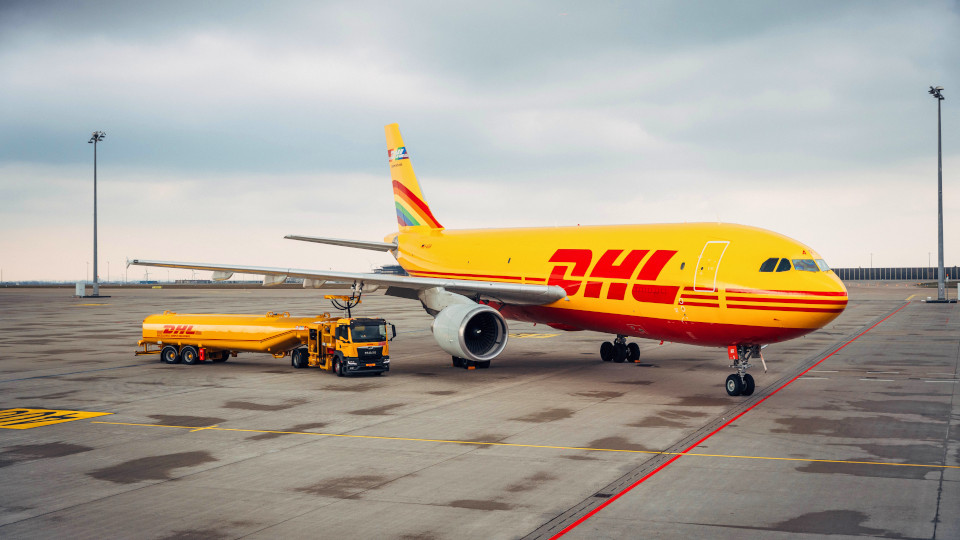
Dhaka: Global logistics giant DHL says it has measures in place to protect its operations from jet fuel shortages, though challenges persist at airports where it lacks a dedicated fuel supply setup.
Speaking during the company's first quarter 2026 earnings call, DHL Chief Executive Tobias Meyer said managing fuel security is considerably easier at the company's major hubs compared to other locations, particularly in Asia.
DHL operates hubs at Leipzig/Halle, Cincinnati/Northern Kentucky International, Hong Kong International, and Bahrain International airports.
Meyer noted that at hub locations, DHL benefits from dedicated infrastructure and closer supplier dialogue, offering greater visibility and certainty over fuel availability. At spoke locations in Asia, however, the company relies heavily on local suppliers in regulated markets, with limited alternatives.
"We have seen in some Asian airports, constraints, either constraints that were announced, so no fuel being available for additional flights, but also some structural shortages," Meyer said.
As a workaround, DHL has employed tankering — fueling aircraft sufficiently at inbound airports to also cover outbound flights. Meyer clarified, however, that this approach is only viable for regional and short-haul operations and cannot be applied to intercontinental flights.
On pricing, Meyer noted that longer-term contracts provide little insulation since jet fuel is generally purchased at spot prices regardless.
Despite the challenges, Meyer expressed confidence in DHL's relative standing. He noted that if a continued shortfall of 10 to 12 million barrels of crude oil persists daily, the broader industry will eventually feel greater strain.
DHL has also taken steps to navigate disruptions stemming from the Middle East conflict. The company rerouted aircraft through King Khalid International in Riyadh and Muscat International after its regional hub at Bahrain International was significantly affected by military activities and extended airspace closures.
DHL's road network connecting Riyadh and Muscat to the UAE, Qatar, Bahrain, and Kuwait proved critical in maintaining service continuity during the disruptions.
Meyer added that not all competitors were able to establish a comparable setup during the crisis period.
V