

Restaurant industry hangs on cliff edge as lockdown crushes sales

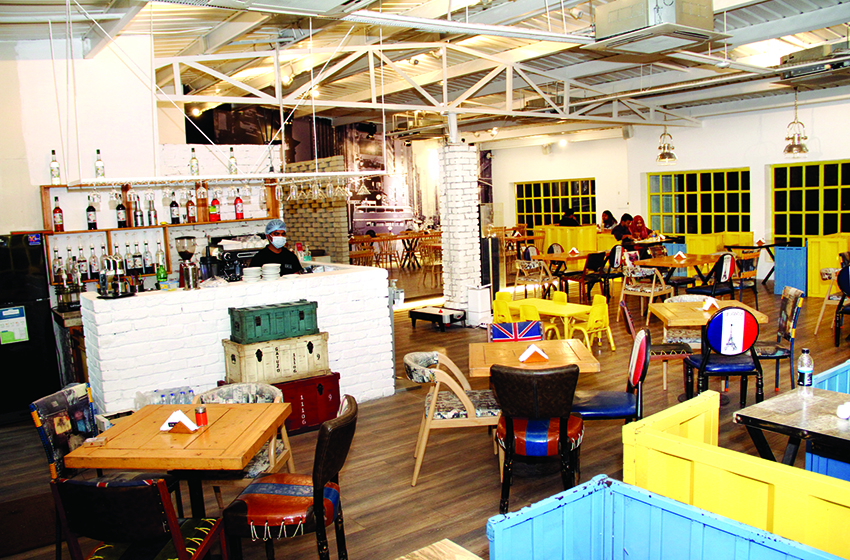
Dhaka : The flourishing restaurant industry of Bangladesh that generates thousands of employment is severely struggling to survive amid the pandemic following lockdowns imposed during their peak sales season like Ramadan and Eid.
Industry experts said that they had almost revived to get back to their feet before the ongoing lockdown, but the new directives to keep all dine-in services closed during the extension of the lockdown period have pulled the restaurants back to their losses.
Bangladesh Restaurant Owners' Association (BROA) said restaurants recovered nearly 60-70 per cent since the reopening last July. But sales once again dropped down to over 50 per cent, compared to usual times, after the resurgence of the coronavirus spread.
There are currently about 60,000 restaurants nationwide, with over 8,000 in the capital alone. Nearly 2.8 million people are dependent on the F&B industry for their livelihoods. And if the subsectors of the restaurant industry are considered, the number is several times higher.
The crisis began after the virus outbreak last year. Plenty of restaurants began cutting staff while many even closed down or sold off their businesses to survive the crisis.
Syed Mohammad Andalib, Organising Secretary of Bangladesh Restaurant Owners Association (BROA), said that the restaurant industry was once bourgeoning. However, now it is barely hanging on the edge of a cliff.
All other industries are receiving support from the government in several ways such as incentives, loans on low interest and easy terms amid the pandemic.
But the government is not paying any heed to the restaurant industry, said Andalib, who owns Baburchi Restaurant and the biggest digital food court Tri State Eatery.
Imran Hassan, General Secretary of BROA, said that nearly 25-30 per cent of the restaurants have shut down permanently after the first wave of the coronavirus, 50 per cent ownerships have been transferred as their original owners found no other way to weather the crisis.
"Restaurants suffered a fresh shock after the declaration of a strict lockdown from April 14, the first day of Ramadan as Iftar parties and Iftar-based sales plunged," said Hassan, adding, "Because dine-in services have been closed, it had been difficult to pay for utilities, shop rent, payments of the employees ahead of Eid ul-Fitr only through sales from takeouts."
Ashiqur Rahman Ayat, Owner of Platted restaurant at Old Dhaka's Lalbagh area, mentioned that he had to slash a significant number of his employees from his restaurant, from 15 to 3, to meet the expenses.
There is almost zero sales, claimed Ayat, whose restaurant faces Lalbagh Fort, adding that sometimes there are no sales for 3-4 days in a row.
"And yet, we have to pay utility bills, rent, wages, etc. A restaurant like mine costs about BDT 1-1.2 lac for rent and utility bills per month," he added.
"Although sales are down, value-added tax (VAT) has not waived for us. It is like rubbing salt into a wound. We urge the government to allow us to open dine-in services in compliance with the health directives."
Publicity Secretary of BROA, Ashfaq Rahman Asif, restaurateur and Owner of Tarka, a popular Indian restaurant at Banani area, said, "We are surviving on delivery and takeaway system, but it has not been beneficial for us. About 85-90 per cent of the guests of a restaurant dine-in and 10-15 per cent order takeaway. Food delivery doubled to 20-25 per cent as there is no opportunity for dining in, but we have lost 75-80 per cent of our guests."
"We don't understand exactly how we can sustain the business with this 20-25 per cent in sales. Although we lost 80 per cent of sales, our overhead cost such as space rent, utility bills, and employees' wages remain the same. Our survival has become a big challenge," he further mentioned.
Mir Akter Uddin Dulal, Owner of Star Kabab, said that their business almost halved due to the ongoing second wave of the pandemic.
A similar scenario was seen while speaking with owners of the restaurants across the capital like Pinewood Café, Tradition BD, Sajna, Steak House, Fakhruddin Biriyani and others.
An employee of Dhaka Fried Chicken, in Dhanmondi area, said that he was worried about losing his job even though the restaurant was open. He was anxious how long it would last as the number of orders had significantly reduced in the past few weeks.
Syed Mohammad Andalib, Organising Secretary, BROA, explained why restaurants cannot avail SME loans. He said, "Although we have fulfilled all the conditions of being an industry, this sector has not yet been recognised. That is why we do not get any bank loan, as the central bank labeled us as a perishable sector,"
"We have repeatedly appealed to the government for incentives. I have heard that many of the funds allocated in the SME sector have been unused. We want this booming sector to be given soft loans from there, and incentives for our staff," said Andalib.
On whether restaurants are eligible to get loans from SME Foundation or not, Rashedul Karim Munna, Director of SME Foundation, said that although restaurants should be part of the SME sector by definition, it has not been integrated in Bangladesh yet.
"We are trying to expand the sector. However, one factor could be that funding is low here. Yet through proper discussion between restaurant owners' association and the SME foundation, I believe a fruitful outcome can be reached," Munna concluded.