

Biman's Rome stop raises questions on operational preparedness

Dhaka
: Biman Bangladesh Airlines' decision to replace Istanbul with Rome as the
technical stop on its Toronto route was intended to improve operational
efficiency. The move, introduced in March this year, reduced scheduled travel
time by approximately 55 minutes and utilized infrastructure already available
to the airline. On the surface, it appeared to be a logical operational
adjustment.
However,
the nearly 40-hour disruption of a Biman Toronto-Dhaka flight in Rome last
August has raised important questions about whether sufficient attention was
given to the risks associated with the new arrangement and, more importantly,
what measures have since been taken to prevent a recurrence.
The
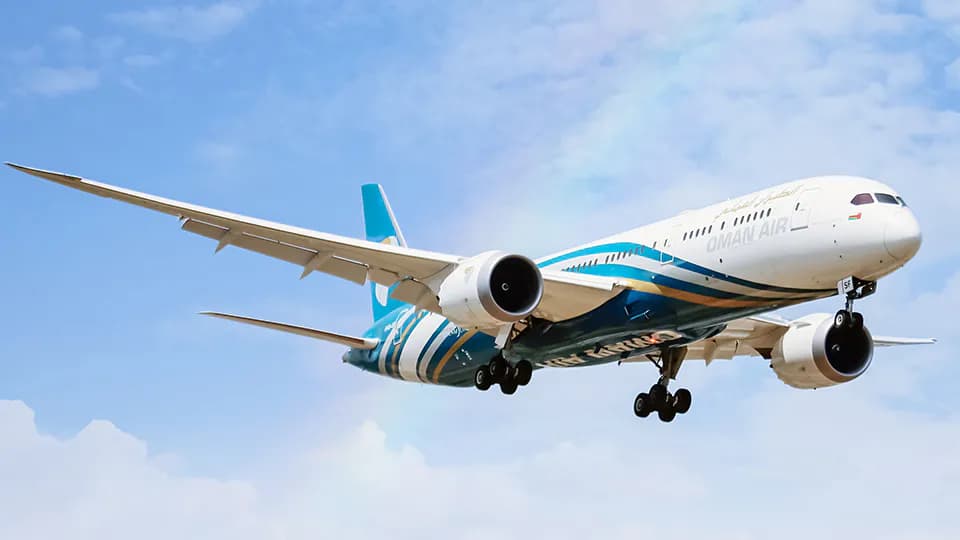
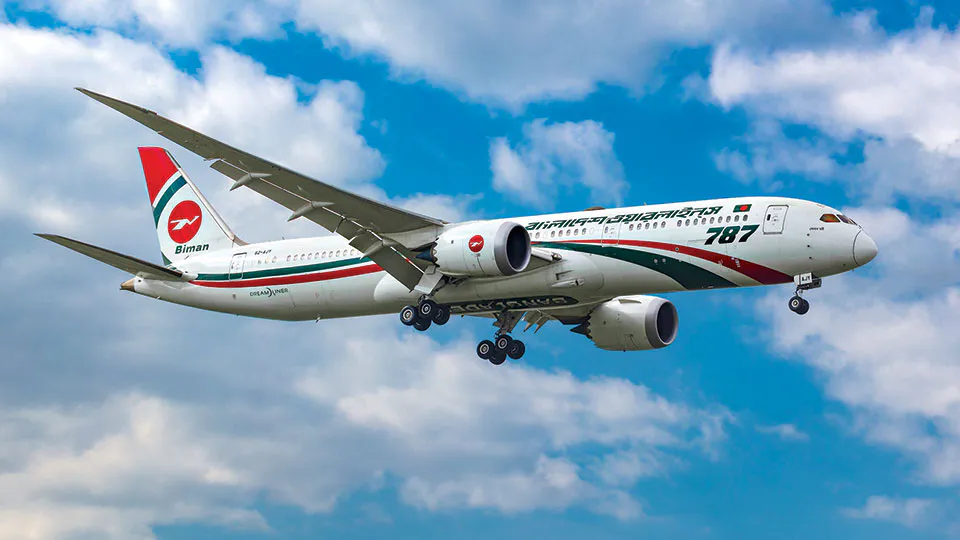
incident occurred on August 7 when Biman's Boeing 787-9, operating flight BG306
from Toronto to Dhaka, landed at Rome Fiumicino Airport for its scheduled
technical stop. A fault involving the aircraft's cabin-pressure control system
was detected, preventing the aircraft from continuing its journey. Engineers,
spare parts and equipment had to be dispatched from Dhaka, resulting in a delay
of almost 40 hours.
The
disruption affected 259 passengers, including a large number of Bangladeshi
nationals. While passengers holding passports or visas allowing entry into
Italy could be accommodated in hotels, many others were unable to leave the
airport because of Italian transit visa requirements. Reports indicated that
passengers faced significant difficulties during the prolonged delay, including
lack of proper rest, food, medicines and other essential support services.
The
incident highlights an issue often overlooked in airline planning. A technical
stop is not simply a refueling point. When a serious technical problem occurs,
it immediately becomes an engineering, passenger welfare, immigration and
operational recovery challenge. The effectiveness of an airline's contingency
planning is tested not during normal operations but during such unexpected
events.
The
Rome routing undoubtedly provides a measurable benefit. A reduction of nearly
one hour on a long-haul flight is valuable from both commercial and operational
perspectives. Yet the August
disruption raises a broader question: Does the time saved during normal
operations outweigh the potential operational and financial exposure when
things go wrong?
The costs associated with a major Aircraft-on-Ground (AOG) event can be substantial. They include aircraft recovery, transportation of engineers and spare parts, passenger support, accommodation, airport and handling charges, disruption to subsequent flight schedules and additional crew-related expenses. Beyond these direct costs lies an equally important factor-reputation. A lengthy delay involving hundreds of passengers can affect customer confidence, particularly among the large Bangladeshi diaspora market that Biman serves.
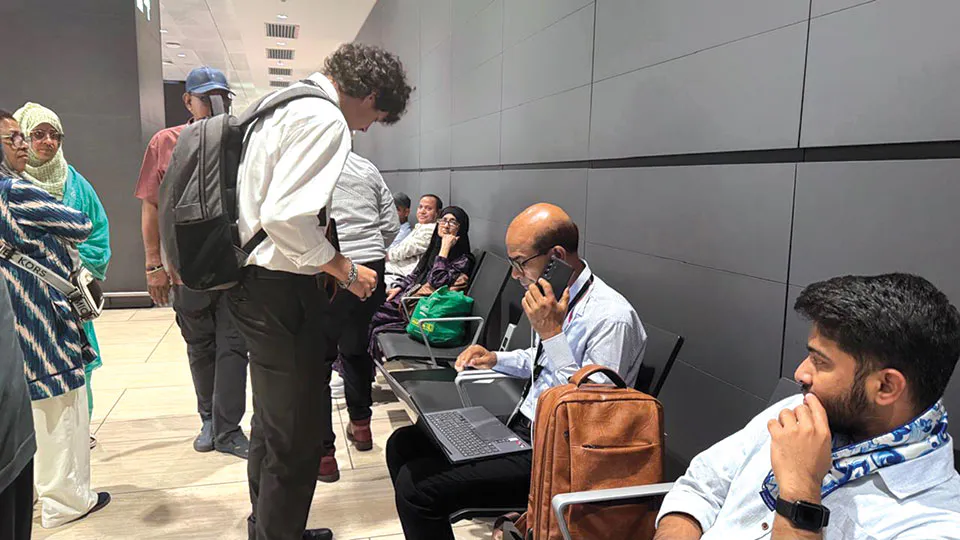 Passengers of Biman flight BG-306 stranded at Rome's Fiumicino Airport in Italy for nearly 40 hours in August
Another
aspect that deserves attention is the airline's preparedness for technical
contingencies at Rome. Industry observers have questioned whether adequate
engineering support, specialist tooling, spare-parts availability and
rapid-response arrangements were in place when Rome was selected as the regular
technical stop. The ability to resolve technical issues locally can
dramatically reduce disruption time and passenger inconvenience.
The
issue becomes even more relevant considering that this was not the first major
Biman aircraft disruption in Rome. In August 2025, a Biman Boeing 787 was
grounded at the same airport following a technical problem, requiring
replacement parts to be brought in before the aircraft could resume operations.
Although the circumstances differed from the 2026 incident, the recurrence
naturally raises questions about what lessons were learned and what
improvements were implemented before Rome became the regular technical stop for
the Toronto service.
The
recurrence also raises an organizational-learning: what did Biman learn from
the 2025 Rome AOG, and what specifically changed before Rome became the regular
technical stop? Were 787 engineering support, spare-parts availability, AOG response
capability and passenger-contingency arrangements strengthened as a result?
Equally
important is the passenger-care dimension. If a future disruption were to keep
passengers stranded for 12, 24 or even 48 hours, what arrangements are
available for those unable to enter Italy? Are there dedicated facilities,
accommodation options or special procedures to ensure adequate care for elderly
passengers, children and those requiring medical assistance? These are
practical questions that deserve clear answers.
As
of now, there has been no public indication that Biman intends to change the
Rome stopover arrangement following the August incident. That does not necessarily mean the
airline has not conducted an internal review. Airlines routinely evaluate
operational events and implement corrective measures without public disclosure.
Nevertheless, the incident has highlighted the importance of balancing
efficiency with resilience.
The
fundamental issue is not whether Rome is a capable airport. Fiumicino is one of
Europe's major aviation hubs with extensive infrastructure and technical
resources. The real question is whether Biman's own support ecosystem at Rome
is sufficiently robust to support an ultra-long-haul operation and to manage
unexpected disruptions quickly and effectively.
The
August disruption does not prove that Rome was the wrong choice. Nor does it
suggest that the airline's decision was unsafe. What it does demonstrate is the
difference between efficiency in normal operations and resilience during
abnormal ones. Ultimately, the success of the Rome routing will be judged not
by the minutes saved when everything goes according to plan, but by how
effectively Biman responds when it does not.