

ILO plan calls for sustainable tourism shift in Cox's Bazar


Cox's
Bazar : Cox's Bazar needs to shift away from tourism growth driven primarily by
rising visitor numbers and toward a more sustainable model that protects the
environment, improves visitor experiences and creates greater economic
opportunities for local communities, according to a new publication by the
International Labor Organization.
The
Destination Development Plan for Cox's Bazar (2025-2027), published by the
International Labor Office in 2025, lays out a three-year roadmap for
transforming Bangladesh's best-known beach destination into a more sustainable,
inclusive and well-managed tourism hub.
The publication was produced by Enroute International Limited as part of the ILO's Leaving No One Behind: Improving Skills and Economic Opportunities for Women and Youth in Cox's Bazar (ISEC) project. The project received financial support from Global Affairs Canada.

The
plan was prepared by Md. Sarowar Jahan Mithu, consultant for sustainable
tourism development, and Shakil Ahmed, junior consultant.
Md.
Ibrahim Khalil Bhuiyan, team leader at Enroute International Limited, and
Intijamul Islam, deputy team leader, were part of the editorial and operations
team.
New
direction for tourism
The
plan proposes six broad strategic objectives covering tourism governance,
infrastructure and safety, environmental sustainability, skills and enterprise
development, and destination branding and digital innovation.
It
prioritizes eight destinations for targeted interventions.
The
recommendations were developed through stakeholder consultations, interviews,
surveys, focus group discussions and field research involving government
agencies, businesses, communities and other stakeholders.
The
report says domestic tourism accounts for more than 98 percent of tourism
revenue in Cox's Bazar.
During
the October-April peak season, about two million tourists visit the
destination, while domestic arrivals increased from 1.2 million in 2015 to
roughly 3 million in 2023.
Environmental
pressure grows
Rapid
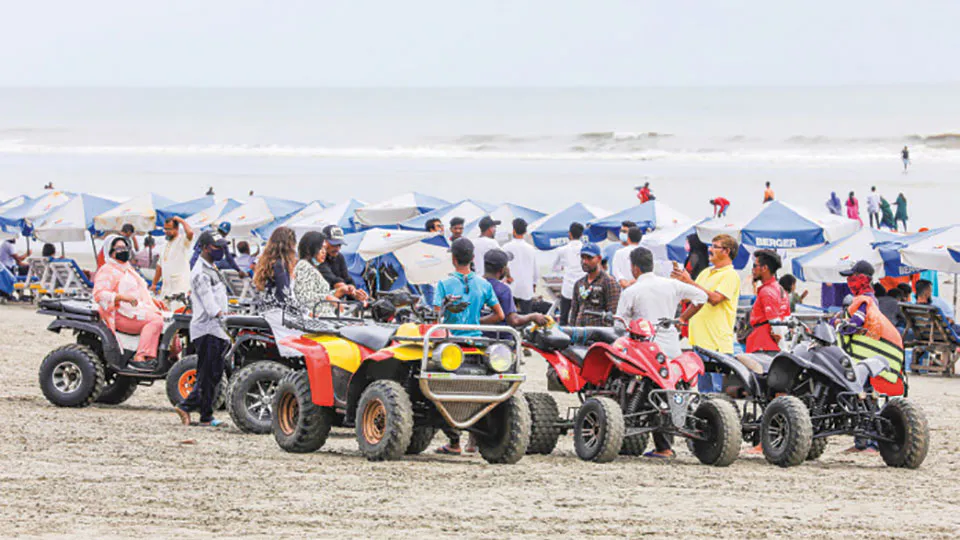
tourism growth has placed increasing pressure on the district's natural and
coastal environments.
The plan recommends visitor registration and digital entry systems in two ecological zones, carrying-capacity assessments in three biodiversity areas and the development of eco-friendly tourism products.
It
also proposes waste bins and signage at eight sites, regular cleanup campaigns
and a regional recycling plant.
A
pilot "Green Entry Fee" at a protected site is also proposed, with
revenues intended to support conservation and site maintenance.
The
report points to Himchari as an example of the challenges created by heavy
visitor pressure.
The
popular site can receive about 5,000 visitors a day during peak season and as
many as 6,000 on holidays.
Poor
waste disposal, inadequate facilities, littering and a lack of
carrying-capacity management are among the concerns identified in the plan.
Women,
youth at center
The ILO publication places particular emphasis on creating better economic opportunities for women and young people.
The
plan proposes 500 short-term hospitality job placements and aims for women to
account for at least half of the beneficiaries.
It
also calls for skills development, entrepreneurship opportunities and stronger
links between local businesses and the tourism value chain.
The
report identifies barriers facing women, including limited access to training
and finance, social restrictions, unsafe workplaces and inadequate childcare
facilities.
It
recommends stronger gender-responsive policies and greater participation by
women in tourism businesses and decision-making.
Safety,
local governance
Visitor
safety is another major component of the plan.
It
proposes training 50 community youth as "Tourist Safety Volunteers,"
deploying Tourist Police in three destinations and installing 16 safety and
zoning signboards.
The
plan also calls for the reactivation of beach management committees.
To
improve coordination, the plan places the District Tourism Development
Committee at the center of destination management, bringing together government
agencies, police, health and local government officials, as well as
representatives from hotels, transport operators and tourism businesses.
Implementation
crucial
The
plan's success will ultimately depend on implementation.
It
calls for quarterly monitoring, annual reviews, a midterm evaluation at the end
of 2026 and a final evaluation at the end of 2027.
The
publication argues that Cox's Bazar's tourism future should not be measured
simply by how many people visit.
Instead,
success should be judged by the quality of visitor experiences, protection of
the destination's natural resources and the extent to which tourism generates
decent work and inclusive economic opportunities for local communities.