

TTDC seeks bigger role for Bangladesh in global travel market

Dhaka
: Bangladesh needs coordinated policy, stronger private-sector investment, and
a more expert-driven approach to tourism if it is to turn its substantial
potential into a larger economic contributor, speakers said at the launch of
the new think tank Travel and Tourism Development Centre (TTDC) held at
Inter-Continental Dhaka on August 8.
TTDC is a national platform dedicated to advancing the sustainable growth of Bangladesh's tourism, hospitality, and aviation sectors through meaningful public-private collaboration.
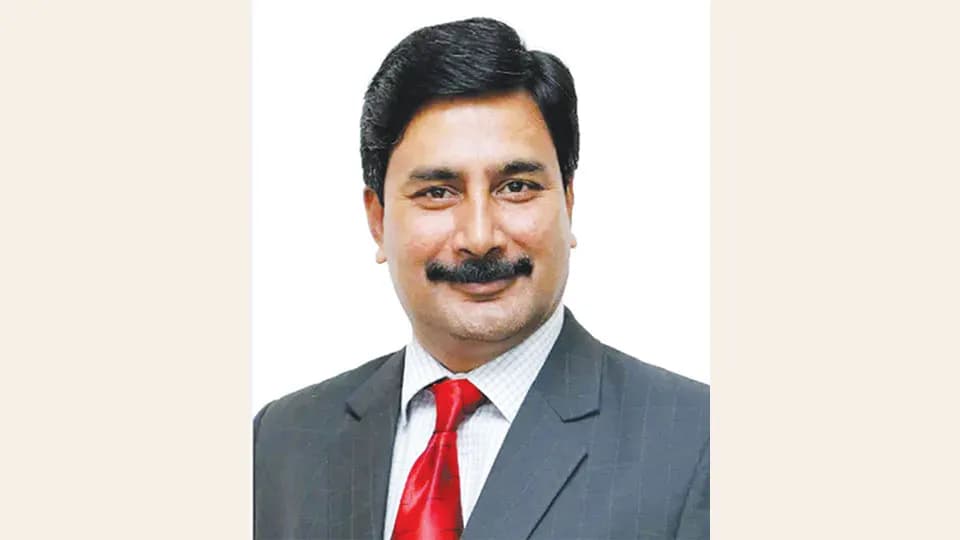
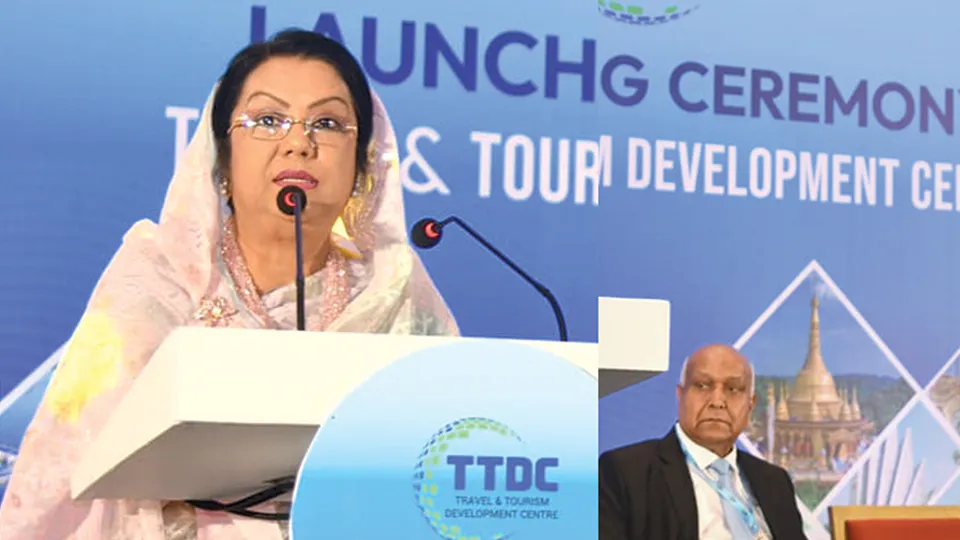 Afroza Khanam Rita
The
launching ceremony was attended by Afroza Khanam Rita, Minister for Civil
Aviation and Tourism, as the Chief Guest.
Speaking
on the occasion, the minister said tourism currently contributes about three
percent to Bangladesh's GDP, generating around USD 10 billion in economic value
and supporting about two million jobs. The government wants to raise the
sector's contribution to six percent, she informed.
The
government is preparing a master plan for tourism and developing separate mega
tourism plans for Cox's Bazar, Sylhet, and Khulna, the minister added. More
than 1000 potential tourism hubs have also been identified across the country.
She
stressed that the private sector would have to play the leading role in
developing the industry, while the government would support businesses through
policy measures and diplomatic efforts. Public-private cooperation would be
essential to turn the planned tourism hubs into viable destinations, she
mentioned.
The minister further added that TTDC could provide an important platform for such collaboration.
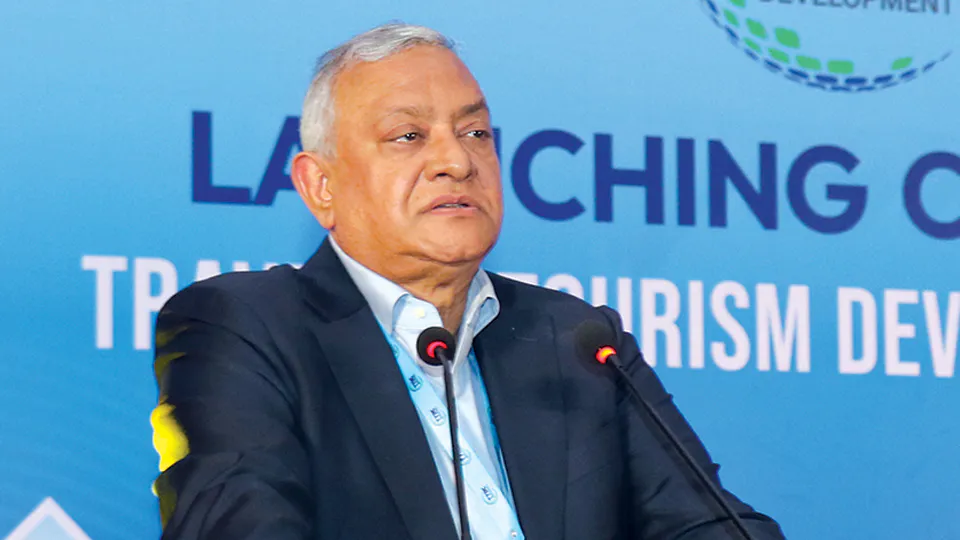 Nasser Rahman
Nasser
Rahman, TTDC Executive Committee Member and Chairman of Launching Committee,
speaking at the event, painted a more critical picture of Bangladesh's position
in the regional tourism market. He said Bangladesh remains far behind other
South Asian countries and has yet to establish a meaningful presence as an
international tourism destination.
Most
foreign visitors coming to Bangladesh are business travelers rather than
leisure tourists, Rahman sighed. He claimed that some business travelers
identify themselves as tourists on embarkation forms because declaring business
travel can involve additional immigration formalities.
As
a result, the number of genuine international leisure tourists is considerably
smaller than headline visitor figures might suggest, he noted.
Rahman
also pointed to an imbalance between inbound and outbound tour operators.
According to him, Bangladesh has roughly 50 outbound operators for every five
inbound operators. While inbound tourism brings foreign currency into the
country, outbound tourism sends money abroad, he said.
He
called for greater involvement of tourism professionals and experts in
government institutions, particularly the Bangladesh Tourism Board and
Bangladesh Parjatan Corporation, rather than relying predominantly on
bureaucrats.
"Bangladesh
is the only country in South Asia where tourism is zero," Rahman said,
arguing that the industry needs to be revitalized under the current government.
He
said the TTDC could function as a think tank and advise the government on
practical strategies that can be implemented within existing budgets. He also
suggested bringing in an international tourism expert for two or three years to
advise the government on developing the sector.
Rahman said Bangladesh's resort industry also remains heavily dependent on domestic visitors, with international tourists largely absent. Domestic travelers typically stay for only a short period, while attracting foreign tourists could encourage longer stays and higher spending.
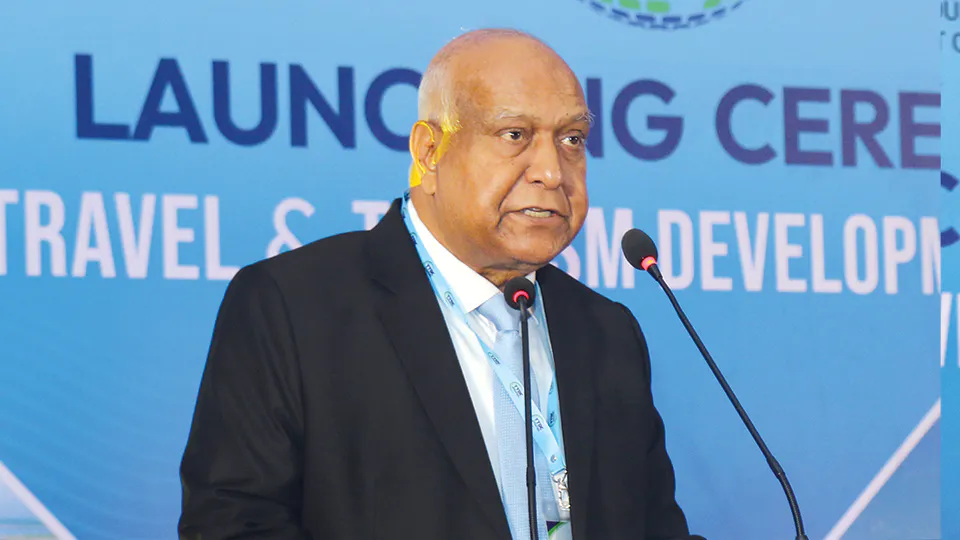 Kazi Wahidul Alam
Kazi
Wahidul Alam, President, TTDC, also addressed the event. He said the four
components of the sector - travel, tourism, aviation, and hospitality - are
closely interconnected and together form a complete value chain.
He
expressed that TTDC was established to promote sustainable growth and
development through research, information, advocacy, collaboration, and
strategic dialogue.
The
center will focus on identifying industry challenges and developing solutions
related to policy coordination, infrastructure, service quality, development
strategies, and sustainability. Its broader mission will include research,
policy advocacy, industry development, capacity building, and engagement among
government and private-sector stakeholders.
Alam said Bangladesh has significant potential in the international tourism market, but that potential cannot be realized without coordinated action across the sector.
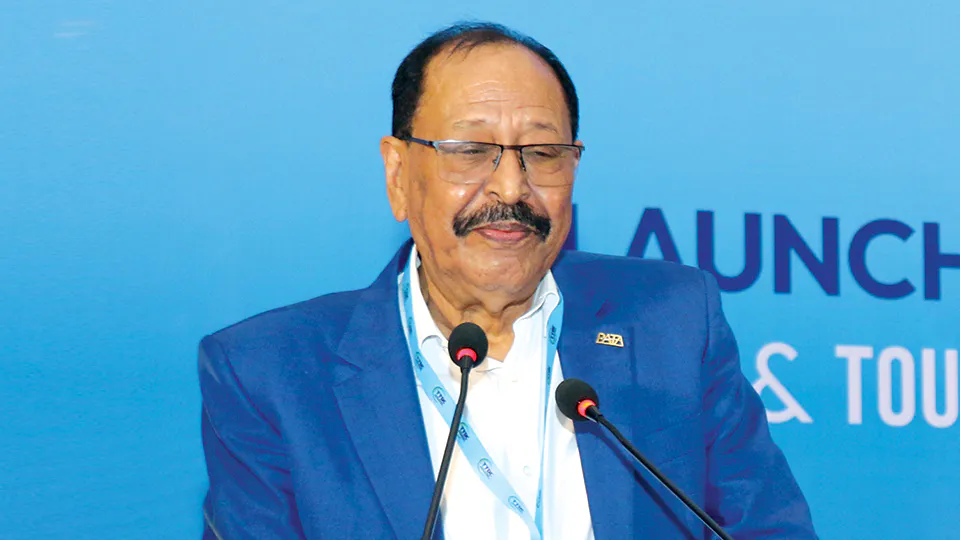 Shahid Hamid
TTDC,
he said, would seek to bridge gaps among stakeholders and help develop
strategies capable of positioning Bangladesh more effectively in the global
tourism marketplace.
Shahid
Hamid, Executive Committee Member of TTDC, who also spoke at the event,
described the TTDC as the first organization of its kind in Bangladesh,
bringing together the interests of travel, tourism, aviation, and hospitality
under a common platform.
He
said the center would work to create a stronger foundation for sustainable
industry development and provide a space where government, businesses and other
stakeholders could exchange ideas and work jointly on sectoral challenges.
The
launch also featured a presentation by TTDC Executive Committee Member Sadia
Haque, followed by a panel discussion involving Chowdhury Ashik Mahmud Bin
Harun, Executive Chairman of the Bangladesh Investment Development Authority;
Dr. Khondaker Golam Moazzem, Research Director at the Centre for Policy
Dialogue; Ahmed Yusuf Walid, President of Galaxy Group; and Ashwani Nayar, Area
General Manager for IHG South West Asia and Cluster General Manager of Crowne
Plaza Dhaka Airport.
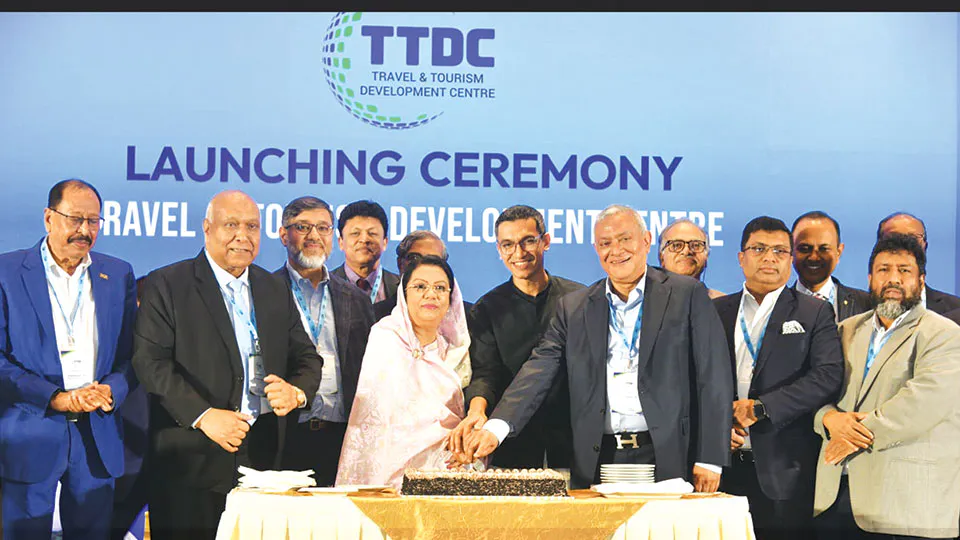
TTDC
was formally launched through a cake-cutting ceremony following the
discussions.